
肝脏脂肪酸结合蛋白FABP1将底物转移至细胞色素P450 4A11以进行催化。
Liver fatty acid binding protein FABP1 transfers substrates to cytochrome P450 4A11 for catalysis.
作者信息
McCarty Kevin D, Guengerich F Peter
机构信息
Department of Biochemistry, Vanderbilt University School of Medicine, Nashville, Tennessee, USA.
Department of Biochemistry, Vanderbilt University School of Medicine, Nashville, Tennessee, USA.
出版信息
J Biol Chem. 2025 Feb;301(2):108168. doi: 10.1016/j.jbc.2025.108168. Epub 2025 Jan 8.
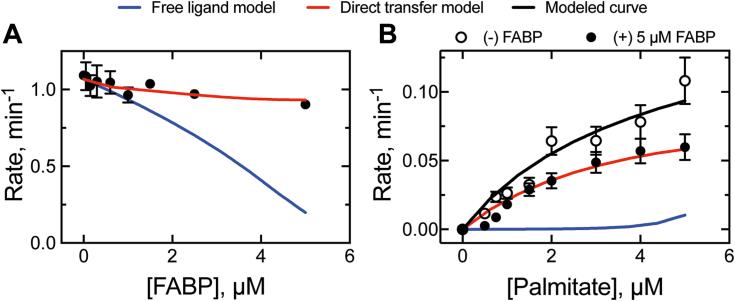
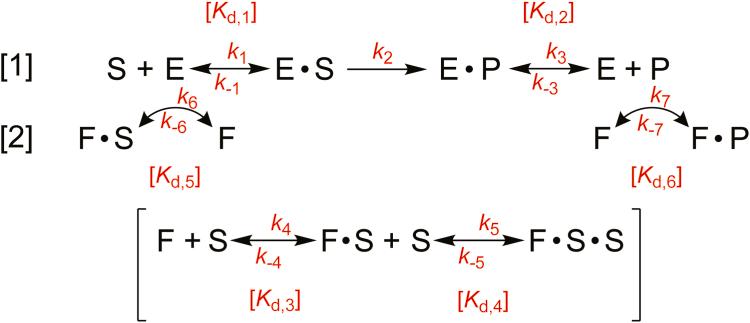
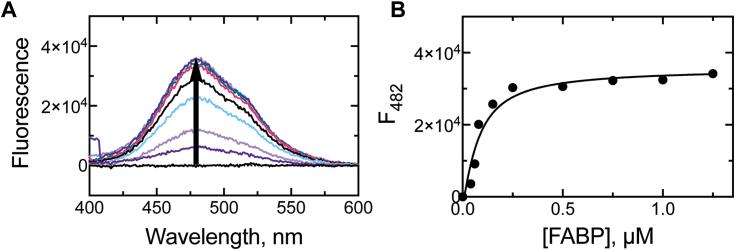
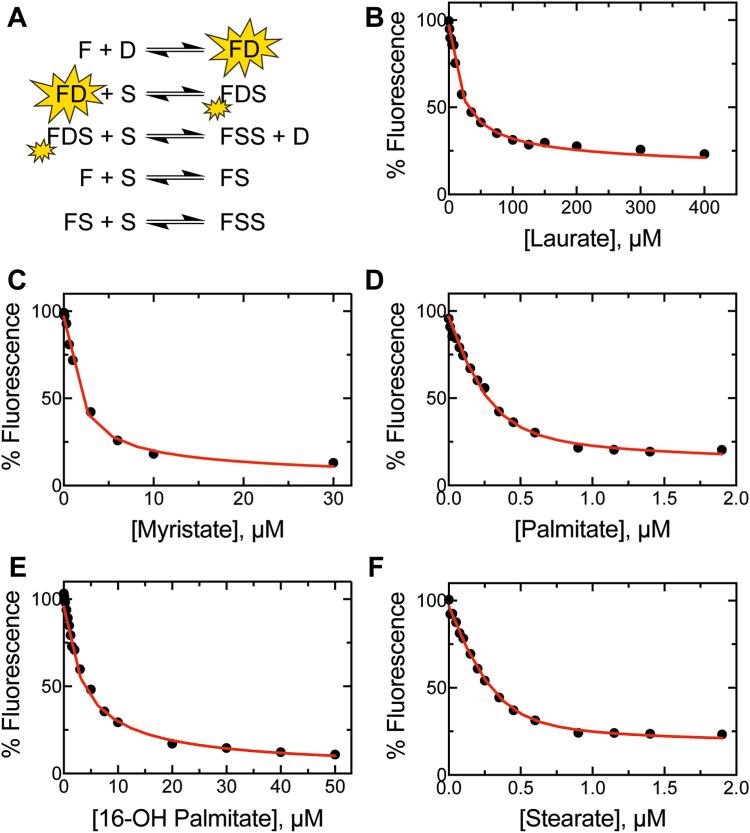
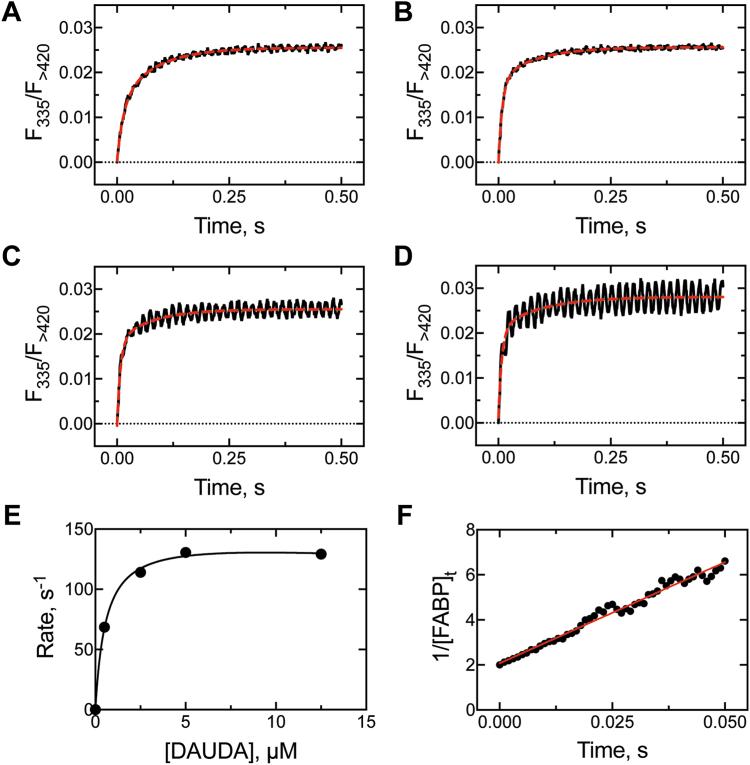
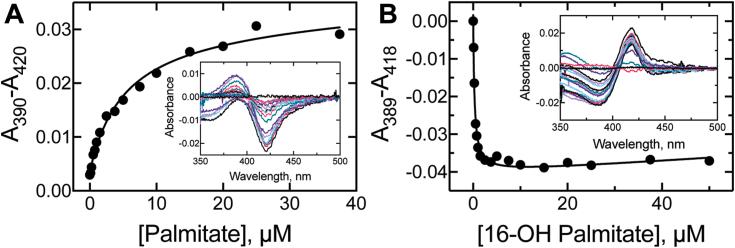
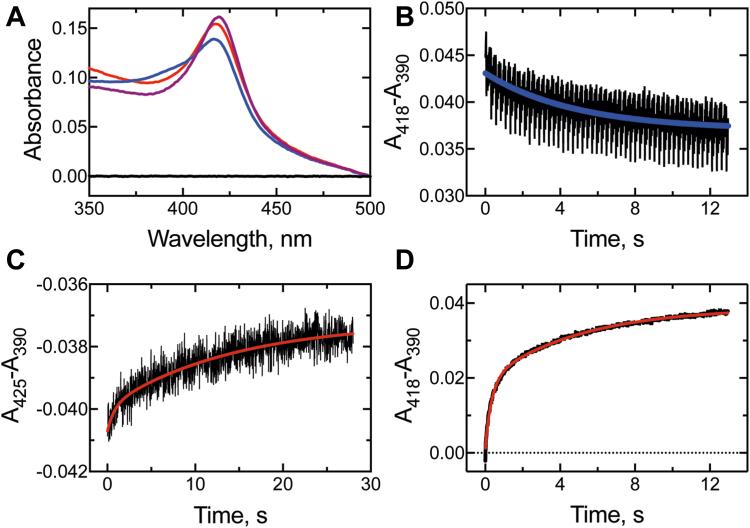
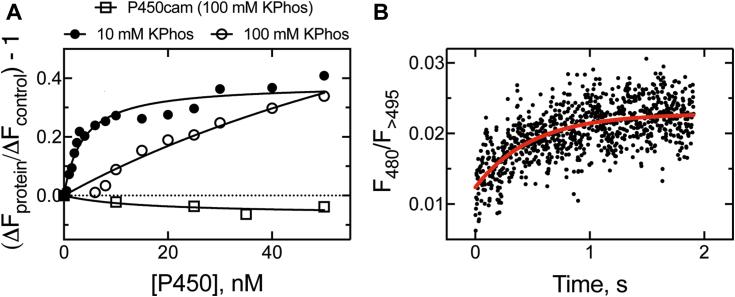
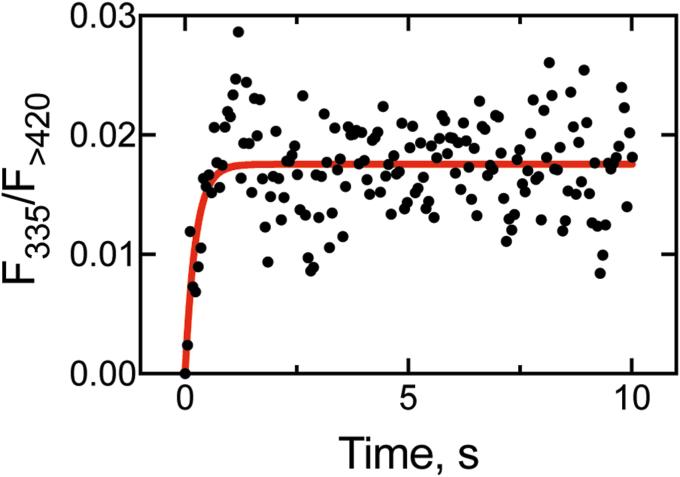
Cytochrome P450 (P450) 4A11 is a human P450 family 4 ω-oxidase that selectively catalyzes the hydroxylation of the terminal methyl group of fatty acids. Cytosolic lipids are the substrates for the enzyme but are considered to be primarily bound in cells by liver fatty acid binding protein (FABP1). Lipid binding to recombinant FABP1 with a fluorophore displacement assay showed substantial preference of FABP1 for ≥16-carbon fatty acids (K < 70 nM). Comparison of palmitate-binding studies revealed that FABP1 bound the lipid >100-fold more tightly than P450 4A11. Tight binding of P450 4A11 to Alexa-488 dye-labeled FABP1 was observed in fluorescence assays, and the interaction was dependent on ionic strength (K = 3-124 nM). Kinetic studies with Alexa-FABP1 indicated that the rate of protein-protein association is fast (∼2 s), and a palmitate delivery experiment suggested that substrate transfer (from FABP1 to P450) is not rate limiting. From these results, we constructed a kinetic model of the FABP1-P450 interaction and applied it to a catalytic study of FABP1 on P450 4A11 palmitate ω-hydroxylation, the results of which conclusively rejected the free ligand hypothesis. Our results are explained by a direct transfer model in which lipid-bound FABP1 interacts with P450 4A11, transfers the substrate, and a slower P450 conformational change follows to position the molecule in a mode for oxidation. Given the limited free lipid pool in vivo, interaction with FABP1 may be a dominant mechanism by which P450 4A11 accesses its substrates and may offer a novel means to target P450 4A11 activity.
细胞色素P450(P450)4A11是一种人类P450家族4的ω-氧化酶,可选择性催化脂肪酸末端甲基的羟基化反应。胞质脂质是该酶的底物,但在细胞中主要由肝脏脂肪酸结合蛋白(FABP1)结合。通过荧光团置换试验检测脂质与重组FABP1的结合情况,结果显示FABP1对≥16碳脂肪酸具有显著偏好(K<70 nM)。棕榈酸结合研究的比较表明,FABP1与脂质的结合比P450 4A11紧密100倍以上。在荧光试验中观察到P450 4A11与Alexa-488染料标记的FABP1紧密结合,且这种相互作用依赖于离子强度(K = 3 - 124 nM)。对Alexa-FABP1的动力学研究表明,蛋白质-蛋白质结合速率很快(约2秒),棕榈酸传递实验表明底物转移(从FABP1到P450)不是限速步骤。基于这些结果,我们构建了FABP1 - P450相互作用的动力学模型,并将其应用于FABP1对P450 4A11棕榈酸ω-羟基化的催化研究,结果明确否定了游离配体假说。我们的结果可用直接转移模型来解释,即脂质结合的FABP1与P450 4A11相互作用,转移底物,随后P450发生较慢的构象变化,使分子处于氧化模式。鉴于体内游离脂质池有限,与FABP1的相互作用可能是P450 4A11获取其底物的主要机制,并且可能提供一种靶向P450 4A11活性的新方法。


 Zotero 插件