
总抗氧化和氧化状态作为酒精过量的潜在生物标志物。
Total Antioxidant and Oxidative Status as Potential Biomarkers of Alcohol Overdose.
作者信息
Ptaszyńska-Sarosiek Iwona, Gołaś Edyta, Nesterowicz Miłosz, Niemcunowicz-Janica Anna, Zalewska Anna, Żendzian-Piotrowska Małgorzata, Maciejczyk Mateusz
机构信息
Department of Forensic Medicine, Medical University of Bialystok, 15-269 Bialystok, Poland.
Students Scientific Club "Biochemistry of Civilization Diseases" at the Department of Hygiene, Epidemiology and Ergonomics, Medical University of Bialystok, 15-269 Bialystok, Poland.
出版信息
Int J Mol Sci. 2024 Dec 25;26(1):82. doi: 10.3390/ijms26010082.
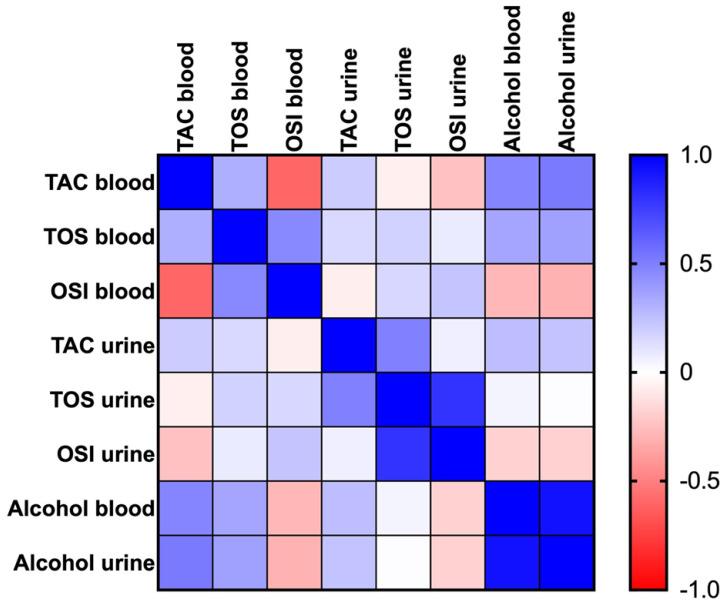
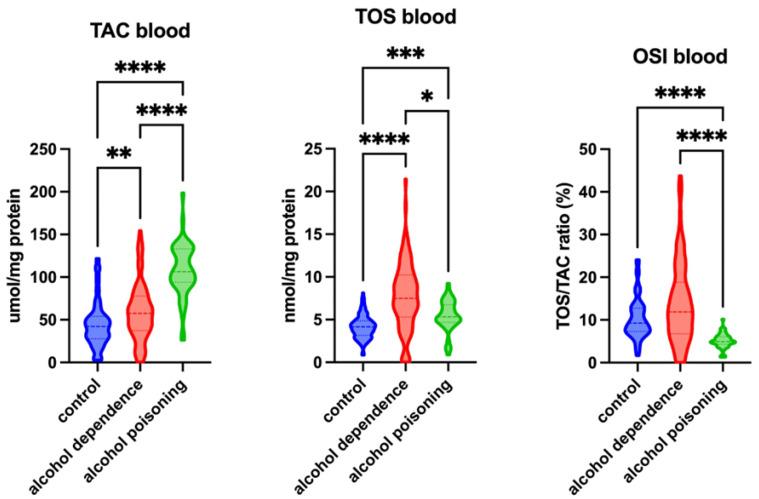
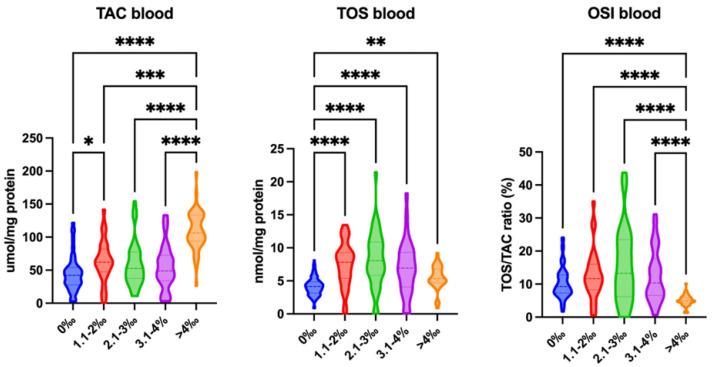
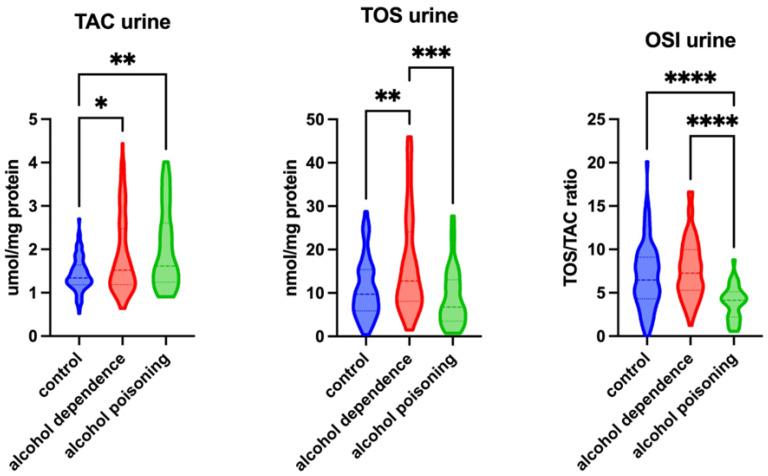
Serious alcohol-associated hazards underscore the need to develop new biomarkers reflecting the biological changes caused by chronic alcohol use and predicting the risk of alcohol-related death. Oxidative stress is one mechanism of alcohol toxicity. The blood and urine redox status (total antioxidant capacity [TAC], total oxidative status [TOS], and oxidative stress index [OSI]) was assessed in 105 people who died a sudden death (controls), 47 people who died of alcohol overdose, and 102 people with alcohol dependency. TAC and TOS were determined utilizing the colorimetric method. Non-parametric tests were used for statistical analysis. Blood and urine TAC levels were significantly elevated in individuals both with alcohol dependency and alcohol poisoning compared with controls. TOS levels were elevated in the blood of both study groups compared with the control group, and significantly higher in patients with alcohol dependency compared with the group with alcohol poisoning. TAC in the blood highly correlated with blood alcohol content. Receiver operating characteristic (ROC) analysis showed that the blood TAC effectively discriminated between individuals with alcohol poisoning and alcohol dependency with high sensitivity and specificity. Our study confirmed impaired redox homeostasis in people with alcoholism and indicated the utility of TAC, TOS, and OSI as biomarkers of alcohol exposure.
严重的酒精相关危害凸显了开发新生物标志物的必要性,这些生物标志物能够反映慢性酒精使用所引起的生物学变化,并预测酒精相关死亡的风险。氧化应激是酒精毒性的一种机制。对105例猝死人员(对照组)、47例死于酒精过量的人员以及102例酒精依赖者的血液和尿液氧化还原状态(总抗氧化能力 [TAC]、总氧化状态 [TOS] 和氧化应激指数 [OSI])进行了评估。采用比色法测定TAC和TOS。使用非参数检验进行统计分析。与对照组相比,酒精依赖者和酒精中毒者的血液和尿液TAC水平均显著升高。与对照组相比,两个研究组的血液TOS水平均升高,且酒精依赖患者的TOS水平显著高于酒精中毒组。血液中的TAC与血液酒精含量高度相关。受试者工作特征(ROC)分析表明,血液TAC能够以高灵敏度和特异性有效区分酒精中毒者和酒精依赖者。我们的研究证实了酗酒者体内氧化还原稳态受损,并表明TAC、TOS和OSI可作为酒精暴露的生物标志物。

 Zotero 插件