
一个β地中海贫血细胞生物样本库:更新情况、在基因与治疗研究中的进一步验证以及新冠疫情期间(及之后)的机遇
A β-Thalassemia Cell Biobank: Updates, Further Validation in Genetic and Therapeutic Research and Opportunities During (and After) the COVID-19 Pandemic.
作者信息
Gambari Roberto, Gamberini Maria Rita, Cosenza Lucia Carmela, Zuccato Cristina, Finotti Alessia
机构信息
Center "Chiara Gemmo and Elio Zago" for the Research on Thalassemia, Ferrara University, 44121 Ferrara, Italy.
Department of Life Sciences and Biotechnology, Ferrara University, 44121 Ferrara, Italy.
出版信息
J Clin Med. 2025 Jan 6;14(1):289. doi: 10.3390/jcm14010289.
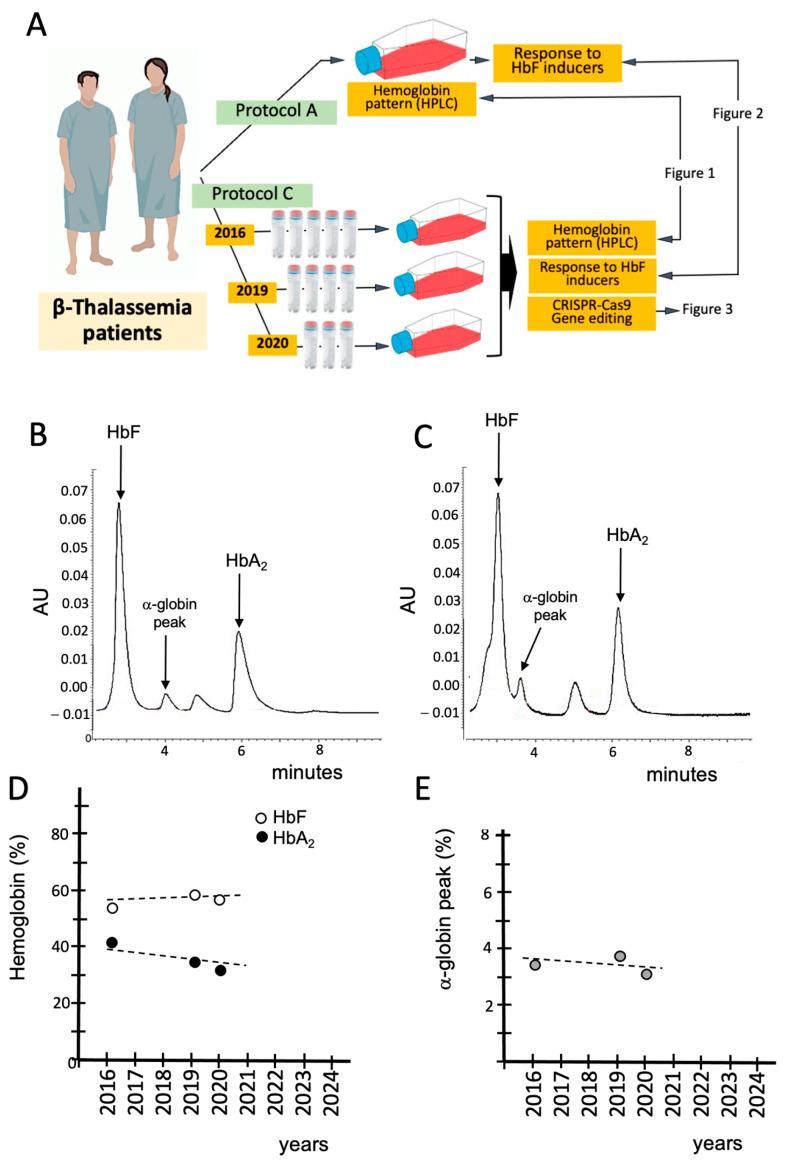
: Cellular biobanks are of great interest for performing studies finalized in the development of personalized approaches for genetic diseases, including β-thalassemia and sickle cell disease (SCD), important diseases affecting the hematopoietic system. These inherited genetic diseases are characterized by a global distribution and the need for intensive health care. The aim of this report is to present an update on the composition of a cellular Thal-Biobank, to describe its utilization since 2016, to present data on its application in studies on fetal hemoglobin induction and on gene editing, and to discuss its employment as a "unique tool" during and after the COVID-19 pandemic. : The methods were as follows: freezing, cryopreservation, long-term storage, and thawing of erythroid precursor cells from β-thalassemia patients; fetal hemoglobin (HbF) induction; CRISPR-Cas9 gene editing; HPLC analysis of the hemoglobin pattern. : The updated version of the Thal-Biobank is a cellular repository constituted of 990 cryovials from 221 β-thalassemia patients; the phenotype (pattern of hemoglobin production) is maintained after long-term storage; fetal hemoglobin induction and CRISPR-Cas9 gene editing can be performed using biobanked cells. In representative experiments using an isoxazole derivative as HbF inducer, the HbF increased from 13.36% to more than 60%. Furthermore, in CRIPR/Cas9 gene editing, de novo production of HbA was obtained (42.7% with respect to the trace amounts found in untreated cells). : The implemented Thal-Biobank was developed before the COVID-19 outbreak and should be considered a tool of great interest for researchers working on β-thalassemia, with the aim of developing innovative therapeutic protocols and verifying the impact of the COVID-19 pandemic on erythroid precursor cells.
细胞生物样本库对于开展旨在开发针对包括β地中海贫血和镰状细胞病(SCD)在内的遗传性疾病的个性化治疗方法的研究具有重要意义,这些疾病是影响造血系统的重要疾病。这些遗传性疾病具有全球分布的特点且需要强化医疗护理。本报告的目的是介绍细胞地中海贫血生物样本库的组成更新情况,描述其自2016年以来的使用情况,展示其在胎儿血红蛋白诱导研究和基因编辑研究中的应用数据,并讨论其在2019冠状病毒病大流行期间及之后作为“独特工具”的用途。
方法如下
对β地中海贫血患者的红系前体细胞进行冷冻、低温保存、长期储存和解冻;胎儿血红蛋白(HbF)诱导;CRISPR-Cas9基因编辑;血红蛋白模式的高效液相色谱分析。
更新后的地中海贫血生物样本库是一个细胞储存库,由来自221名β地中海贫血患者的990个冻存管组成;长期储存后表型(血红蛋白产生模式)得以维持;可使用生物样本库中的细胞进行胎儿血红蛋白诱导和CRISPR-Cas9基因编辑。在使用异恶唑衍生物作为HbF诱导剂的代表性实验中,HbF从13.36%增加到60%以上。此外,在CRIPR/Cas9基因编辑中,获得了HbA的从头产生(相对于未处理细胞中发现的痕量,为42.7%)。
已实施的地中海贫血生物样本库是在2019冠状病毒病爆发之前建立的,对于从事β地中海贫血研究的人员来说,应被视为一个极具价值的工具,其目的是开发创新治疗方案并验证2019冠状病毒病大流行对红系前体细胞的影响。


 Zotero 插件