
颞下颌关节紊乱症成年患者中枢敏化和躯体化的患病率——一项前瞻性观察研究
Prevalence of central sensitization and somatization in adults with temporomandibular disorders-a prospective observational study.
作者信息
Seweryn Piotr, Waliszewska-Prosol Marta, Straburzynski Marcin, Smardz Joanna, Orzeszek Sylwia, Bombala Wojciech, Bort Marta, Jenca Andrej, Paradowska-Stolarz Anna, Wieckiewicz Mieszko
机构信息
Department of Experimental Dentistry, Wroclaw Medical University, 50-425 Wroclaw, Poland.
Department of Neurology, Wroclaw Medical University, 50-556 Wroclaw, Poland.
出版信息
J Oral Facial Pain Headache. 2024 Dec;38(4):33-44. doi: 10.22514/jofph.2024.037. Epub 2024 Dec 12.
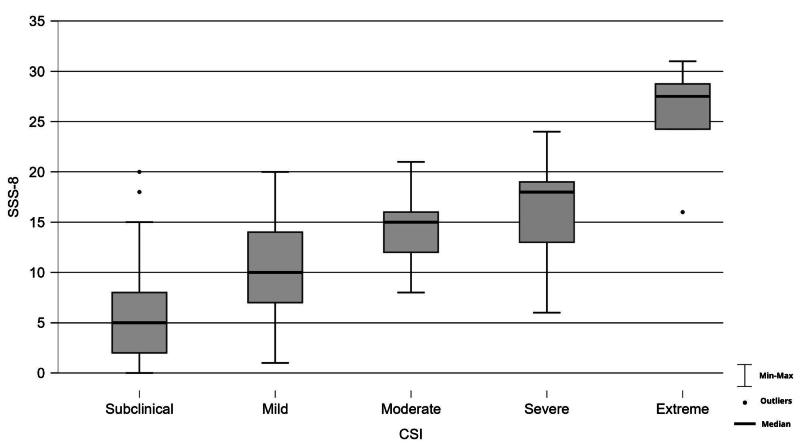
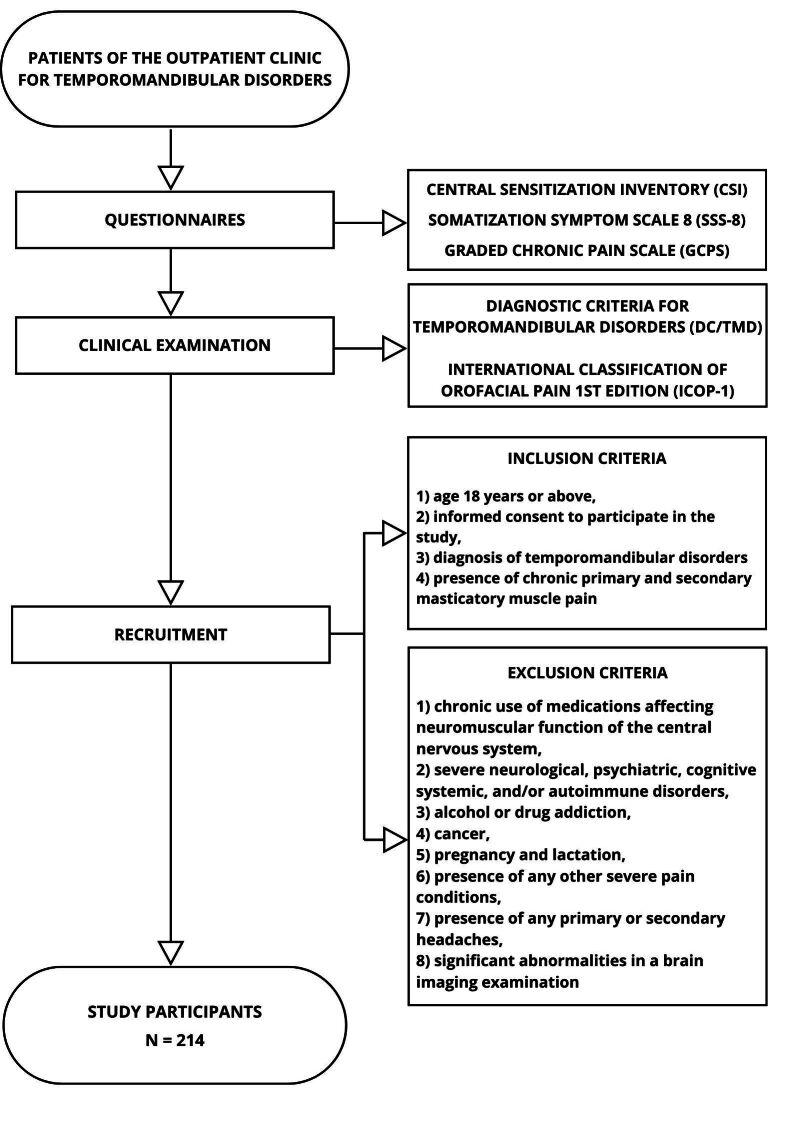
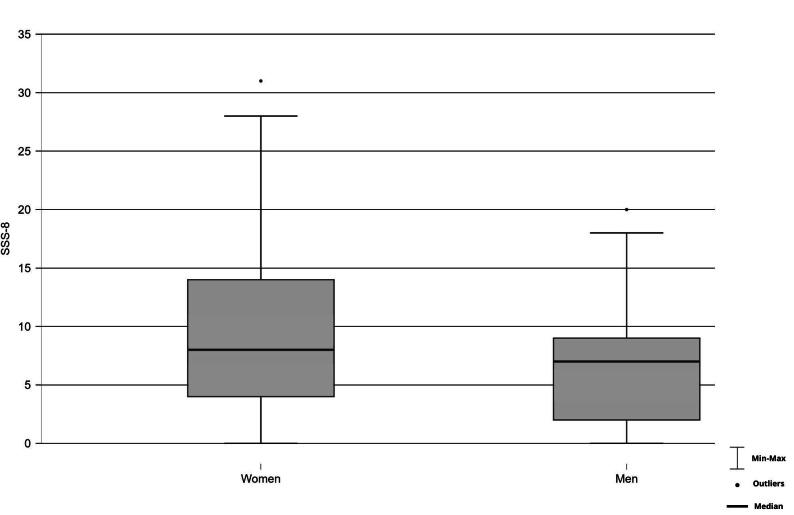
Temporomandibular disorders (TMD) comprise a group of conditions affecting the masticatory muscles, the temporomandibular joints and associated structures, often manifesting as orofacial pain and functional limitations of the mandible. Central sensitization (CS) is gaining increasing attention in research focused on pain syndromes and somatization, playing a significant role in the pain experience. This study investigates the prevalence of CS and somatization among TMD patients, analyzing their relationships with TMD diagnoses and the intensity of chronic masticatory muscle pain (MMP). A prospective observational study was conducted with 214 adult participants diagnosed with TMD, based on the Diagnostic Criteria for Temporomandibular Disorders (DC/TMD). The Central Sensitization Inventory (CSI) and the Somatic Symptom Scale-8 (SSS-8) were utilized to assess CS and the burden of somatic symptoms, respectively. Furthermore, the patients were assessed for MMP, and the average pain in these muscles was calculated. Statistical analysis investigated correlations between CSI and SSS-8 scores, specific TMD diagnoses and MMP intensity. Most participants did not surpass the subclinical level for CS as assessed by the CSI. Women reported higher SSS-8 scores than men, suggesting sex differences in somatic symptom reporting. No significant relationship was found between specific TMD diagnoses and levels of CS or the SSS-8. However, a significant correlation was observed between SSS-8 scores and the intensity of chronic MMP, underscoring the impact of the intensity of chronic MMP on the perception of somatic symptoms among TMD patients. Additionally, the group with subclinical levels of CS presented significantly lower SSS-8 scores than other groups. This study highlights a lower-than-expected prevalence of CS among TMD patients. Higher levels of somatization were related to higher levels of CS and greater MMP. The findings suggest that TMD management should not only address specific pain sources but also consider the broader psychosocial aspects of the disorders, especially in chronic types.
颞下颌关节紊乱病(TMD)是一组影响咀嚼肌、颞下颌关节及相关结构的病症,常表现为口面部疼痛和下颌功能受限。在聚焦于疼痛综合征和躯体化的研究中,中枢敏化(CS)越来越受到关注,在疼痛体验中发挥着重要作用。本研究调查了TMD患者中CS和躯体化的患病率,分析了它们与TMD诊断以及慢性咀嚼肌疼痛(MMP)强度之间的关系。基于颞下颌关节紊乱病诊断标准(DC/TMD),对214名被诊断为TMD的成年参与者进行了一项前瞻性观察研究。分别使用中枢敏化量表(CSI)和躯体症状量表-8(SSS-8)来评估CS和躯体症状负担。此外,对患者的MMP进行评估,并计算这些肌肉的平均疼痛程度。统计分析研究了CSI和SSS-8评分、特定TMD诊断与MMP强度之间的相关性。通过CSI评估,大多数参与者未超过CS的亚临床水平。女性报告的SSS-8评分高于男性,表明在躯体症状报告方面存在性别差异。未发现特定TMD诊断与CS水平或SSS-8之间存在显著关系。然而,观察到SSS-8评分与慢性MMP强度之间存在显著相关性,强调了慢性MMP强度对TMD患者躯体症状感知的影响。此外,CS处于亚临床水平的组的SSS-8评分显著低于其他组。本研究强调TMD患者中CS的患病率低于预期。较高水平的躯体化与较高水平的CS和更严重的MMP相关。研究结果表明,TMD的管理不仅应解决特定的疼痛来源,还应考虑这些病症更广泛的心理社会方面,尤其是在慢性类型中。

 Zotero 插件