
糖尿病领域中的经济激励、收入补充、现金转移和普遍基本收入干预措施:理解差异与有效性:一项范围综述
Financial Incentives, Income Supplementation, Cash Transfer, and Universal Basic Income Interventions in Diabetes: Understanding Differences and Effectiveness: A Scoping Review.
作者信息
Egede Leonard E, Campbell Jennifer A, Linde Sebastian, Walker Rebekah J
机构信息
Division of Population Health, Department of Medicine, Jacobs School of Medicine and Biomedical Sciences, University at Buffalo, Buffalo, NY.
Department of Health Policy and Management, School of Public Health, Texas A&M University, College Station, TX.
出版信息
Diabetes Care. 2025 Mar 1;48(3):306-323. doi: 10.2337/dci24-0072.
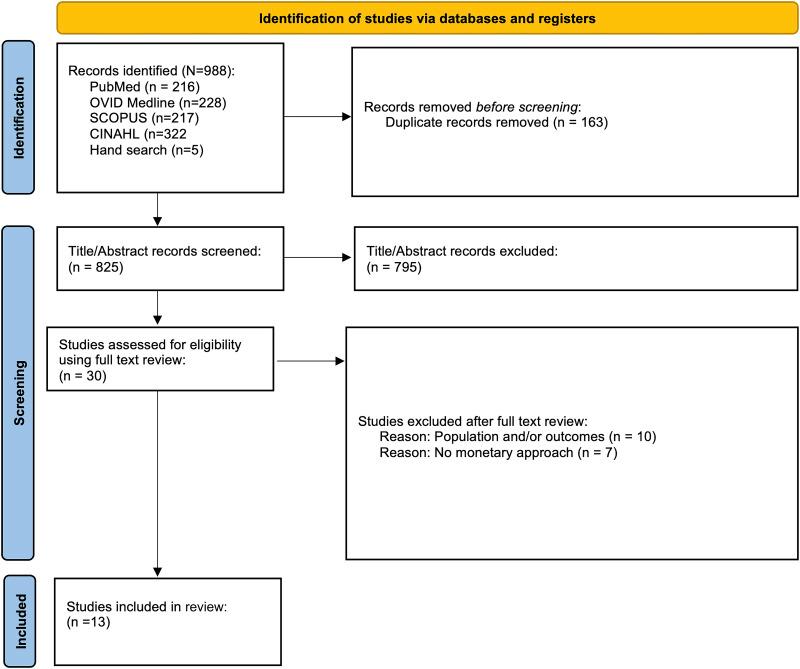
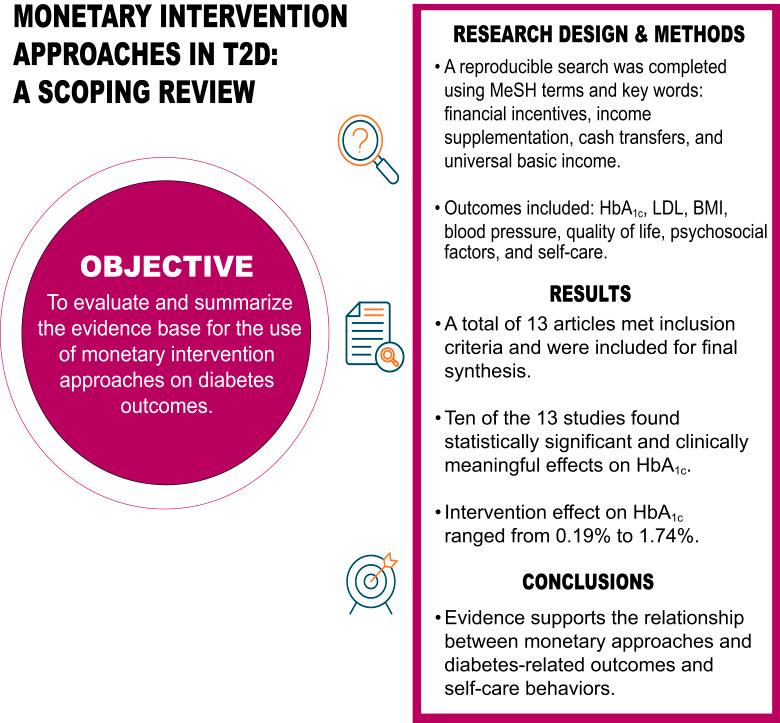
The objective of this review is to evaluate and summarize the evidence base for the effects of monetary intervention approaches (the use of positive monetary reinforcers and gains) on diabetes outcomes. A reproducible search using OVID Medline, PubMed, Scopus, and CINAHL was conducted. Articles published from database creation up to July 2024 were searched. Outcomes included hemoglobin A1c (HbA1c), LDL, BMI, blood pressure, quality of life (QOL), psychosocial factors, self-care behaviors, and diabetes complications. A total of 13 articles met inclusion criteria and were included for final synthesis. Looking at the monetary approach across each study, eight used financial incentives, three used a form of income supplementation, one used cash transfers, and one used a combination of income supplementation and financial incentives. Ten of the 13 studies found statistically significant and clinically meaningful changes in HbA1c. For participants receiving interventions, change in HbA1c ranged from 0.19% to 1.74% for interventions incorporating financial incentives, 0.7% to 1.3% for interventions incorporating income supplementation, and 0.2% to 0.7% for the study incorporating cash transfers. Overall, evidence supports the relationship between monetary approaches, diabetes-related outcomes, and self-care behaviors across monetary approaches. Future studies should consider comparison between different monetary approaches using designs that will allow identification of effective strategies. As these approaches are theoretically and structurally different, pathways identifying the underlying mechanisms of change are greatly needed to advance the field.
本综述的目的是评估和总结货币干预方法(使用积极的货币强化物和收益)对糖尿病结局影响的证据基础。我们使用OVID Medline、PubMed、Scopus和CINAHL进行了可重复的检索。检索了从数据库创建到2024年7月发表的文章。结局指标包括糖化血红蛋白(HbA1c)、低密度脂蛋白、体重指数、血压、生活质量(QOL)、心理社会因素、自我护理行为和糖尿病并发症。共有13篇文章符合纳入标准并被纳入最终综合分析。纵观各项研究中的货币干预方法,八项研究使用了经济激励措施,三项研究使用了某种形式的收入补贴,一项研究使用了现金转移支付,一项研究使用了收入补贴和经济激励措施的组合。13项研究中有10项发现HbA1c有统计学上显著且具有临床意义的变化。对于接受干预的参与者,在纳入经济激励措施的干预中,HbA1c的变化范围为0.19%至1.74%;在纳入收入补贴的干预中,变化范围为0.7%至1.3%;在纳入现金转移支付的研究中,变化范围为0.2%至0.7%。总体而言,证据支持货币干预方法、糖尿病相关结局以及不同货币干预方法下自我护理行为之间的关系。未来的研究应考虑使用能够确定有效策略的设计,对不同货币干预方法进行比较。由于这些方法在理论和结构上存在差异,非常需要确定潜在变化机制的途径,以推动该领域的发展。
 Zotero 插件