
再探传染性哭泣:一项使用红外热成像技术对婴儿情绪传染进行的跨文化调查。
Contagious Crying Revisited: A Cross-Cultural Investigation Into Infant Emotion Contagion Using Infrared Thermal Imaging.
作者信息
Vreden C, Renner E, Ainamani H E, Crowther R, Forward B, Mazari S, Tuohy G, Ndyareeba E, Clay Zanna
机构信息
Department of Psychology, Durham University, Durham, UK.
Department of Psychology, Northumbria University, Newcastle upon Tyne, UK.
出版信息
Dev Sci. 2025 Mar;28(2):e13608. doi: 10.1111/desc.13608.
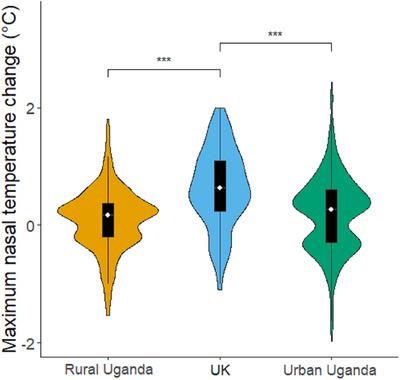
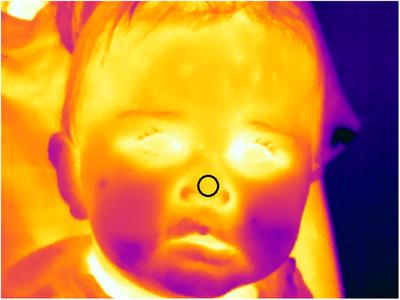
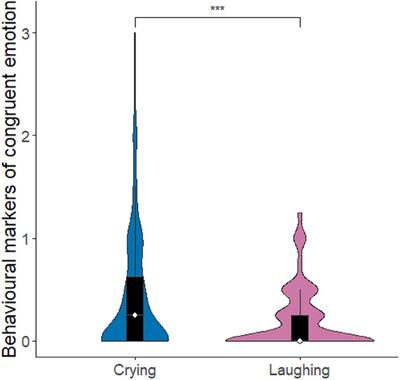
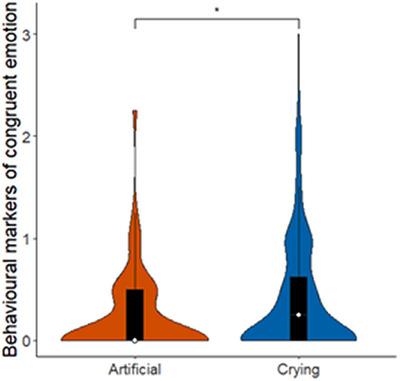
Contagious crying in infants has been considered an early marker of their sensitivity to others' emotions, a form of emotional contagion, and an early basis for empathy. However, it remains unclear whether infant distress in response to peer distress is due to the emotional content of crying or acoustically aversive properties of crying. Additionally, research remains severely biased towards samples from Europe and North America. In this study, we address both aspects by employing the novel and non-invasive method of infrared thermal imaging, in combination with behavioural markers of emotional contagion, to measure emotional arousal during a contagious crying paradigm in a cross-cultural sample of 10- to 11-month-old infants from rural and urban Uganda and the United Kingdom (N = 313). Infants heard social stimuli of positive, negative, and neutral emotional valence (infant laughing, crying, and babbling, respectively) and a non-social, acoustically matched artificial aversive sound. Results revealed that overall changes (as opposed to positive or negative) in infant nasal temperature were larger in response to crying and laughing compared to the artificial aversive sound and larger for crying than for babbling. Infants showed stronger behavioural responses for crying than for the artificial stimulus, as well as for crying than for laughing. Overall, our results support the view that infants within the first year of life experience emotional contagion in response to peer distress, an effect that is not just explained by the aversive nature of the stimuli. Sensitivity to others' emotional signals in the first year of life may provide the core building blocks for empathy.
婴儿的传染性哭泣一直被视为他们对他人情绪敏感的早期标志,一种情绪传染的形式,以及共情的早期基础。然而,尚不清楚婴儿对同伴痛苦的反应是由于哭泣的情感内容还是哭泣在声学上的厌恶特性。此外,研究仍然严重偏向于来自欧洲和北美的样本。在本研究中,我们通过采用新颖且非侵入性的红外热成像方法,并结合情绪传染的行为标记,来测量来自乌干达农村和城市以及英国的10至11个月大婴儿的跨文化样本在传染性哭泣范式中的情绪唤醒,以此解决这两个方面的问题(N = 313)。婴儿听到了具有积极、消极和中性情绪效价的社会刺激(分别为婴儿笑声、哭声和咿呀声)以及一种非社会性的、声学上匹配的人工厌恶声音。结果显示,与人工厌恶声音相比,婴儿对哭声和笑声的鼻温总体变化(而非正向或负向变化)更大,且对哭声的反应比对咿呀声的反应更大。与人工刺激相比,婴儿对哭声的行为反应更强,对哭声的反应也比对笑声的反应更强。总体而言,我们的结果支持这样一种观点,即一岁以内的婴儿会因同伴痛苦而产生情绪传染,这种效应不仅仅由刺激的厌恶性质来解释。生命第一年对他人情绪信号的敏感性可能为共情提供核心基石。



 Zotero 插件