
氨基胍、氨基脲和硫代氨基脲治疗甲基乙二醛诱导的实验模型神经毒性的比较评价
Comparative Evaluation of Aminoguanidine, Semicarbazide and Thiosemicarbazide Treatment for Methylglyoxal-Induced Neurological Toxicity in Experimental Models.
作者信息
Nikray Noushin, Abharian Nikoo, Jafari Ashtiani Shahin, Kobarfard Farzad, Faizi Mehrdad
机构信息
Department of Pharmacology and Toxicology, School of Pharmacy, Shahid Beheshti University of Medical Sciences, Tehran, Iran.
Department of Medicinal Chemistry, School of Pharmacy, Shahid Beheshti University of Medical Sciences, Tehran, Iran.
出版信息
Iran J Pharm Res. 2024 Oct 6;23(1):e153322. doi: 10.5812/ijpr-153322. eCollection 2024 Jan-Dec.
BACKGROUND
Advanced glycation end products (AGEs) are complex compounds that play a critical role in neurological disorders, including the pathogenesis of Alzheimer's disease. Methylglyoxal (MG) is recognized as the primary precursor of AGEs. Methylglyoxal is produced endogenously and also introduced through dietary exposures.
OBJECTIVES
This study aimed to investigate and compare the effects of aminoguanidine (AG), semicarbazide (SC), and thiosemicarbazide (TSC) on MG-induced neurological toxicity in rats.
METHODS
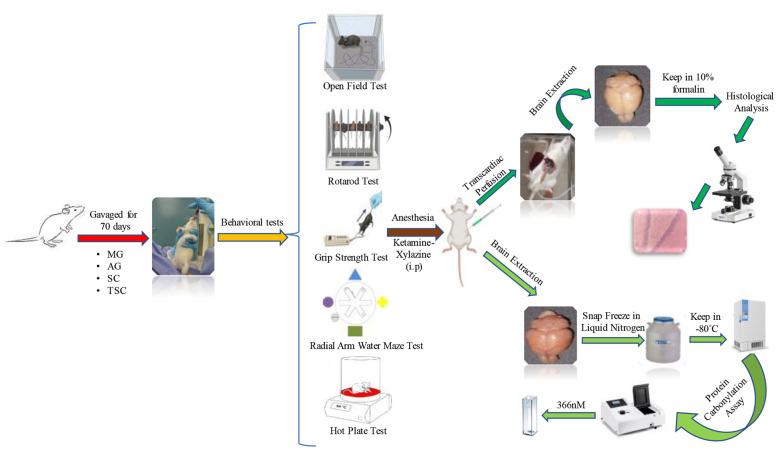
Male Wistar rats were exposed orally to MG, MG + AG, MG + SC, and MG + TSC for 70 days. Neurobehavioral, biochemical, and histopathological changes were evaluated.
RESULTS
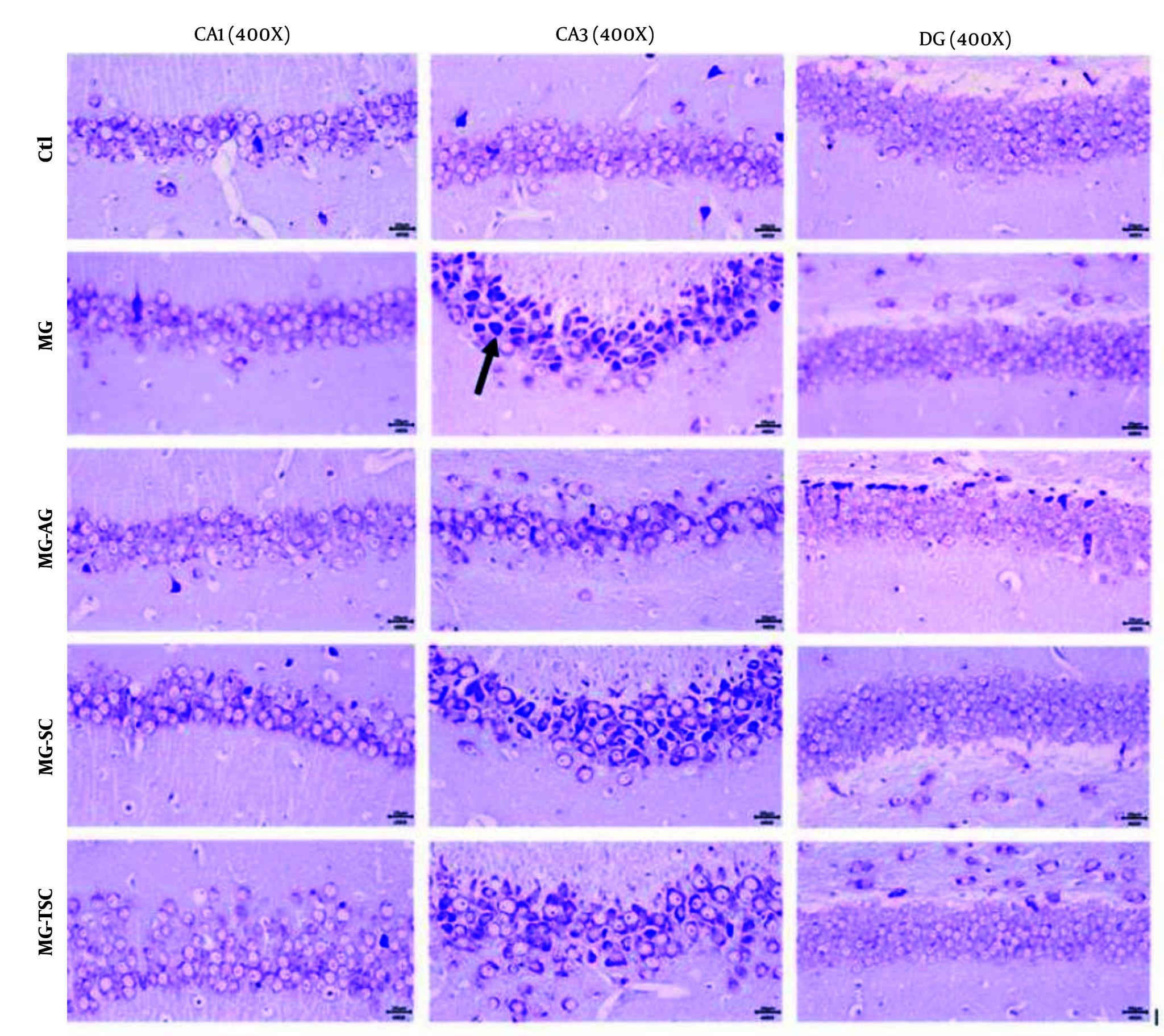
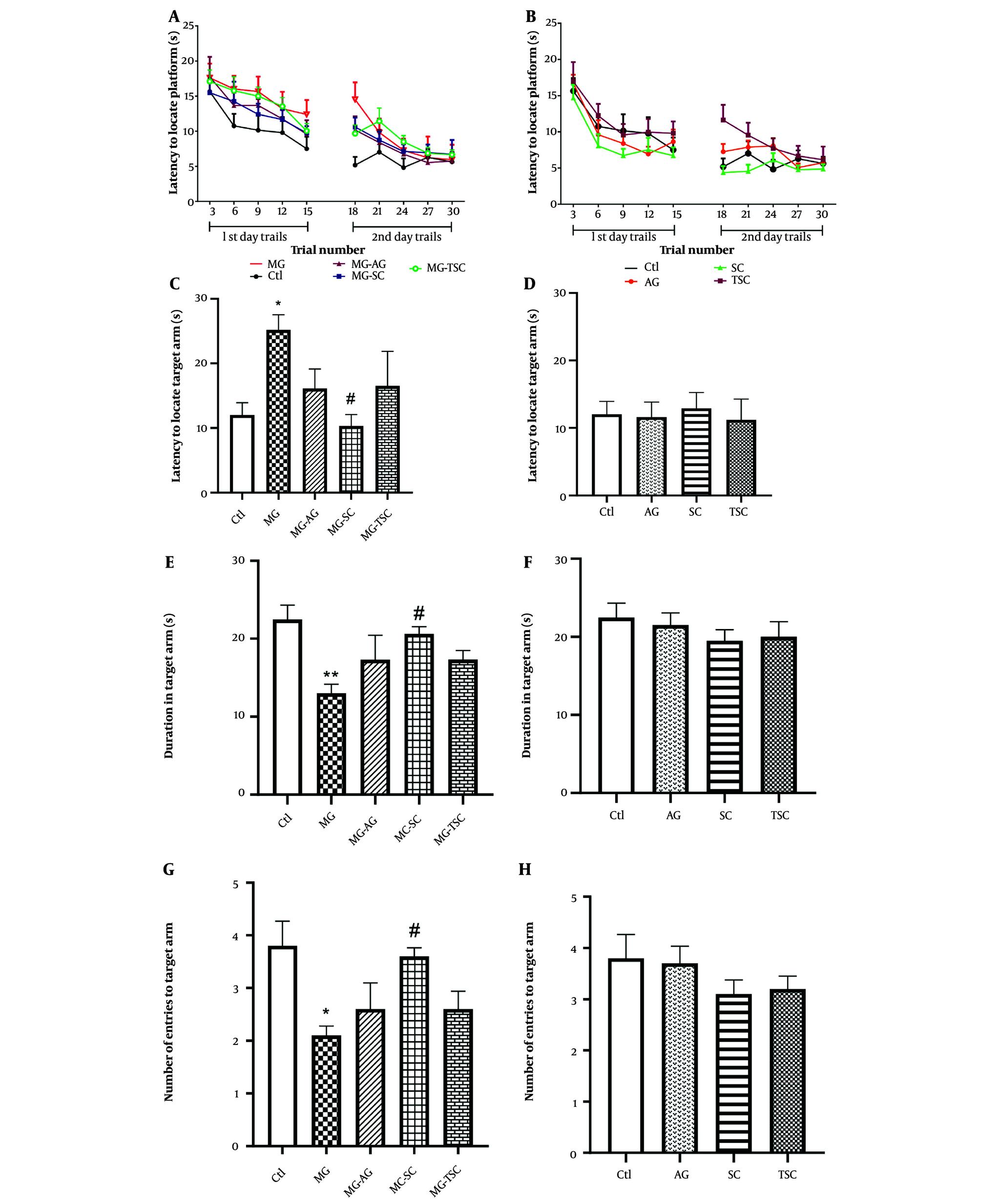
The findings indicated that oral administration of MG for 70 days resulted in memory impairment and increased anxiety in neurobehavioral tests. Additionally, MG elevated protein carbonylation in brain tissues. Semicarbazide was found to prevent MG-induced memory problems, while both SC and AG reduced carbonyl content in brain tissues. Aminoguanidine and TSC were effective in alleviating anxiety induced by MG exposure. Histopathological analysis revealed that MG caused cell damage and neuronal necrosis in the hippocampus, particularly in the cornu ammonis 1 and 3 (CA1 and CA3) and AG, SC, and TSC improved neuronal survival specifically in the CA1 and DG areas.
CONCLUSIONS
The data suggest that SC, AG, and TSC may offer neuroprotective effects against MG-induced neurobehavioral toxicity. Further studies are required to explore the mechanisms of action of these compounds.
背景
晚期糖基化终末产物(AGEs)是复杂的化合物,在神经疾病(包括阿尔茨海默病的发病机制)中起关键作用。甲基乙二醛(MG)被认为是AGEs的主要前体。甲基乙二醛可内源性产生,也可通过饮食接触引入。
目的
本研究旨在调查和比较氨基胍(AG)、氨基脲(SC)和硫代氨基脲(TSC)对MG诱导的大鼠神经毒性的影响。
方法
将雄性Wistar大鼠口服给予MG、MG + AG、MG + SC和MG + TSC,持续70天。评估神经行为、生化和组织病理学变化。
结果
研究结果表明,口服MG 70天会导致神经行为测试中的记忆障碍和焦虑增加。此外,MG会提高脑组织中的蛋白质羰基化水平。发现氨基脲可预防MG诱导的记忆问题而SC和AG均可降低脑组织中的羰基含量。氨基胍和TSC可有效减轻MG暴露诱导的焦虑。组织病理学分析显示,MG会导致海马体中的细胞损伤和神经元坏死,特别是在海马1和3区(CA1和CA3),而AG、SC和TSC可特异性改善CA1和齿状回(DG)区域的神经元存活。
结论
数据表明,SC、AG和TSC可能对MG诱导的神经行为毒性具有神经保护作用。需要进一步研究以探索这些化合物的作用机制。




 Zotero 插件