
煤矿火灾与大流行后的呼吸道症状:黑泽尔伍德健康研究成年队列的纵向分析
Respiratory symptoms after coalmine fire and pandemic: A longitudinal analysis of the Hazelwood Health Study adult cohort.
作者信息
Lane Tyler J, Carroll Matthew, Borg Brigitte M, McCaffrey Tracy A, Smith Catherine L, Gao Caroline X, Brown David, Johnson Amanda, Poland David, Allgood Shantelle, Ikin Jillian, Abramson Michael J
机构信息
School of Public Health and Preventive Medicine, Monash University, Melbourne, VIC, Australia.
Monash Rural Health Churchill, Monash University, Churchill, VIC, Australia.
出版信息
PLOS Glob Public Health. 2025 Jan 22;5(1):e0004186. doi: 10.1371/journal.pgph.0004186. eCollection 2025.
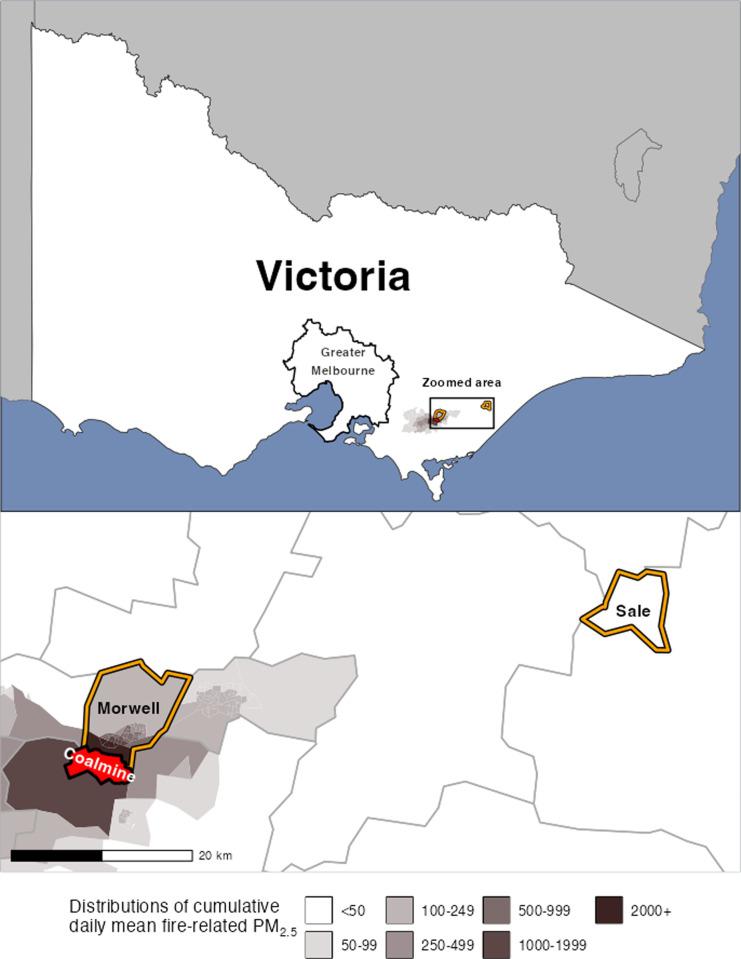
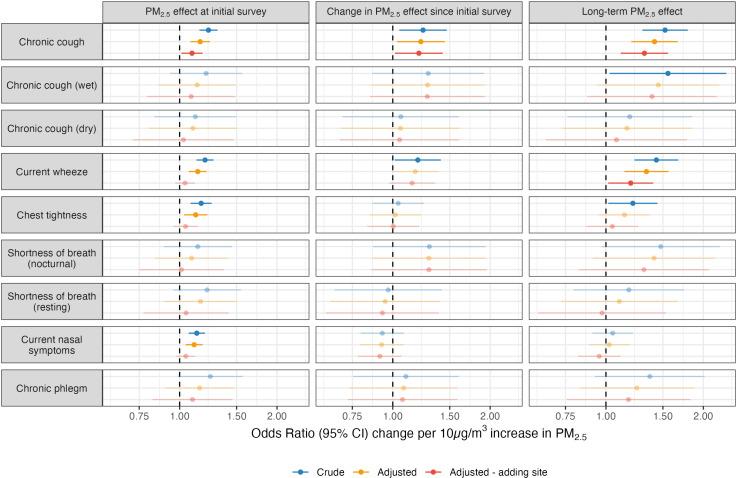
The aim of this study was to determine whether the effects of extreme but discrete PM2.5 exposure from a coal mine fire on respiratory symptoms abated, persisted, or worsened over time, and whether they were exacerbated by COVID-19. We analysed longitudinal survey data from a cohort residing near a 2014 coalmine fire in regional Australia. A 2016/2017 survey included 4,056 participants, of whom 612 were followed-up in 2022. Items included respiratory symptoms, history of COVID-19, and time-location diaries from the mine fire period, which were combined with geospatial and temporal models of fire-related PM2.5. Longitudinal effects of fire-related PM2.5 were examined using a mixed-effects logistic regression model. Exacerbation due to COVID-19 was examined using a logistic regression model. PM2.5 exposure was associated with chronic cough and possibly current wheeze, chest tightness, and current nasal symptoms 2-3 years post-fire, and chronic cough and current wheeze 8.5-9 years post-fire. Further, the association between PM2.5 and chronic cough and possibly current wheeze appeared to increase between the survey periods. While there were no detectable interactions between PM2.5 and COVID-19, PM2.5 exposure was associated with additional respiratory symptoms among participants who reported a history of COVID-19. In summary, medium-duration exposure to extreme levels of fire-related PM2.5 may have increased the long-term risk of chronic cough and current wheeze. While the COVID-19 pandemic started several years after the mine fire, contracting this illness may have exacerbated the effect of fire-related PM2.5 through development of additional respiratory symptoms.
本研究的目的是确定煤矿火灾导致的极端但离散的细颗粒物(PM2.5)暴露对呼吸道症状的影响是否会随着时间的推移而减轻、持续或恶化,以及这些影响是否会因2019冠状病毒病(COVID-19)而加剧。我们分析了澳大利亚地区一个居住队列的纵向调查数据,该队列居住在2014年发生煤矿火灾的附近地区。2016/2017年的调查包括4056名参与者,其中612人在2022年接受了随访。调查项目包括呼吸道症状、COVID-19病史以及煤矿火灾期间的时间-地点日记,并将这些与火灾相关的PM2.5的地理空间和时间模型相结合。使用混合效应逻辑回归模型研究火灾相关PM2.5的纵向影响。使用逻辑回归模型研究COVID-19导致的症状加重情况。PM2.5暴露与火灾后2至3年的慢性咳嗽以及可能的当前喘息、胸闷和当前鼻部症状有关,与火灾后8.5至9年的慢性咳嗽和当前喘息有关。此外,在不同调查期间,PM2.5与慢性咳嗽以及可能的当前喘息之间的关联似乎有所增加。虽然PM2.5与COVID-19之间没有可检测到的相互作用,但在报告有COVID-19病史的参与者中,PM2.5暴露与额外的呼吸道症状有关。总之,中等时长暴露于极端水平的火灾相关PM2.5可能增加了慢性咳嗽和当前喘息的长期风险。虽然COVID-19大流行在煤矿火灾发生几年后才开始,但感染这种疾病可能通过引发额外的呼吸道症状而加剧了火灾相关PM2.5的影响。

 Zotero 插件