
基于荧光激活分选福尔马林固定石蜡包埋组织的H3K27ac分析及超级增强子分析的改进染色质免疫沉淀测序
Improved ChIP Sequencing for H3K27ac Profiling and Super-Enhancer Analysis Assisted by Fluorescence-Activated Sorting of Formalin-Fixed Paraffin-Embedded Tissues.
作者信息
Jiang Nenggang, Wen Zhihao, Tao Huan, Liao Hongyan
机构信息
Department of Laboratory Medicine, West China Hospital of Sichuan University, Chengdu, 610041, China.
Department of Hematology, West China Hospital of Sichuan University, Chengdu, 610041, China.
出版信息
Biol Proced Online. 2025 Jan 22;27(1):1. doi: 10.1186/s12575-025-00262-9.
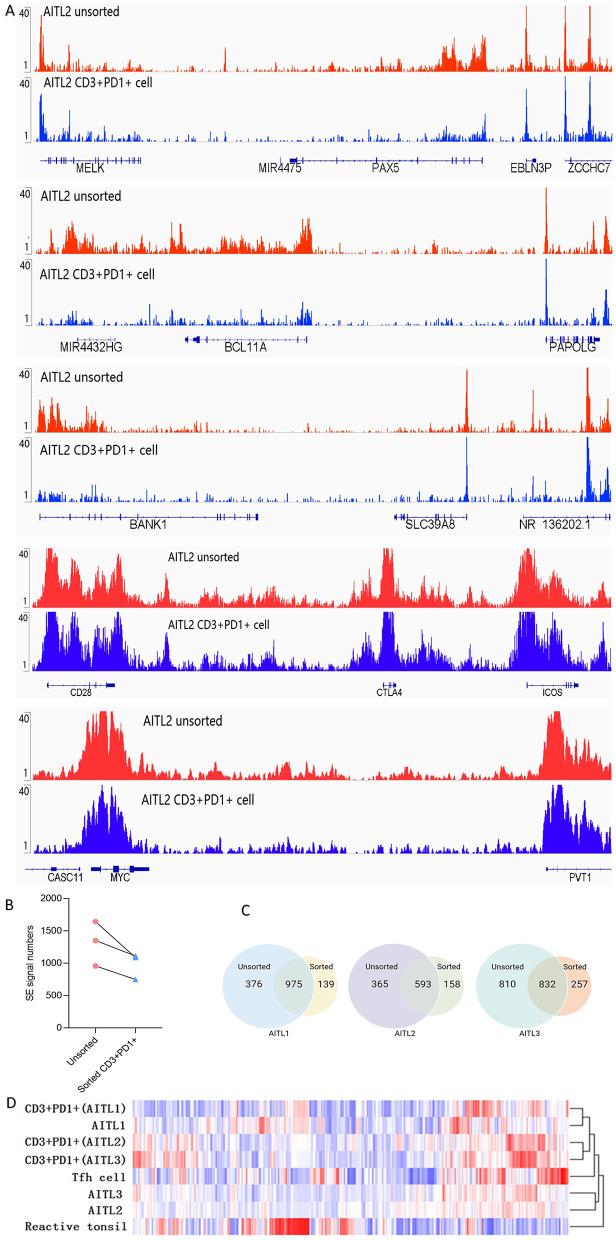
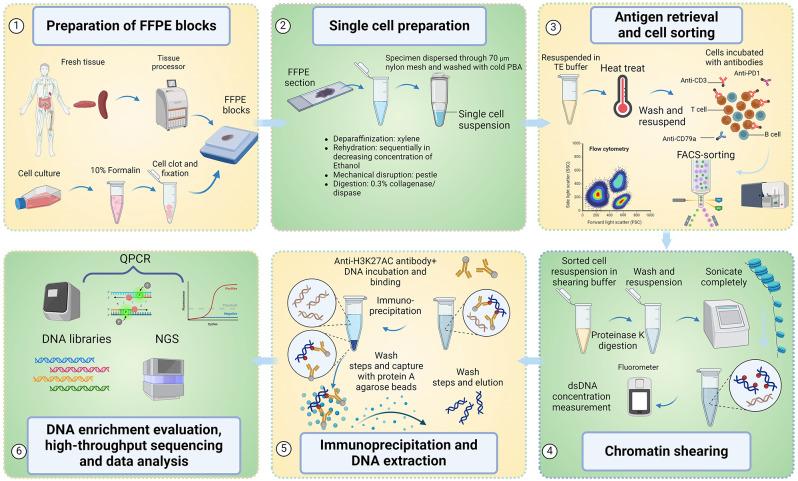
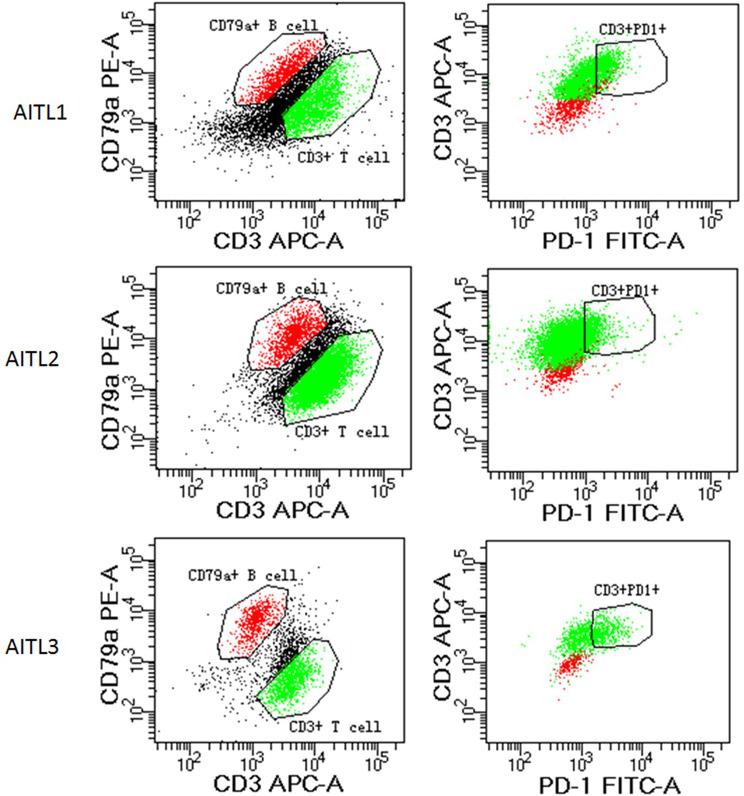
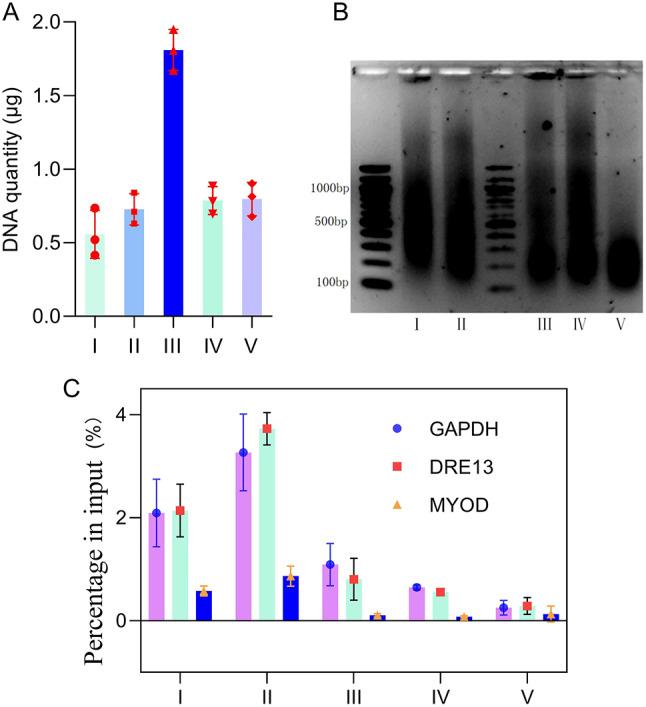
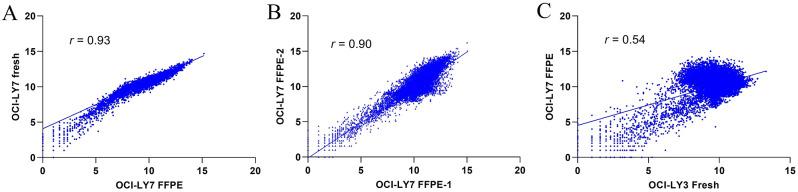
Archived clinical formalin-fixed paraffin-embedded tissue (FFPE) is valuable for the study of tumor epigenetics. Although protocol of chromatin immunoprecipitation coupled with next generation sequencing (NGS) (ChIP-seq) using FFPE samples has been established, removal of interference signals from non-target cell components in the samples is still needed. In this study, the protocol of ChIP-seq with purified cells from FFPE lymphoid tissue of nodal T follicular helper cell lymphoma, angioimmunoblastic type (nTFHL-AI) after fluorescence-activated cell sorting (FACS) was established and optimized. Essential steps included single cell preparation, heat treatment enhancing antigen retrieval and labeling, cell sorting, chromatin shearing, ChIP and NGS. Through assistance of FACS, we successfully isolated tumor cells from FFPE lymph node samples of nTFHL-AI and profiled super-enhancers (SEs) mapping by enrichment of H3K27ac signals. The data indicated that the SEs mapping of the sorted cells was different from that of the entire unsorted tissue sample. The H3K27ac signals with cell lineage specificity from background cell components were successfully removed, and the remaining SEs mapping was more similar to T follicular helper cell in an unsupervised clustering analysis, rather than the primary tissue. In addition, we also evaluated the protocol using cultured pure cell lines, and the results indicated that the sequencing data obtained through this protocol had high fidelity and reproducibility. These results show that ChIP-seq for H3K27ac profiling and SEs mapping assisted by FACS with pathological FFPE tissue is available for research of histone modification. Precise epigenetic characteristics of the tumor cell can be described with this protocol.
存档的临床福尔马林固定石蜡包埋组织(FFPE)对于肿瘤表观遗传学研究具有重要价值。尽管已经建立了使用FFPE样本进行染色质免疫沉淀结合下一代测序(NGS)(ChIP-seq)的方案,但仍需要去除样本中非靶细胞成分的干扰信号。在本研究中,建立并优化了在荧光激活细胞分选(FACS)后,对血管免疫母细胞型淋巴结T滤泡辅助细胞淋巴瘤(nTFHL-AI)的FFPE淋巴组织中的纯化细胞进行ChIP-seq的方案。基本步骤包括单细胞制备、热处理增强抗原修复和标记、细胞分选、染色质剪切、ChIP和NGS。通过FACS的辅助,我们成功地从nTFHL-AI的FFPE淋巴结样本中分离出肿瘤细胞,并通过富集H3K27ac信号对超级增强子(SEs)进行定位分析。数据表明,分选细胞的SEs定位与整个未分选组织样本的定位不同。成功去除了背景细胞成分中具有细胞谱系特异性的H3K27ac信号,在无监督聚类分析中,剩余的SEs定位更类似于T滤泡辅助细胞,而不是原始组织。此外,我们还使用培养的纯细胞系评估了该方案,结果表明通过该方案获得的测序数据具有高保真度和可重复性。这些结果表明,通过FACS辅助对病理FFPE组织进行H3K27ac分析和SEs定位的ChIP-seq可用于组蛋白修饰研究。该方案可以描述肿瘤细胞精确的表观遗传特征。
 Zotero 插件