
新型快速凝固且机械强度高的含二甲双胍释放的磷酸钙盖髓水泥,用于增强牙髓干细胞活性
Novel Fast-Setting and Mechanically-Strong Calcium Phosphate Pulp-Capping Cement with Metformin Release to Enhance Dental Pulp Stem Cells.
作者信息
Alenizy Mohammad, Alhussein Abdullah, Almutairi Nader, Ba-Armah Ibrahim, Ma Tao, Wang Suping, Pilli Nageswara R, Kane Maureen A, Weir Michael D, Schneider Abraham, Xu Hockin H K
机构信息
Dental Biomedical Sciences Ph.D. Program, Graduate School, University of Maryland, Baltimore, MD 21201, USA.
Department of Biomaterials and Regenerative Dental Medicine, University Maryland School of Dentistry, Baltimore, MD 21201, USA.
出版信息
Bioengineering (Basel). 2024 Dec 28;12(1):13. doi: 10.3390/bioengineering12010013.
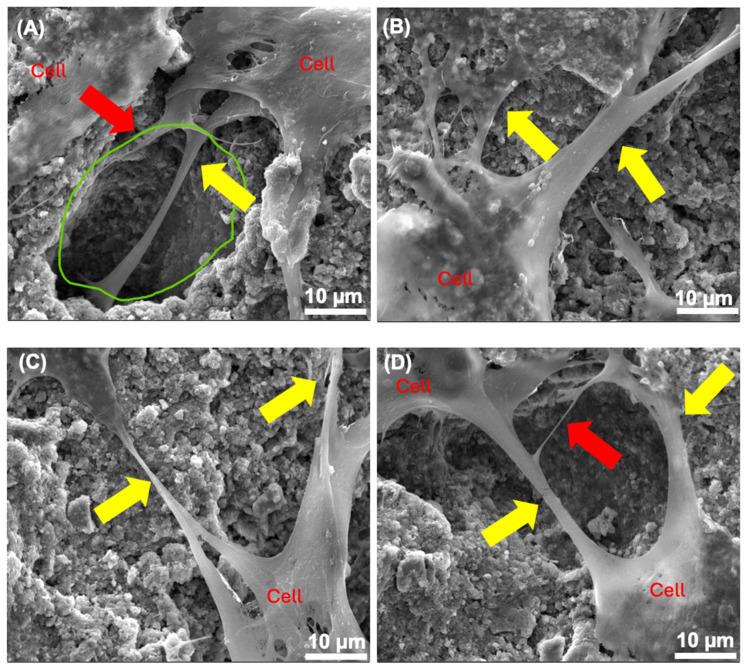
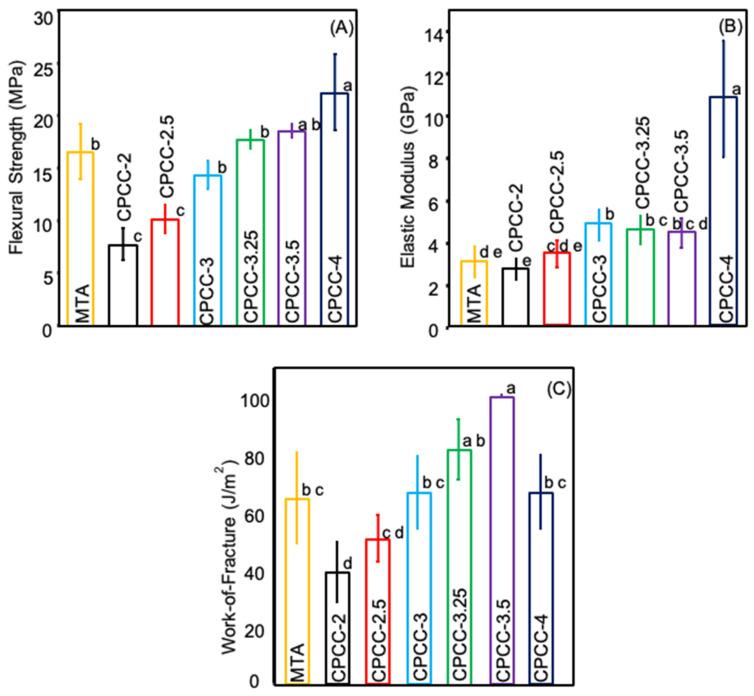
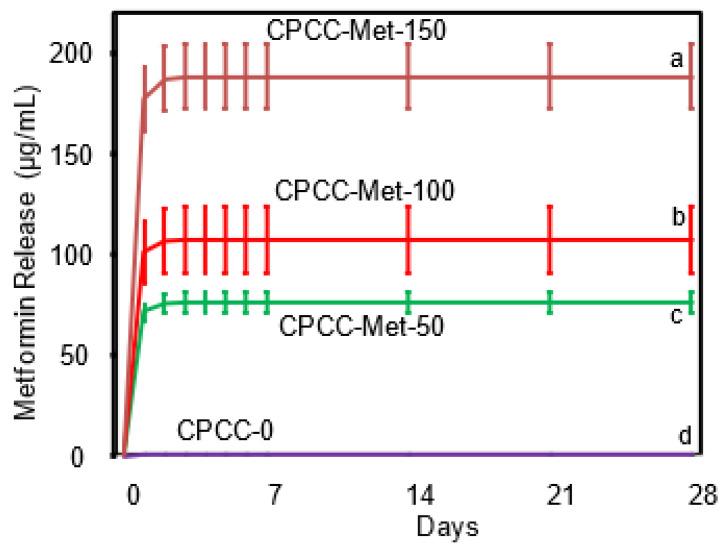
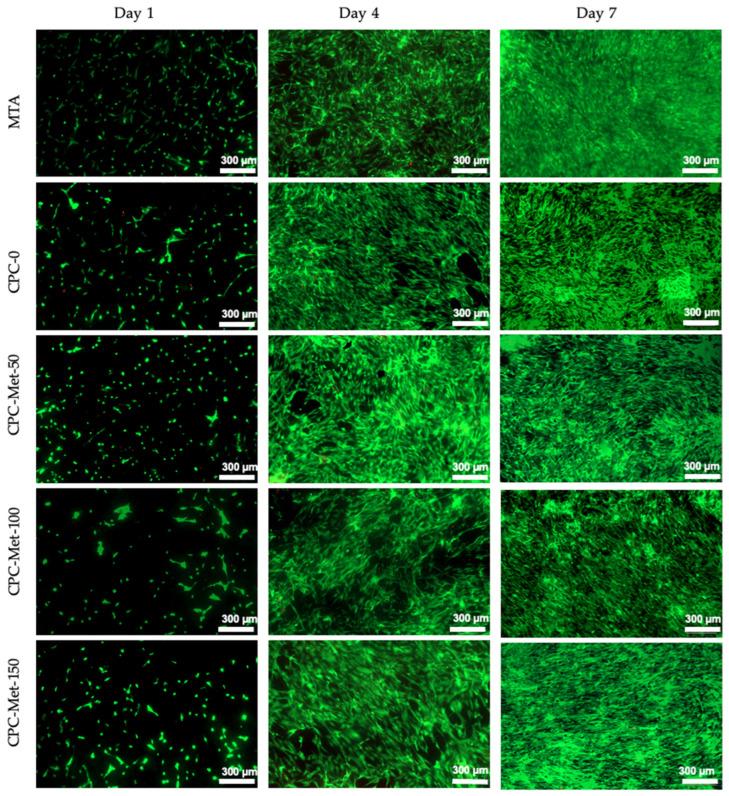
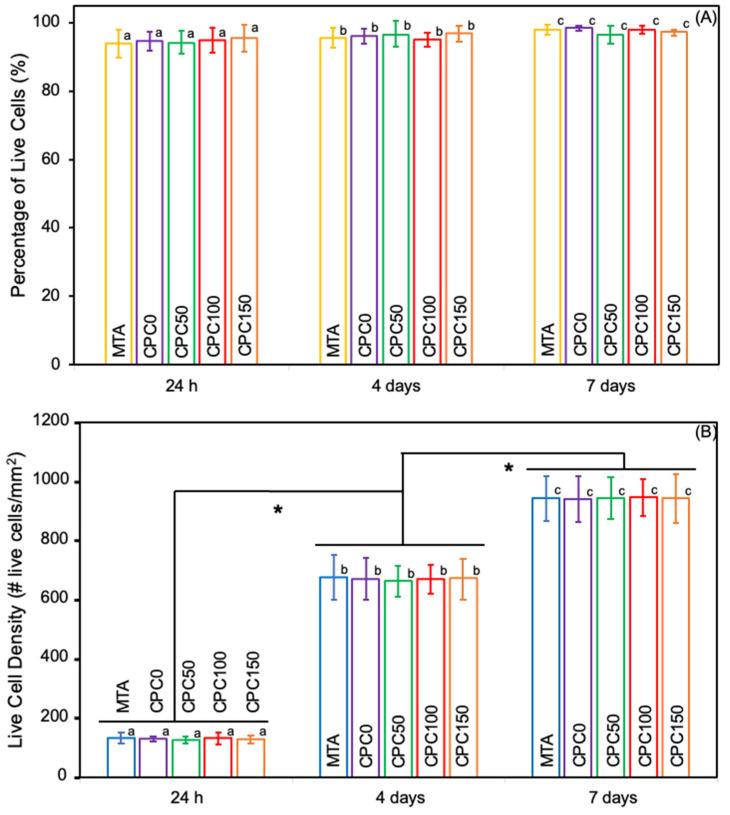
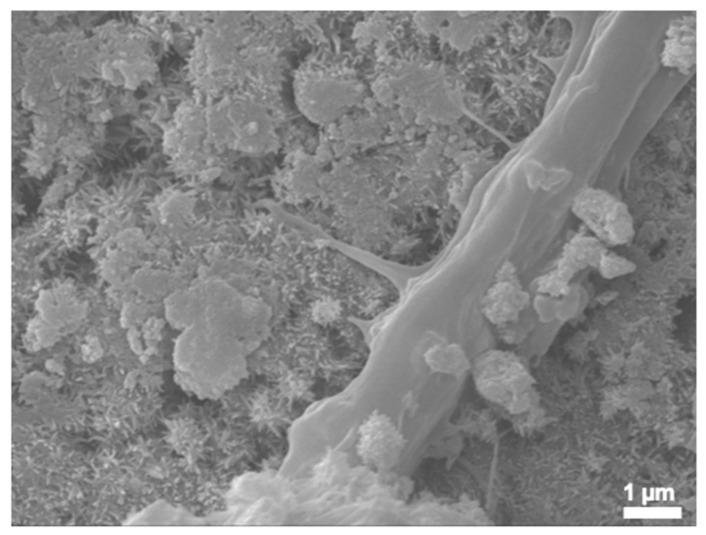
Traditional pulp-capping materials like mineral trioxide aggregate (MTA) offer excellent biocompatibility and sealing, but limitations such as prolonged setting time, low bioactivity, and high costs persist. Metformin, with its potential in craniofacial regeneration, could enhance dentin synthesis by targeting pulp cells. This study aimed to: (1) develop a calcium phosphate cement with chitosan (CPCC) with improved physio-mechanical properties; (2) incorporate metformin (CPCC-Met) to assess release; and (3) evaluate human dental pulp stem cells (hDPSCs) response. CPCC was mixed at different powder-to-liquid ratios to evaluate physio-mechanical properties compared to MTA. The optimized CPCC formulation was loaded with 0, 50, 100, and 150 µg of metformin to measure release and assess hDPSCs attachment and proliferation (1, 4, and 7 d) via live/dead imaging and SEM. One-way ANOVA was used for statistical analysis. Results showed CPCC at a 3.25:1 ratio significantly reduced setting time to 41.5 min versus 123 min for MTA ( < 0.05). Metformin release correlated with concentration, and SEM confirmed the presence of a porous, hydroxyapatite-rich surface. Cell viability was consistently high across groups (>93% at 1 d, >95% at 4 d, ≈98% at 7 d), with no significant differences ( > 0.05). These findings suggest that the novel CPCC-Met demonstrates promise as a fast-setting, cost-effective pulp-capping material, offering metformin delivery to enhance dentin repair.
传统的盖髓材料如三氧化矿物凝聚体(MTA)具有出色的生物相容性和密封性,但仍存在诸如凝固时间长、生物活性低和成本高等局限性。二甲双胍在颅面再生方面具有潜力,可通过作用于牙髓细胞来增强牙本质合成。本研究旨在:(1)开发一种具有改善物理机械性能的壳聚糖磷酸钙骨水泥(CPCC);(2)加入二甲双胍(CPCC-Met)以评估其释放情况;(3)评估人牙髓干细胞(hDPSCs)的反应。将CPCC以不同的粉液比混合,与MTA相比评估其物理机械性能。将优化后的CPCC配方分别加载0、50、100和150μg的二甲双胍,以测量其释放情况,并通过活/死成像和扫描电子显微镜评估hDPSCs的附着和增殖(1、4和7天)。采用单因素方差分析进行统计分析。结果显示,CPCC在3.25:1的比例下,凝固时间显著缩短至41.5分钟,而MTA为123分钟(<0.05)。二甲双胍的释放与浓度相关,扫描电子显微镜证实存在多孔、富含羟基磷灰石的表面。各组细胞活力始终较高(1天时>93%,4天时>95%,7天时≈98%),无显著差异(>0.05)。这些发现表明,新型的CPCC-Met作为一种快速凝固、经济高效的盖髓材料具有潜力,可提供二甲双胍以促进牙本质修复。


 Zotero 插件