
新型更明亮生物发光报告基因的筛选与工程改造以及用于哺乳动物细胞pH传感的颜色可调荧光素酶
Selection and Engineering of Novel Brighter Bioluminescent Reporter Gene and Color- Tuning Luciferase for pH-Sensing in Mammalian Cells.
作者信息
Bevilaqua Vanessa R, Pelentir Gabriel F, Hausen Moema A, Duek Eliana A R, Viviani Vadim R
机构信息
Biomaterials Laboratory, Medical and Health Sciences Faculty, Pontifical University Catholic of São Paulo (PUC-SP), Sorocaba 18060-030, SP, Brazil.
Laboratory of Biochemistry, Molecular Biology and Bioluminescent Systems Technology, Department of Physics, Chemistry and Mathematics, Federal University of Sao Carlos (UFSCAR), Rodovia João Leme dos Santos, km 110, Sorocaba 18052-780, SP, Brazil.
出版信息
Biosensors (Basel). 2025 Jan 4;15(1):18. doi: 10.3390/bios15010018.
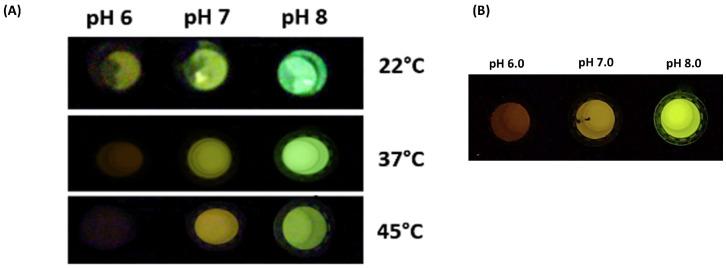
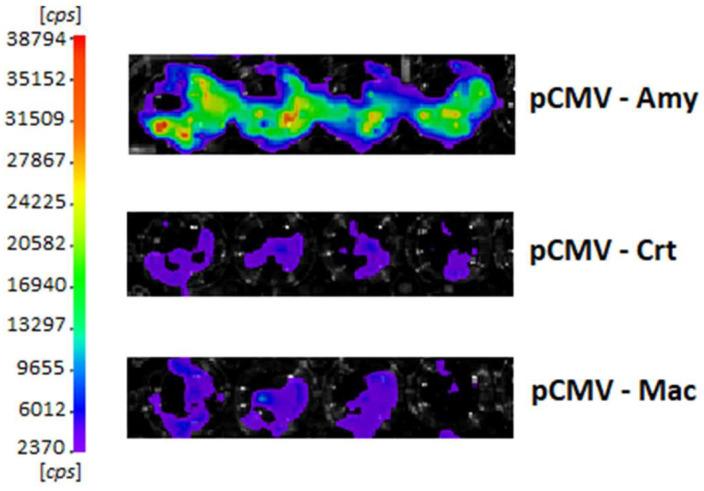
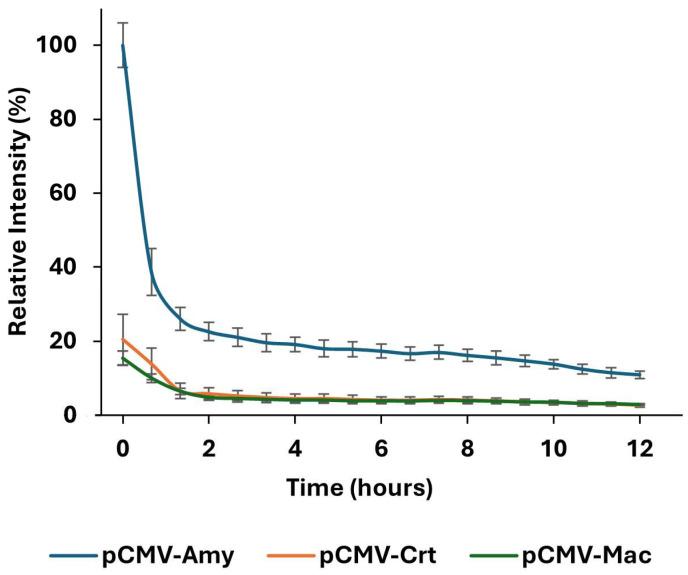
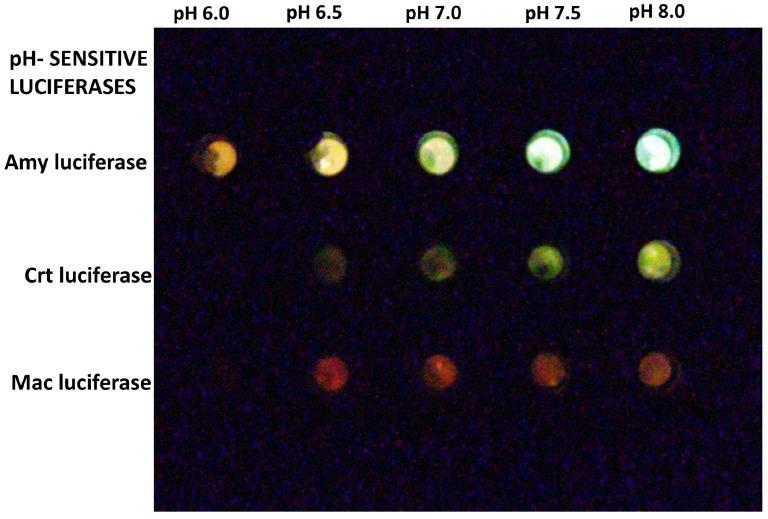
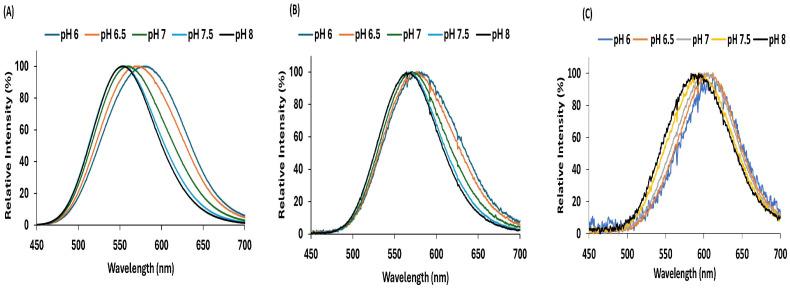
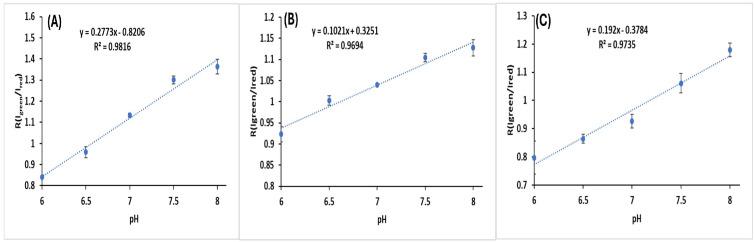
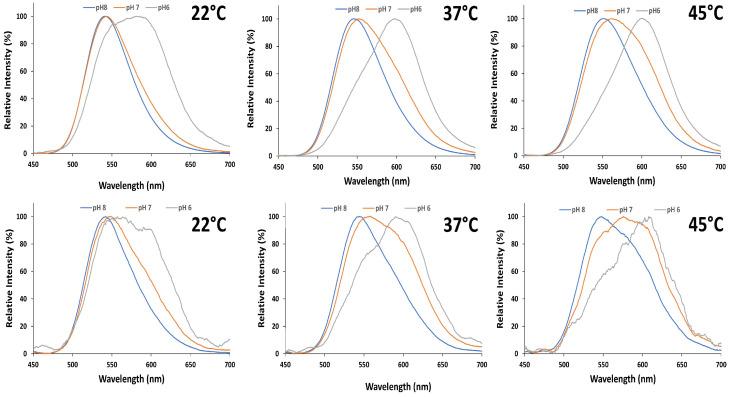
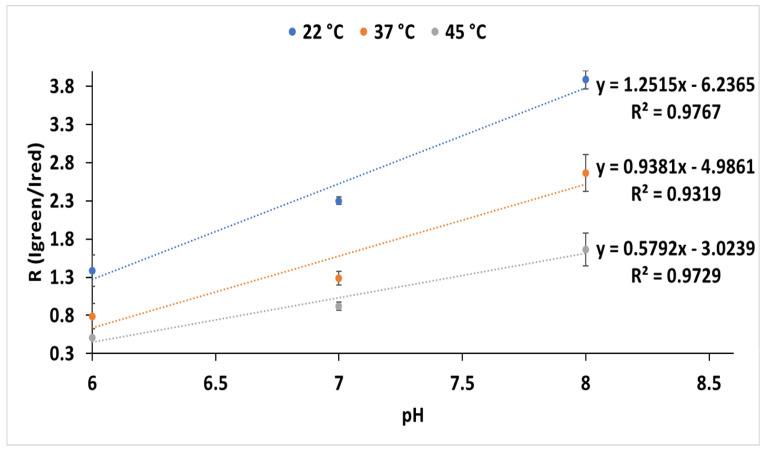
Firefly luciferases have been extensively used for bioanalytical applications, including their use as bioluminescent reporters, biosensors, and for bioimaging biological and pathological processes. Due to their intrinsic pH- sensitivity, in recent years we have demonstrated that firefly luciferases can also be harnessed as color- tuning sensors of intracellular pH. However, it is known that mammalian cells require temperatures higher than 36 °C, which red-shift the bioluminescence spectra of most firefly luciferases, decreasing their activities and the resolution of ratiometric pH analysis. Therefore, we prospected and engineered novel pH-sensitive firefly luciferases for mammalian cells. We humanized the luciferases of (Amy-Luc) and (Crt-Luc) fireflies, inserted them into the pCDNA3 vector, and compared their bioluminescence and pH-sensing properties with those of firefly luciferase (Mac-Luc) inside fibroblasts. The transfected COS-1 with Mac-Luc and Crt-Luc displayed lower bioluminescence activity and considerably red-shifted spectra (611 and 564 nm, respectively) at 37 °C, whereas Amy-Luc displayed the highest bioluminescence activity and spectral stability at 37 °C inside cells, displaying the most blue-shifted spectrum at such temperatures (548 nm) and the best spectral resolution at different pH values, making it possible to ratiometrically estimate the pH from 6.0 to 8.0. These results show that Amy-Luc is a novel brighter reporter gene and suitable pH- indicator for mammalian cells. Furthermore, whereas at pH 8.0 the spectrum was thermally stable, at pH 6.0 Amy-Luc showed higher temperature sensitivity, raising the possibility of using this luciferase as an intracellular temperature sensor. Thus, the improved bioluminescence properties as compared to existing luciferases could offer advantages for in vivo imaging and pH- sensing for the study of mammalian cellular physiology.
萤火虫荧光素酶已被广泛用于生物分析应用,包括用作生物发光报告基因、生物传感器以及用于生物成像生物和病理过程。由于其固有的pH敏感性,近年来我们已证明萤火虫荧光素酶还可作为细胞内pH的颜色调节传感器。然而,已知哺乳动物细胞需要高于36°C的温度,这会使大多数萤火虫荧光素酶的生物发光光谱发生红移,降低其活性和比率pH分析的分辨率。因此,我们探索并设计了适用于哺乳动物细胞的新型pH敏感萤火虫荧光素酶。我们对(Amy-Luc)和(Crt-Luc)萤火虫的荧光素酶进行了人源化改造,将它们插入pCDNA3载体,并在成纤维细胞内将其生物发光和pH传感特性与萤火虫荧光素酶(Mac-Luc)进行了比较。用Mac-Luc和Crt-Luc转染的COS-1在37°C时显示出较低的生物发光活性和明显红移的光谱(分别为611和564nm),而Amy-Luc在细胞内37°C时显示出最高的生物发光活性和光谱稳定性,在此温度下显示出最蓝移的光谱(548nm)以及在不同pH值下最佳的光谱分辨率,从而能够通过比率法估计pH值在6.0至8.0之间。这些结果表明Amy-Luc是一种新型的更亮的报告基因和适用于哺乳动物细胞的pH指示剂。此外,虽然在pH 8.0时光谱是热稳定的,但在pH 6.0时Amy-Luc显示出更高的温度敏感性,增加了将这种荧光素酶用作细胞内温度传感器的可能性。因此,与现有荧光素酶相比,其改善的生物发光特性可为体内成像和pH传感研究哺乳动物细胞生理学提供优势。
 Zotero 插件