
植物抗菌肽及其主要家族与作用:文献综述
Plant Antimicrobial Peptides and Their Main Families and Roles: A Review of the Literature.
作者信息
de Oliveira Samuel Salomão Silva, Cherene Milena Bellei, Taveira Gabriel Bonan, de Oliveira Mello Érica, de Oliveira Carvalho André, Gomes Valdirene Moreira
机构信息
Laboratório de Fisiologia e Bioquímica de Microrganismos, Universidade Estadual do Norte Fluminense Darcy Ribeiro, Rio de Janeiro 28013-602, Brazil.
出版信息
Curr Issues Mol Biol. 2024 Dec 24;47(1):1. doi: 10.3390/cimb47010001.
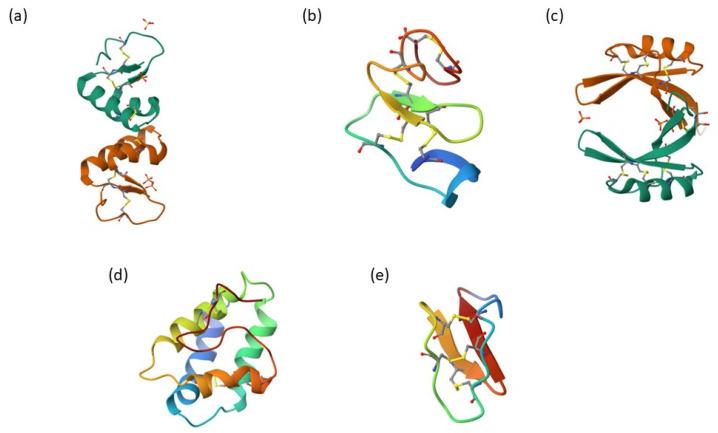
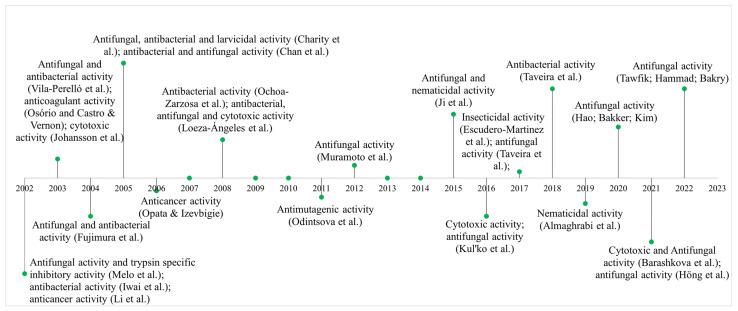
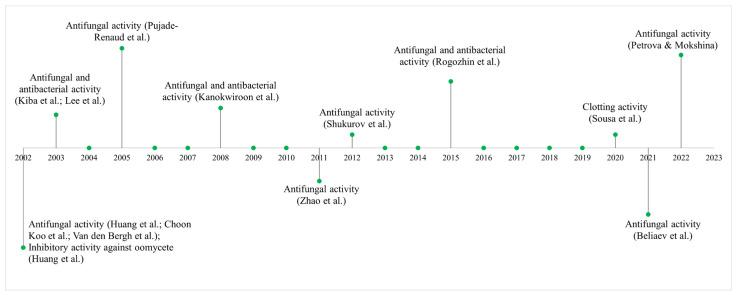
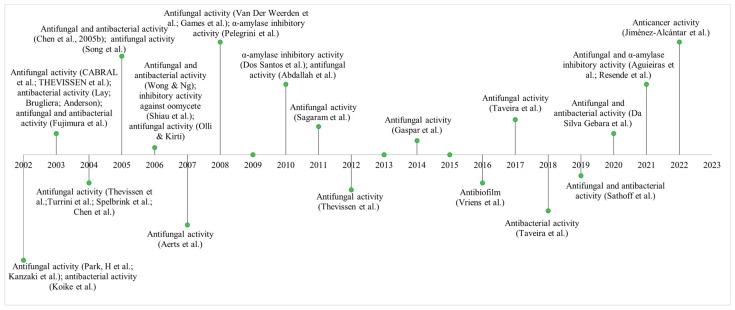
Antimicrobial peptides (AMPs) are constituent molecules of the innate defense system and are naturally produced by all organisms. AMPs are characterized by a relatively low molecular weight (less than 10 kDa) and a variable number of cysteine residues that form disulfide bonds and contribute to the stabilization of the tertiary structure. In addition, there is a wide repertoire of antimicrobial agents against bacteria, viruses, fungi, and protozoa that can provide a large number of prototype peptides for study and biochemical manipulation. In this sense, plant AMPs stand out because they have a wide range of biological functions against microorganisms and potential applications in medicine and agriculture. Herein, we describe a mini-review of the principal AMP families, such as defensins, lipid transfer proteins (LTPs), thionins, heveins, and cyclotides. The objective of this work was to present the main discoveries regarding the biological activities of these plant AMP families, especially in the last 20 years. We also discuss the current knowledge of their biological activities, gene expression, and possible uses as antimicrobial molecules and in plant biotechnology.
抗菌肽(AMPs)是天然免疫系统的组成分子,由所有生物体自然产生。抗菌肽的特点是分子量相对较低(小于10 kDa),半胱氨酸残基数量可变,这些残基形成二硫键并有助于三级结构的稳定。此外,有多种针对细菌、病毒、真菌和原生动物的抗菌剂,可为研究和生化操作提供大量原型肽。从这个意义上说,植物抗菌肽脱颖而出,因为它们对微生物具有广泛的生物学功能,并在医学和农业中有潜在应用。在此,我们对主要的抗菌肽家族进行简要综述,如防御素、脂质转移蛋白(LTPs)、硫堇、橡胶素和环肽。这项工作的目的是介绍关于这些植物抗菌肽家族生物学活性的主要发现,特别是在过去20年中的发现。我们还讨论了它们生物学活性、基因表达的现有知识,以及作为抗菌分子和在植物生物技术中的可能用途。

 Zotero 插件