
2型和3型脊髓性肌萎缩症患儿的白质完整性降低和脑网络中断。
Reduced white matter integrity and disrupted brain network in children with type 2 and 3 spinal muscular atrophy.
作者信息
Nie Huirong, Lan Shasha, Wang Huan, Xiang Pei, Yan Mengzhen, Fan Yang, Shen Wanqing, Li Yijuan, Tang Wen, Yang Zhiyun, Liang Yujian, Chen Yingqian
机构信息
Department of Radiology, The First Affiliated Hospital of Sun Yat-sen University, No 58 Zhongshan 2nd Road, Guangzhou, 510080, China.
Department of Pediatric Intensive Care Unit, The First Affiliated Hospital of Sun Yat-sen University, No 58 Zhongshan 2nd Road, Guangzhou, 510080, China.
出版信息
J Neurodev Disord. 2025 Jan 24;17(1):3. doi: 10.1186/s11689-025-09592-x.
BACKGROUND
Spinal muscular atrophy (SMA) is caused by reduced expression of survival motor neuron (SMN) protein. Previous studies indicated SMA causes not only lower motor neuron degeneration but also extensive brain involvement. This study aimed to investigate the changes of brain white matter and structural network using diffusion tensor imaging (DTI) in children with type 2 and 3 SMA.
METHODS
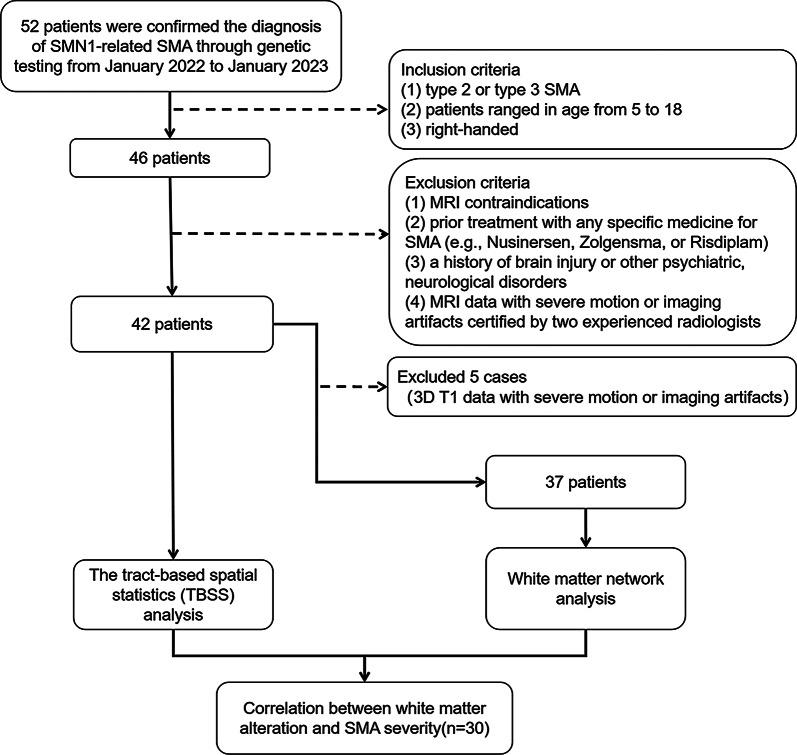
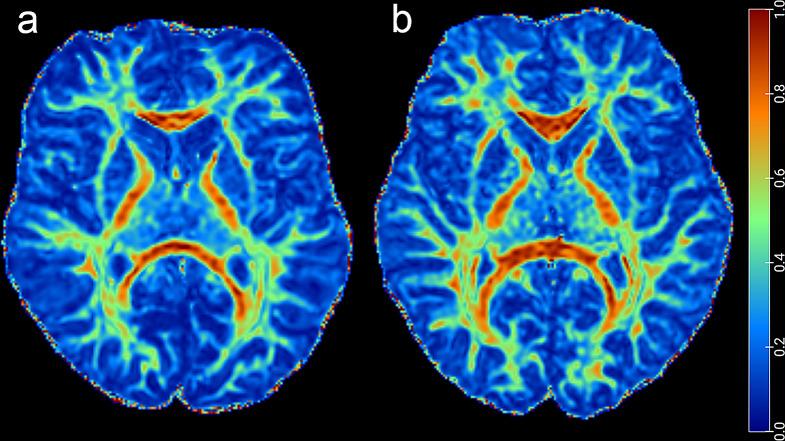
Forty-two type 2 and 3 pediatric SMA patients and 42 age- and gender-matched healthy controls (HC) were prospectively enrolled in this study. The tract-based spatial statistics (TBSS) was used to assess white matter integrity and the structural network properties were calculated based on DTI white matter fiber tracking and the graph theory approach. A partial correlation was performed to explore the relationship between white matter parameters and clinical characteristics.
RESULTS
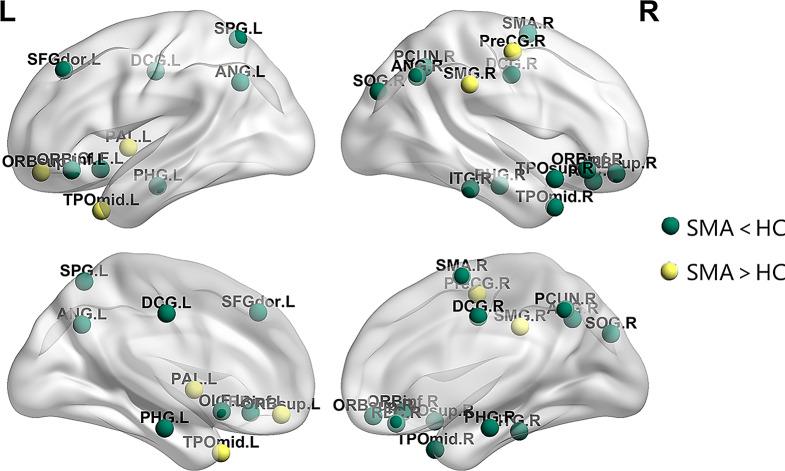
In total, 42 patients (mean age, 10.86 ± 4.07 years; 23 men) were included. TBSS analysis revealed widespread white matter changes in SMA patients. The SMA patients showed changes in multiple small-world and network efficiency parameters. Compared to the HC group, SMA showed increased characteristic path length (L), normalized clustering coefficient (γ), small-world characteristic (σ), and decreased global efficiency (E) (all p < 0.05). In the node properties, right supramarginal gyrus, right orbital part of superior frontal gyrus, right supplementary motor area, and left median cingulate and paracingulate gyri changed in SMA patients. A decreased axial diffusivity (AD) value was associated with lower Hammersmith Functional Motor Scale-Expanded scores (r = 0.45, p = 0.02), which means that the symptoms of SMA patients are more severe.
CONCLUSIONS
This study found white matter and DTI-based brain network abnormalities in SMA patients, suggesting SMN protein deficiency may affect white matter development.
背景
脊髓性肌萎缩症(SMA)是由生存运动神经元(SMN)蛋白表达降低引起的。先前的研究表明,SMA不仅会导致下运动神经元变性,还会引起广泛的脑受累。本研究旨在利用扩散张量成像(DTI)研究2型和3型SMA儿童的脑白质变化和结构网络。
方法
本研究前瞻性纳入了42例2型和3型小儿SMA患者以及42例年龄和性别匹配的健康对照(HC)。基于纤维束的空间统计学(TBSS)用于评估白质完整性,并基于DTI白质纤维追踪和图论方法计算结构网络属性。进行偏相关分析以探讨白质参数与临床特征之间的关系。
结果
共纳入42例患者(平均年龄10.86±4.07岁;男性23例)。TBSS分析显示SMA患者存在广泛的白质变化。SMA患者在多个小世界和网络效率参数方面出现变化。与HC组相比,SMA患者的特征路径长度(L)、标准化聚类系数(γ)、小世界特征(σ)增加,全局效率(E)降低(均p<0.05)。在节点属性方面,SMA患者的右侧缘上回、右侧额上回眶部、右侧辅助运动区以及左侧中央扣带回和旁扣带回发生了变化。轴向扩散率(AD)值降低与较低的哈默史密斯功能运动量表扩展评分相关(r=0.45,p=0.02),这意味着SMA患者的症状更严重。
结论
本研究发现SMA患者存在白质和基于DTI的脑网络异常,提示SMN蛋白缺乏可能影响白质发育。



 Zotero 插件