
解读第二原发性癌症背后的机制。
Decoding the mechanisms behind second primary cancers.
作者信息
Zeng Meiyuan, Lin Anqi, Jiang Aimin, Qiu Zhengang, Zhang Hongman, Chen Shifu, Xu Mingyan, Liu Zaoqu, Cheng Quan, Zhang Jian, Luo Peng
机构信息
Department of Oncology, Zhujiang Hospital, Southern Medical University, 253 Industrial Avenue, Guangzhou, 510282, Guangdong, China.
Department of Urology, Changhai Hospital, Naval Medical University (Second Military Medical University), Shanghai, China.
出版信息
J Transl Med. 2025 Jan 24;23(1):115. doi: 10.1186/s12967-025-06151-9.
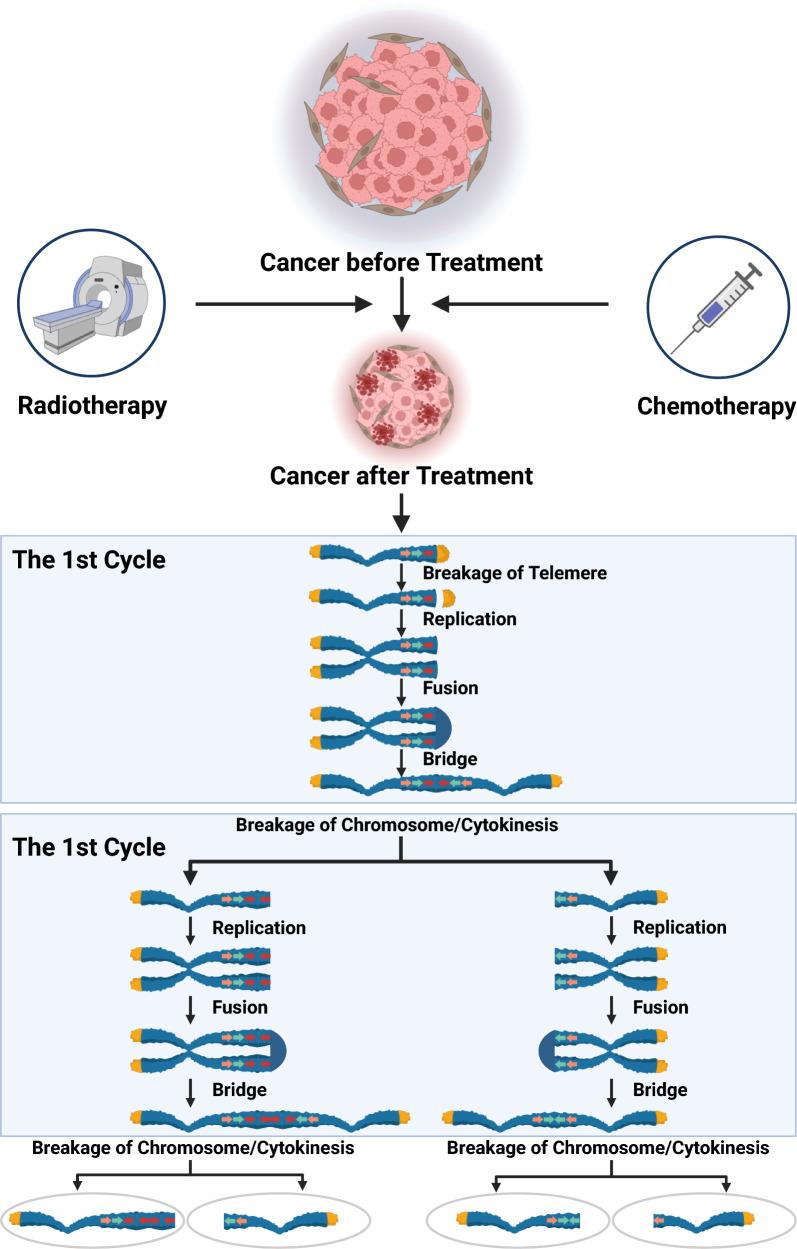
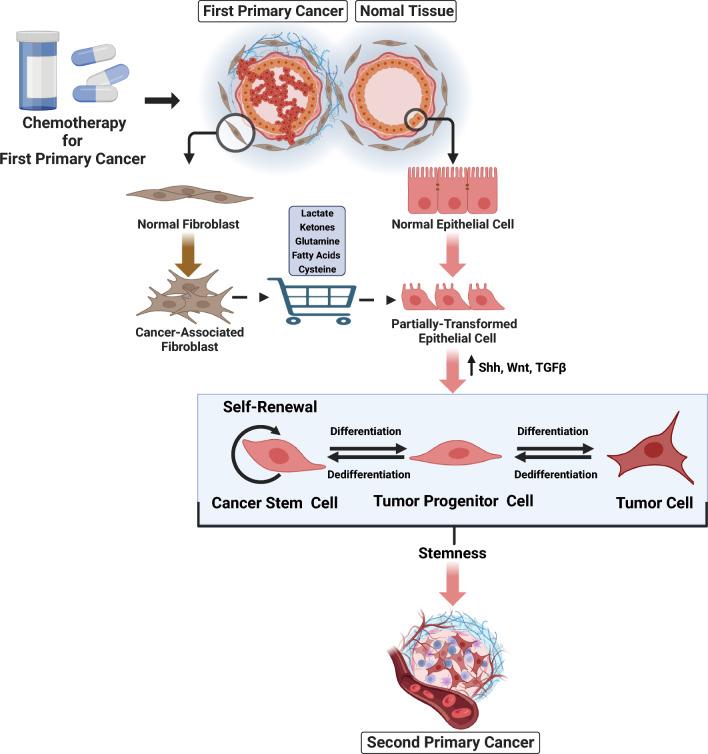
Second Primary Cancers (SPCs) are defined as cancers that develop either simultaneously or metachronously in the same individual who has been diagnosed with and survived one primary cancer. SPCs exhibit a high incidence rate and represent the primary cause of mortality among survivors of first primary cancers. There is growing concern about the dangers of SPCs. This review summarizes recent studies on the mechanisms of SPCs, including the roles of genomic changes after first primary cancer (FPC) treatments, stromal cell phenotypic and metabolic changes, hormone levels and receptor expression, immunosuppression, aberrant gene methylation, EGFR signaling, and cell-free DNA in SPC development. This comprehensive analysis contributes to elucidating current research trends in SPC mechanisms and enhances our understanding of the underlying pathophysiology. Furthermore, potential applications of intratumoral microbes, single-cell multi-omics, and metabolomics in investigating SPC mechanisms are also discussed, providing new ideas for follow-up studies.
第二原发性癌症(SPCs)被定义为在已被诊断患有一种原发性癌症并存活下来的同一个体中同时或异时发生的癌症。SPCs发病率很高,是第一原发性癌症幸存者死亡的主要原因。人们对SPCs的危险性越来越担忧。本综述总结了近期关于SPCs发生机制的研究,包括首次原发性癌症(FPC)治疗后基因组变化、基质细胞表型和代谢变化、激素水平和受体表达、免疫抑制、异常基因甲基化、表皮生长因子受体(EGFR)信号传导以及游离DNA在SPC发生中的作用。这一全面分析有助于阐明SPCs机制的当前研究趋势,并增进我们对潜在病理生理学的理解。此外,还讨论了肿瘤内微生物、单细胞多组学和代谢组学在研究SPCs机制中的潜在应用,为后续研究提供了新思路。


 Zotero 插件