
五十岁以上女性乳腺钼靶筛查的个体幸福感及国家层面的决定因素
Individual well-being and national determinants of screening mammography among women over fifty.
作者信息
Hovav Boaz, Brammli-Greenberg Shuli
机构信息
Faculty of Health Systems Management, The Max Stern Yezreel Valley College Health Systems Management Department, Affula, Emeq Yezreel, 19300, Israel.
University of Haifa School of Public Health, Haifa, Israel.
出版信息
Int J Equity Health. 2025 Jan 24;24(1):30. doi: 10.1186/s12939-025-02389-3.
BACKGROUND
Breast cancer is the most prevalent cancer among women worldwide, causing over 400,000 cases of premature death annually. Timely screening mammography (SM) could have prevented most death. Although SM utilization varies across countries, few studies have examined country-level factors, and fewer explored their interaction with individual-level factors. The study aims to analyze individual and country-level variables and their interaction that determines SM utilization and variation between countries.
METHODS
Individual, country, and cross-level models are used to analyze the cross-sectional data from the SHARE database for 26,672 women aged 50 or over, from 27 countries. Key individual variables investigated include quality-of-life (QOL), psychological, and subjective-health status. Country-level variable included government health expenditure (GHE) percentage of GDP, and organized screening programs. Models were adjusted for individual variables such as age and education.
RESULTS
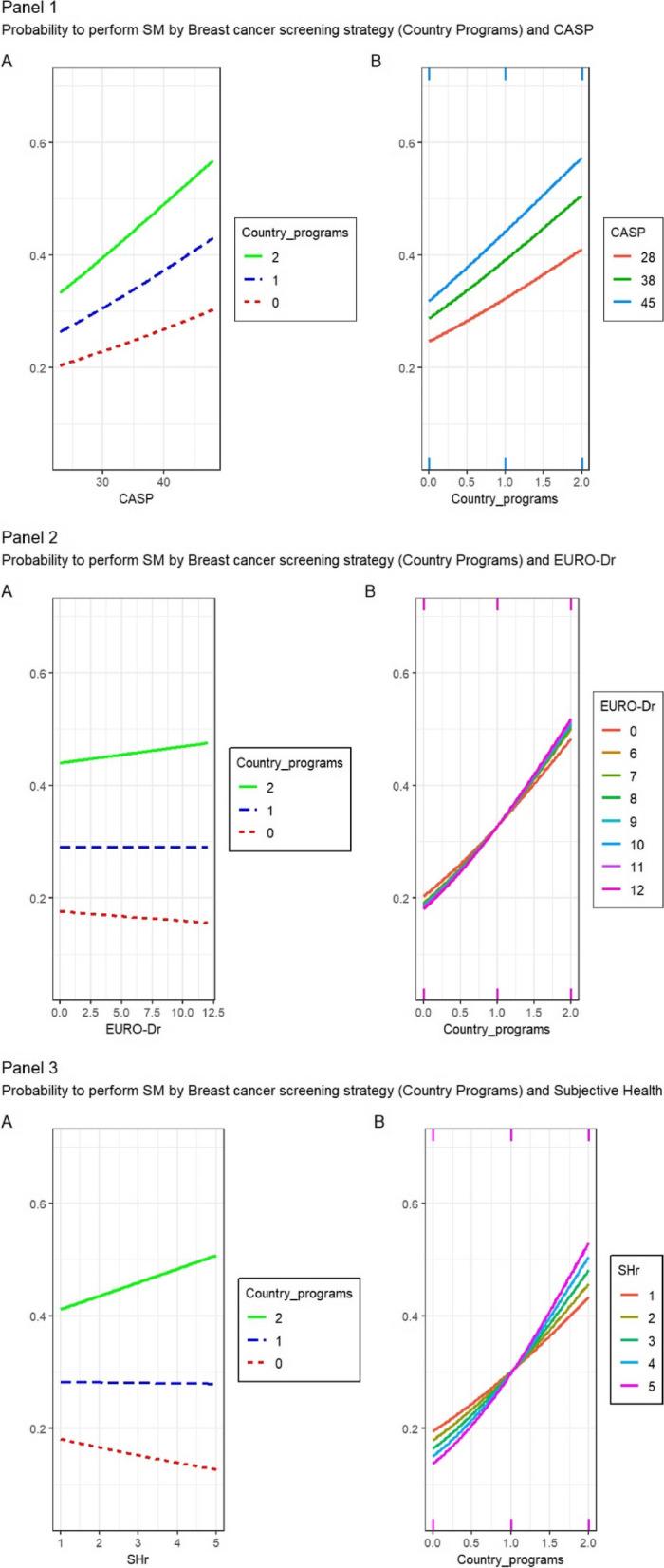
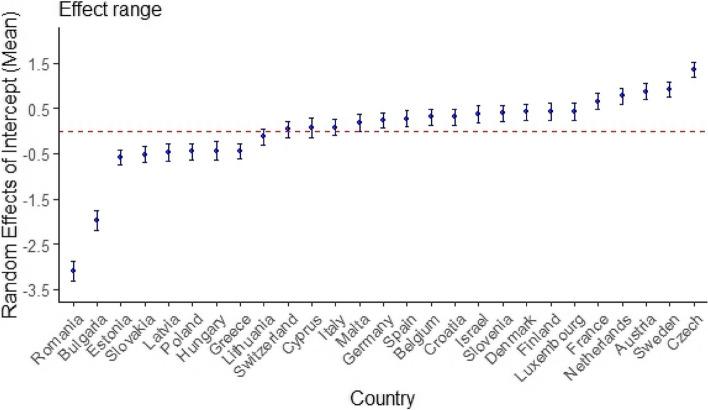
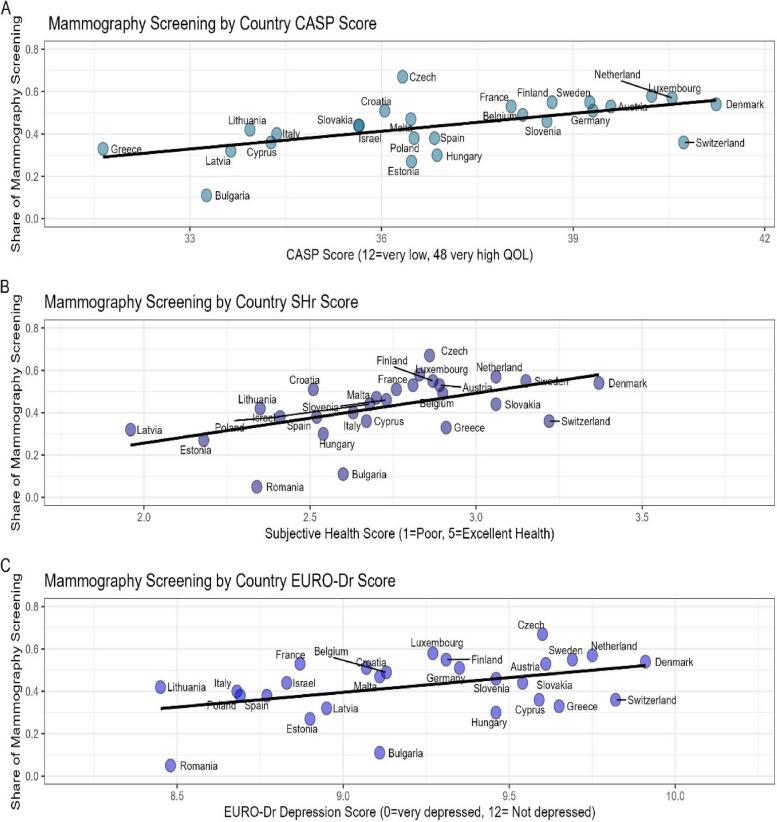
Self-reported SM utilization varied from 5 to 67% in the countries examined. On the individual level, higher QOL, psychological, and subjective health status positively correlated with SM utilization, as did GHE and organized programs on the country-level. Surprisingly, the interaction between individual and country-level variables shows that while SM utilization positively correlates with higher psychological and subjective health status in high-GHE countries, it negatively correlates in low-GHE countries, and only weakly positive correlates in mid-level GHE countries.
CONCLUSIONS
Better individual well-being, both physical and psychological, increased SM utilization, as did higher GHE and countrywide SM programs. The negative correlations in low-GHE countries and positive correlations in high-GHE countries underscores disparities that need to be addressed.
背景
乳腺癌是全球女性中最常见的癌症,每年导致超过40万例过早死亡。及时进行筛查性乳腺X线摄影(SM)本可预防大多数死亡。尽管各国SM的利用率有所不同,但很少有研究考察国家层面的因素,更少有人探讨这些因素与个体层面因素的相互作用。本研究旨在分析个体和国家层面的变量及其相互作用,这些因素决定了SM的利用率以及各国之间的差异。
方法
使用个体、国家和跨层次模型分析来自27个国家26672名50岁及以上女性的SHARE数据库的横断面数据。调查的关键个体变量包括生活质量(QOL)、心理和主观健康状况。国家层面的变量包括政府卫生支出(GHE)占国内生产总值(GDP)的百分比以及有组织的筛查项目。模型针对年龄和教育等个体变量进行了调整。
结果
在所调查的国家中,自我报告的SM利用率从5%到67%不等。在个体层面,较高的QOL、心理和主观健康状况与SM利用率呈正相关,国家层面的GHE和有组织的项目也是如此。令人惊讶的是,个体和国家层面变量之间的相互作用表明,虽然在高GHE国家,SM利用率与较高的心理和主观健康状况呈正相关,但在低GHE国家呈负相关,而在中等GHE国家仅呈微弱正相关。
结论
更好的个体身心健康状况会提高SM利用率,较高的GHE和全国性的SM项目也是如此。低GHE国家的负相关和高GHE国家的正相关凸显了需要解决的差异。

 Zotero 插件