
填补差距:对慢性病患儿照料者虚拟护理解决方案的范围综述
Mapping the Gaps: A Scoping Review of Virtual Care Solutions for Caregivers of Children with Chronic Illnesses.
作者信息
Pope Nicole, Birnie Kathyrn A, Noel Melanie, Dol Justine, Li Danyu, Macneil Megan, Zientek Darrel, Surry Victoria, Stinson Jennifer N
机构信息
Child Health Evaluative Services, Research Institute, The Hospital for Sick Children, Toronto, ON M5G 1E8, Canada.
Department of Nursing, Melbourne School of Health Sciences, Faculty of Medicine, Dentistry and Health Sciences, The University of Melbourne, Melbourne, VIC 3052, Australia.
出版信息
Children (Basel). 2025 Jan 10;12(1):77. doi: 10.3390/children12010077.
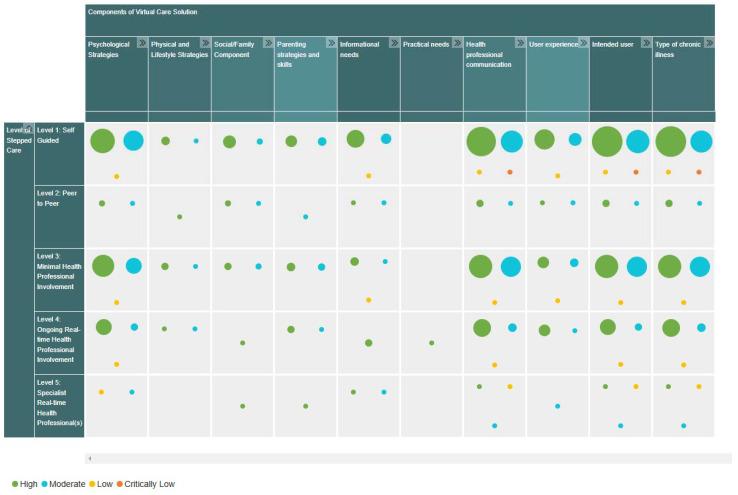
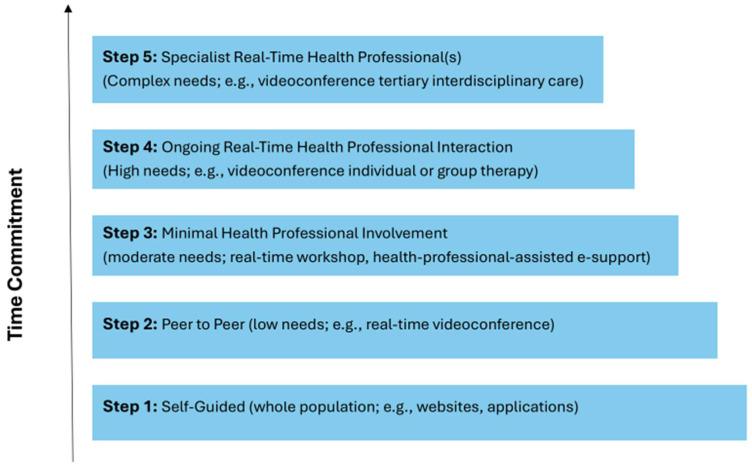
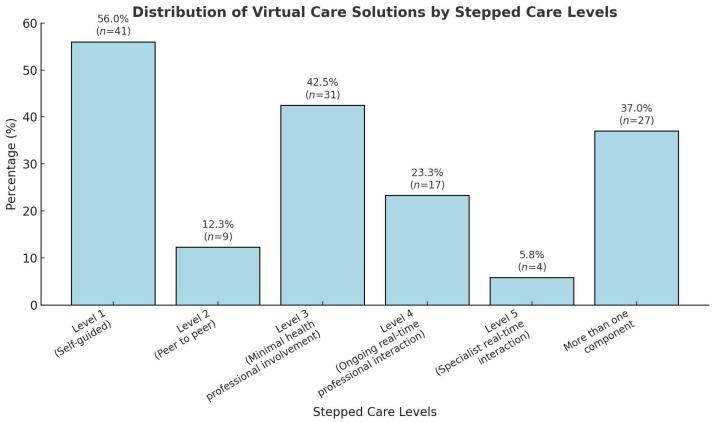
: Caregivers of children with chronic illnesses, including chronic pain, experience high levels of distress, which impacts their own mental and physical health as well as child outcomes. Virtual care solutions offer opportunities to provide accessible support, yet most overlook caregivers' needs. We conducted a scoping review to create an interactive Evidence and Gap Map (EGM) of virtual care solutions across a stepped care continuum (i.e., from self-directed to specialized care) for caregivers of youth with chronic illnesses. : The review methodology was co-designed with four caregivers. Data sources were the peer-reviewed scientific literature and a call for innovations. Records were independently coded and assessed for quality. : Overall, 73 studies were included. Most virtual care solutions targeted caregivers of children with cancer, neurological disorders, and complex chronic illnesses. Over half were noted at lower levels of stepped care (i.e., self-guided apps and websites), with psychological strategies being predominant (84%). However, very few addressed caregivers' physical health (15%) or provided family counseling (19%) or practical support (1%). Significant gaps were noted in interventions for managing caregiver chronic pain, despite its high prevalence and impact on child outcomes. : Evidence and Gap Maps are innovative visual tools for knowledge synthesis, facilitating rapid, evidence-informed decision-making for patients, families, health professionals, and policymakers. This EGM highlighted high-quality virtual care solutions ready for immediate scaling and identified critical evidence gaps requiring prioritization. To address the complexities of pediatric chronic illnesses, including chronic pain, virtual care initiatives must prioritize family-centered, accessible, and equitable approaches. Engaging caregivers as partners is critical to ensure interventions align with their needs and priorities.
患有慢性疾病(包括慢性疼痛)儿童的照料者承受着高水平的痛苦,这会影响他们自身的身心健康以及孩子的状况。虚拟护理解决方案提供了提供可及支持的机会,但大多数都忽视了照料者的需求。我们进行了一项范围综述,以创建一个交互式的证据与差距地图(EGM),该地图涵盖了针对患有慢性疾病青少年照料者的阶梯式护理连续体(即从自我指导护理到专科护理)中的虚拟护理解决方案。:综述方法是与四位照料者共同设计的。数据来源是同行评审的科学文献和创新征集。记录由独立编码并进行质量评估。:总体而言,纳入了73项研究。大多数虚拟护理解决方案针对的是患有癌症、神经系统疾病和复杂慢性疾病儿童的照料者。超过一半的方案处于阶梯式护理的较低水平(即自我指导应用程序和网站),其中心理策略占主导(84%)。然而,很少有方案涉及照料者的身体健康(15%)或提供家庭咨询(19%)或实际支持(1%)。尽管照料者慢性疼痛患病率高且对孩子状况有影响,但在管理照料者慢性疼痛的干预措施方面存在显著差距。:证据与差距地图是用于知识综合的创新可视化工具,有助于患者、家庭、卫生专业人员和政策制定者快速做出基于证据的决策。这张EGM突出了随时可立即扩大规模的高质量虚拟护理解决方案,并确定了需要优先处理的关键证据差距。为应对儿科慢性疾病(包括慢性疼痛)的复杂性,虚拟护理倡议必须优先采用以家庭为中心、可及且公平的方法。让照料者作为合作伙伴参与至关重要,以确保干预措施符合他们的需求和优先事项。

 Zotero 插件