
丛枝菌根真菌对凋落物分解过程中氮动态的影响
Influence of Arbuscular Mycorrhizal Fungi on Nitrogen Dynamics During Litter Decomposition.
作者信息
Gao Yuehong, Long Xiaoyu, Liao Yiqi, Lin Yonghui, He Zaihua, Kong Qin, Kong Xiangshi, He Xingbing
机构信息
College of Biology and Environmental Sciences, Jishou University, Jishou 416000, China.
Key Laboratory for Ecotourism of Hunan Province, School of Tourism, Jishou University, Jishou 416000, China.
出版信息
Microorganisms. 2025 Jan 13;13(1):151. doi: 10.3390/microorganisms13010151.
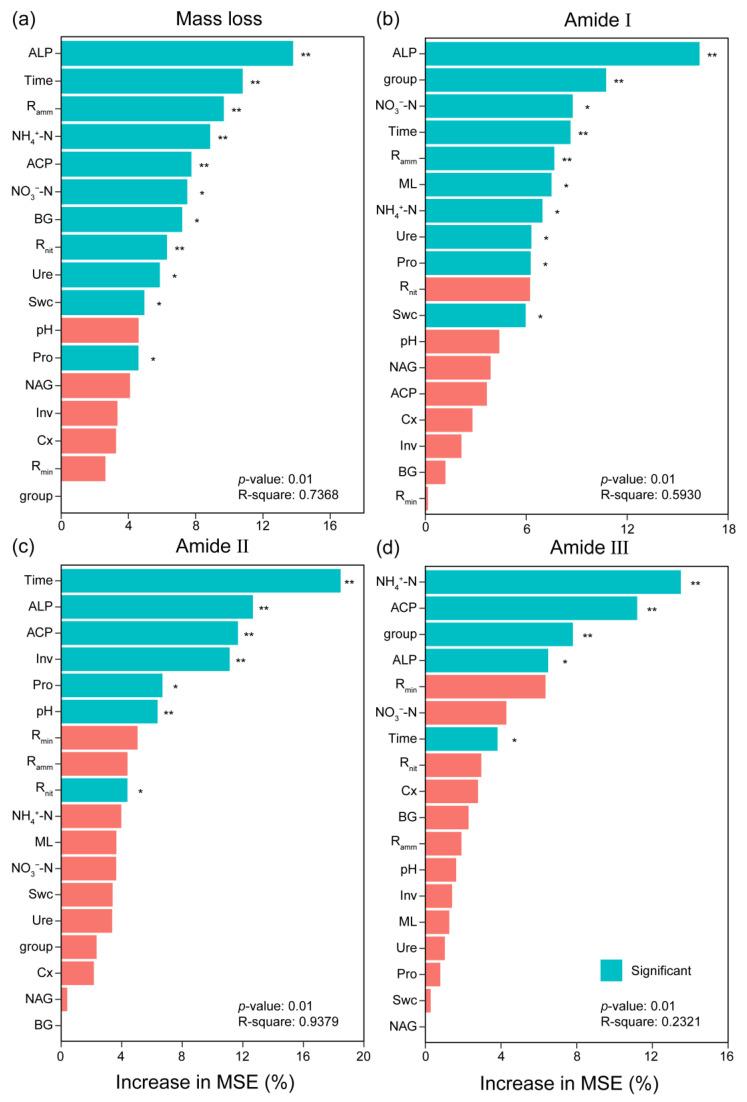
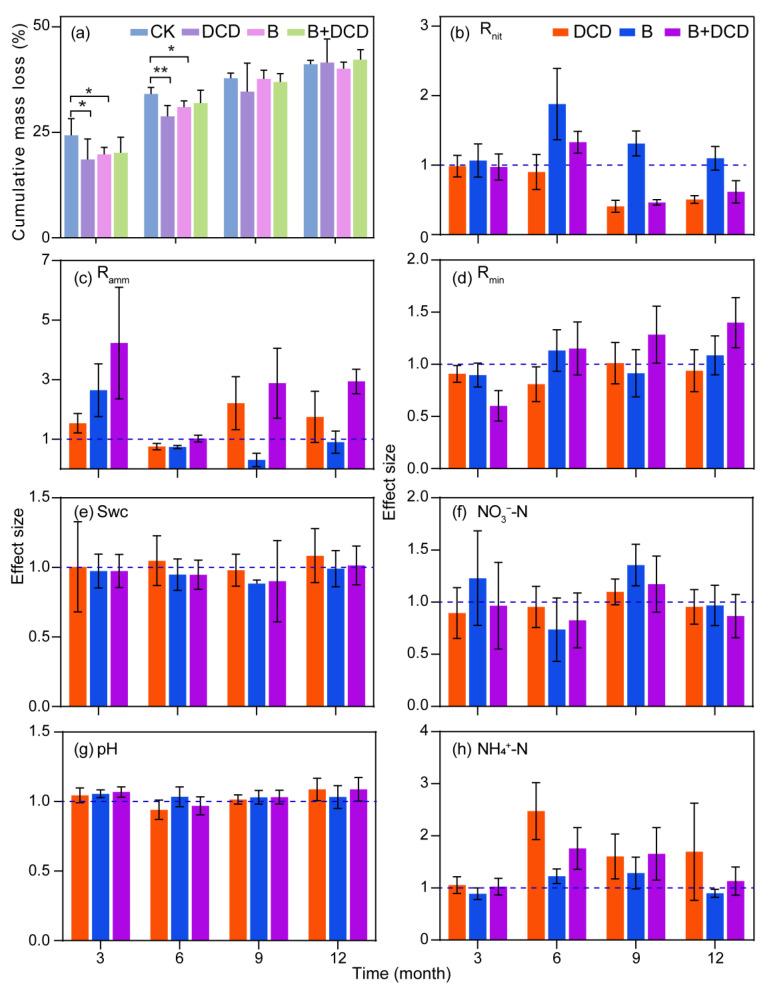
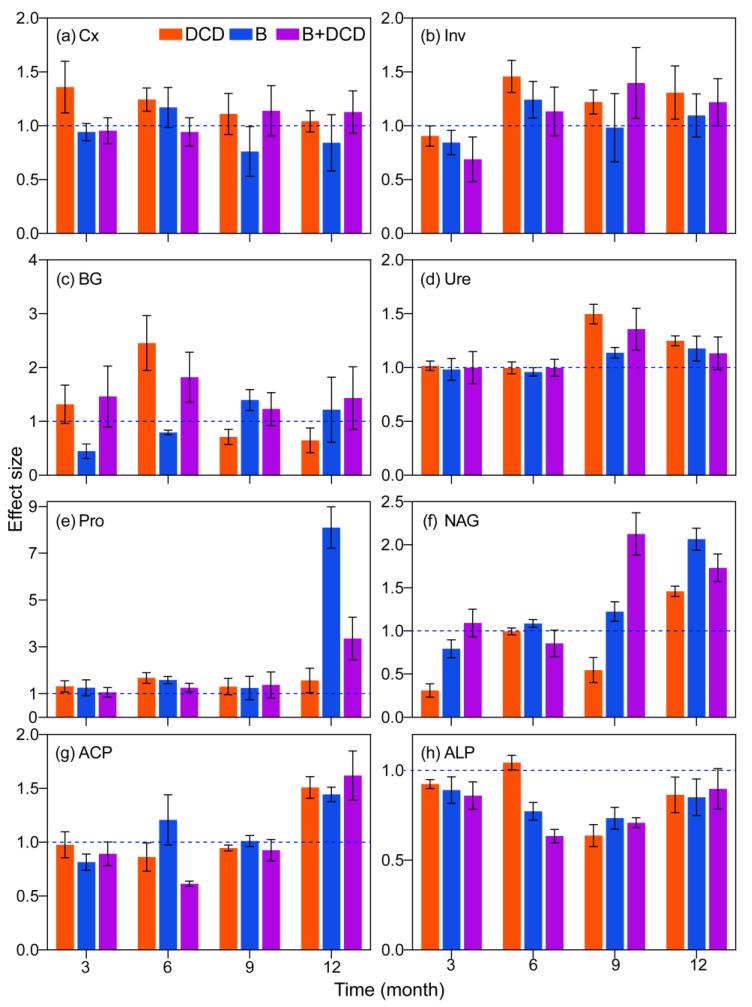
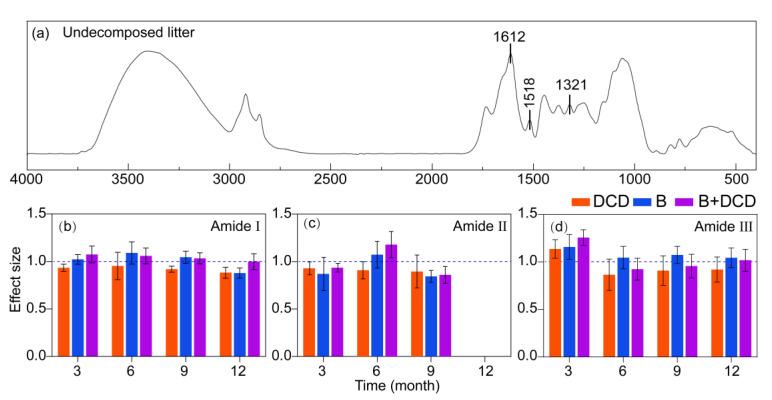
Arbuscular mycorrhizal fungi (AMF) can preferentially absorb the released ammonium (NH) over nitrate (NO) during litter decomposition. However, the impact of AMF's absorption of NH on litter nitrogen (N) decomposition is still unclear. In this study, we investigated the effects of AMF uptake for NH on litter N metabolic characteristics by enriching NH via AMF suppression and nitrification inhibition in a subtropical forest. The results showed that AMF suppression and nitrification inhibition significantly decelerated litter decomposition in the early stage due to the repression of NH in extracellular enzyme activity. In the late stage, when soil NH content was low, in contrast, they promoted litter decomposition by increasing the extracellular enzyme activities. Nitrification inhibition mainly promoted the utilization of plant-derived N by promoting the degradation of the amide I, amide II, and III bands by increasing protease activity, and it promoted ammonification by increasing urease activities, whereas it reduced the utilization of microbial-derived N by decreasing chitinase activity. On the contrary, AMF suppression, which significantly reduced the ammonification rate and increased the nitrification rate, only facilitated the degradation of the amide II band. Moreover, it intensified the microbial-derived N decomposition by increasing chitinase activity. The degradation of the amide I and II bands still relied on the priming effects of AMF on soil saprotrophs. This was likely driven by AMF-mediated phosphorus (P) mineralization. Nutrient acquiring, especially P by phosphatase, were the main factors in predicting litter decomposition and protein degradation. Thus, AMF could relieve the end-product repression of locally enriched NH in extracellular enzyme activity and promote early-stage litter decomposition. However, the promotive effects of AMF on litter protein degradation and NH release rely on P mineralization. Our results demonstrated that AMF could alleviate the N limitation for net primary production via accelerating litter N decomposition and reducing N loss. Moreover, they could restrict the decomposition of recalcitrant components by competing with saprotrophs for nutrients. Both pathways will contribute to C sequestration in forest ecosystems, which advances our understanding of AMF's contribution to nutrient cycling and ecosystem processes in subtropical forests.
丛枝菌根真菌(AMF)在凋落物分解过程中能够优先吸收释放出的铵态氮(NH)而非硝态氮(NO)。然而,AMF对NH的吸收对凋落物氮(N)分解的影响仍不明确。在本研究中,我们通过在亚热带森林中抑制AMF和硝化作用来富集NH,从而研究AMF对NH的吸收对凋落物N代谢特征的影响。结果表明,在早期阶段,由于细胞外酶活性中NH受到抑制,抑制AMF和硝化作用显著减缓了凋落物分解。相反,在后期,当土壤NH含量较低时,它们通过增加细胞外酶活性促进了凋落物分解。硝化作用抑制主要通过提高蛋白酶活性促进酰胺I、酰胺II和III带的降解来促进植物源N的利用,并通过提高脲酶活性促进氨化作用,而通过降低几丁质酶活性降低微生物源N的利用。相反,显著降低氨化速率并提高硝化速率的AMF抑制作用仅促进了酰胺II带的降解。此外,它通过提高几丁质酶活性加剧了微生物源N的分解。酰胺I和II带的降解仍然依赖于AMF对土壤腐生菌的激发效应。这可能是由AMF介导的磷(P)矿化驱动的。养分获取,特别是磷酸酶对P的获取,是预测凋落物分解和蛋白质降解的主要因素。因此,AMF可以缓解细胞外酶活性中局部富集的NH的终产物抑制作用,并促进早期凋落物分解。然而,AMF对凋落物蛋白质降解和NH释放的促进作用依赖于P矿化。我们的结果表明,AMF可以通过加速凋落物N分解和减少N损失来缓解净初级生产的N限制。此外,它们可以通过与腐生菌竞争养分来限制难降解成分的分解。这两条途径都将有助于森林生态系统中的碳固存,这加深了我们对AMF对亚热带森林养分循环和生态系统过程贡献的理解。

 Zotero 插件