
精子DNA碎片化指数:在辅助生殖技术治疗中预测胚胎质量的有效性有限。
Sperm DNA fragmentation index: limited effectiveness on predicting embryo quality in assisted reproduction technology treatments.
作者信息
Jiang Huan, Xia Xiaolu, Luo Ying, Pan Haiyan, Qu Shihao, Xu Jianying
机构信息
Department of Reproductive Endocrinology, Longgang District Maternity & Child Healthcare Hospital of Shenzhen City (Longgang Maternity and Child Institute of Shantou University Medical College), Shenzhen, China.
Reproductive Medicine Center, Zhuhai Maternal and Child Health Care Hospital, 543 Ningxi Road, Zhuhai, 519000, China.
出版信息
Reprod Biol Endocrinol. 2025 Jan 25;23(1):14. doi: 10.1186/s12958-025-01345-8.
PURPOSE
Prior sperm DNA fragmentation index (DFI) thresholds for diagnosing male infertility and predicting assisted reproduction technology (ART) outcomes fluctuated between 15 and 30%, with no agreed standard. This study aimed to evaluate the impact of the sperm DFI on early embryonic development during ART treatments and establish appropriate DFI cut-off values.
METHODS
Retrospectively analyzed 913 couple's ART cycles from 2021 to 2022, encompassing 1,476 IVF and 295 ICSI cycles, following strict criteria. The WHO guidelines directed the semen analysis, while the acridine orange test (AOT) determined the DFI. Male factors (age, BMI, DFI, infertility duration, sperm parameters) and female parameters (age, BMI, AMH, retrieved oocytes) were evaluated. We also assessed embryological parameters like fertilization rate, cleavage rate, and blastocyst quality. Correlations between DFI and embryo quality were examined and DFI cut-off values were established using ROC analysis.
RESULTS
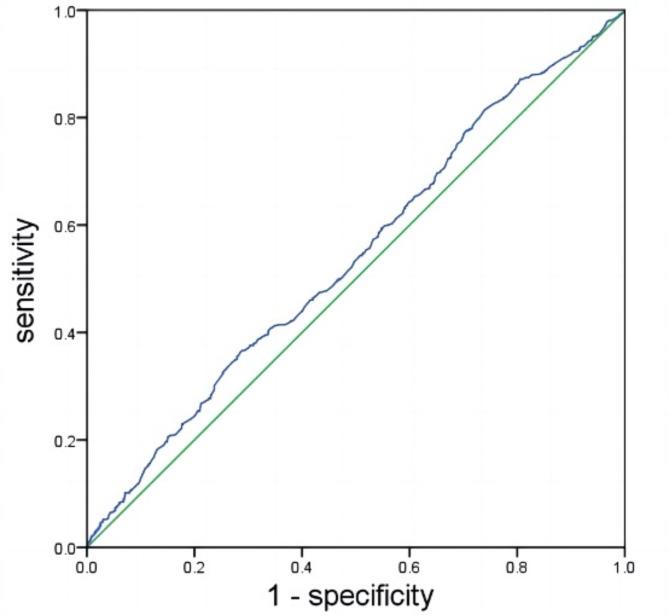
The Sperm DFI demonstrated a positive correlation with male age and a negative correlation with sperm motility, concentration, and normal morphology, while showing no relation to BMI. No connection between DFI and embryological parameters in only IVF and ICSI groups was found, but a negative correlation with fertilization rate was seen in all ART cycles. ROC curve analysis revealed a DFI cut-off value of 21.15% having 36.7% sensitivity and 28.9% specificity in predicting high fertilization rate (≥ 80%).
CONCLUSION
Sperm DFI had a negative correlation with fertilization rate, but limited predictive efficacy and no significant link to other embryological parameters. DFI assessments may improve early embryo development prediction during ART treatments, particularly in older males or those exhibiting poor sperm quality.
目的
先前用于诊断男性不育和预测辅助生殖技术(ART)结局的精子DNA碎片指数(DFI)阈值在15%至30%之间波动,尚无统一标准。本研究旨在评估ART治疗期间精子DFI对早期胚胎发育的影响,并确定合适的DFI临界值。
方法
回顾性分析了2021年至2022年913对夫妇的ART周期,包括1476个体外受精(IVF)周期和295个卵胞浆内单精子注射(ICSI)周期,遵循严格标准。世界卫生组织(WHO)指南指导精液分析,而吖啶橙试验(AOT)测定DFI。评估了男性因素(年龄、体重指数、DFI、不育持续时间、精子参数)和女性参数(年龄、体重指数、抗缪勒管激素、回收的卵母细胞)。我们还评估了受精率、卵裂率和囊胚质量等胚胎学参数。检查了DFI与胚胎质量之间的相关性,并使用ROC分析确定DFI临界值。
结果
精子DFI与男性年龄呈正相关,与精子活力、浓度和正常形态呈负相关,与体重指数无关。在仅IVF和ICSI组中未发现DFI与胚胎学参数之间的关联,但在所有ART周期中均观察到与受精率呈负相关。ROC曲线分析显示,DFI临界值为21.15%,在预测高受精率(≥80%)时敏感性为36.7%,特异性为28.9%。
结论
精子DFI与受精率呈负相关,但预测效力有限,与其他胚胎学参数无显著关联。DFI评估可能改善ART治疗期间早期胚胎发育的预测,特别是在老年男性或精子质量差的男性中。


 Zotero 插件