
急性髓系白血病治疗的变革:基于免疫疗法的系统综述
Revolutionizing acute myeloid leukemia treatment: a systematic review of immune-based therapies.
作者信息
Ebinama Ugochi, George Binsah
机构信息
Department of Internal Medicine, The University of Texas Health Sciences Center at Houston, McGovern Medical School, Houston, TX, USA.
Division of Hematology/Oncology, The University of Texas Health Sciences Center at Houston, McGovern Medical School, 6431 Fannin Street, MSB 5.216, Houston, TX, 77030, USA.
出版信息
Discov Oncol. 2025 Jan 26;16(1):89. doi: 10.1007/s12672-025-01797-9.
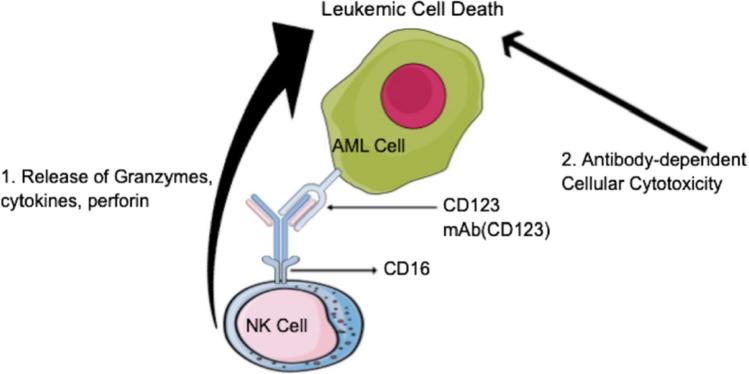
The established protocol for the management of acute myeloid leukemia (AML) has traditionally involved the administration of induction chemotherapy, followed by consolidation chemotherapy, and subsequent allogeneic stem cell transplantation for eligible patients. However, the prognosis for individuals with relapsed and refractory AML remains unfavorable. In response to the necessity for more efficacious therapeutic modalities, targeted immunotherapy has emerged as a promising advancement in AML treatment. This comprehensive review article specifically examines classical unconjugated and toxin-conjugated monoclonal antibodies, which are currently in the preclinical phase or undergoing evaluation in clinical trials. The review delves into the proposed mechanisms through which these monoclonal antibodies elicit anti-tumor activity and identifies the challenges associated with designing targeted immunotherapy. The review focuses on targeting specific antigens in AML, including FLT3/CD125, CLL-1, CD33, CD38, CD47, CD70, and CD123.
传统上,急性髓系白血病(AML)既定的治疗方案包括给予诱导化疗,随后进行巩固化疗,以及为符合条件的患者进行异基因干细胞移植。然而,复发和难治性AML患者的预后仍然不容乐观。为了应对对更有效治疗方式的需求,靶向免疫疗法已成为AML治疗中一项有前景的进展。这篇全面的综述文章专门研究了目前处于临床前阶段或正在临床试验中评估的经典非共轭和毒素共轭单克隆抗体。该综述深入探讨了这些单克隆抗体引发抗肿瘤活性的潜在机制,并确定了设计靶向免疫疗法所面临的挑战。该综述重点关注AML中的特定抗原靶点,包括FLT3/CD125、CLL-1、CD33、CD38、CD47、CD70和CD123。
 Zotero 插件