
皮质神经元对脑震荡的转录反应揭示了损伤后的不同命运。
The transcriptional response of cortical neurons to concussion reveals divergent fates after injury.
作者信息
Alkaslasi Mor R, Lloyd Eliza Y H, Gable Austin S, Silberberg Hanna, Yarur Hector E, Tsai Valerie S, Sohn Mira, Margolin Gennady, Tejeda Hugo A, Le Pichon Claire E
机构信息
Unit on the Development of Neurodegeneration, Eunice Kennedy Shriver National Institute of Child Health and Human Development, National Institutes of Health, Bethesda, MD, USA.
Department of Neuroscience, Brown University, Providence, RI, USA.
出版信息
Nat Commun. 2025 Jan 27;16(1):1097. doi: 10.1038/s41467-025-56292-0.
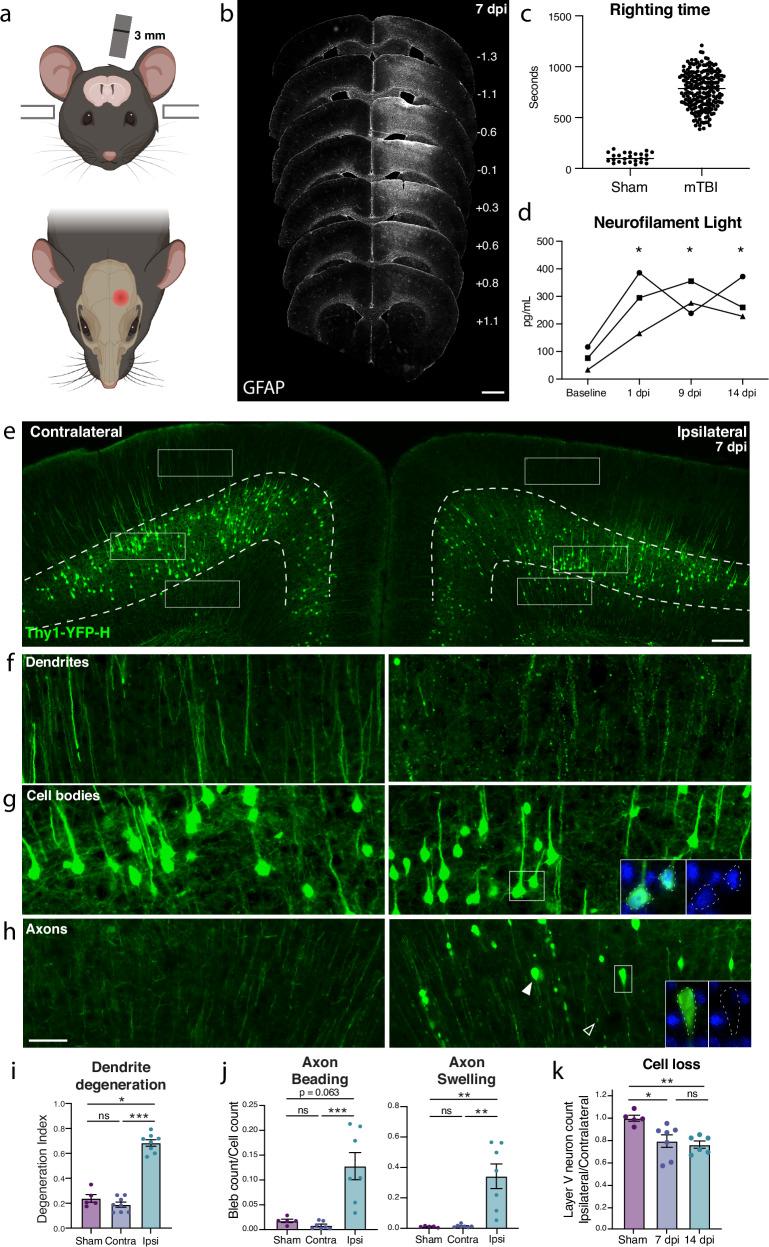
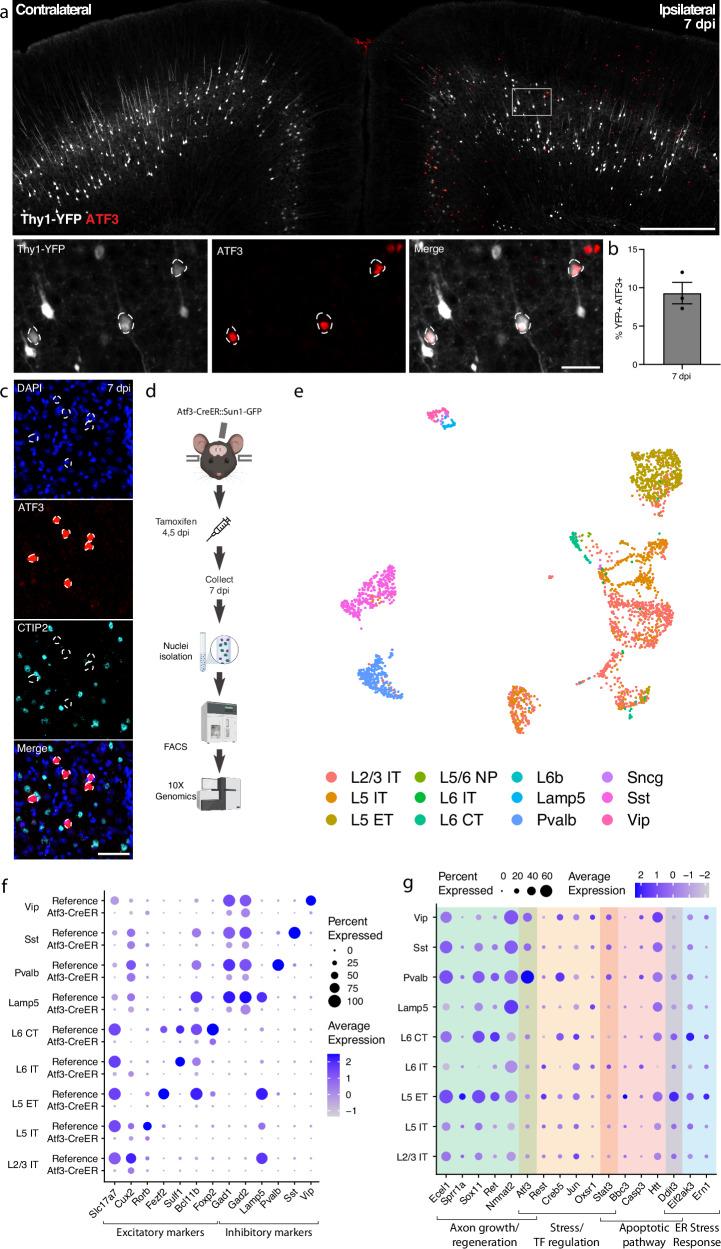
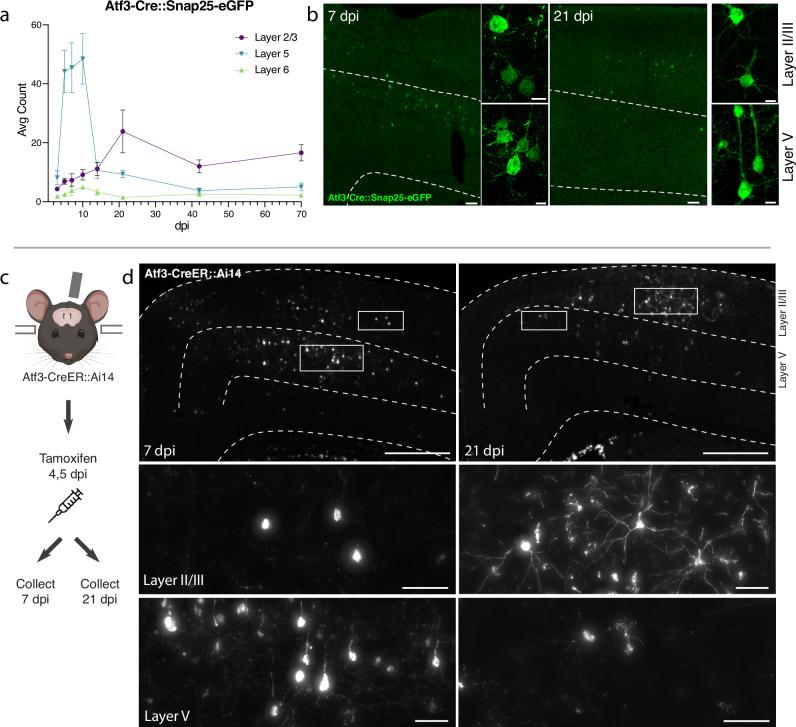
Traumatic brain injury (TBI) is a risk factor for neurodegeneration, however little is known about how this kind of injury alters neuron subtypes. In this study, we follow neuronal populations over time after a single mild TBI (mTBI) to assess long ranging consequences of injury at the level of single, transcriptionally defined neuronal classes. We find that the stress-responsive Activating Transcription Factor 3 (ATF3) defines a population of cortical neurons after mTBI. Using an inducible reporter linked to ATF3, we genetically mark these damaged cells to track them over time. We find that a population in layer V undergoes cell death acutely after injury, while another in layer II/III survives long term and remains electrically active. To investigate the mechanism controlling layer V neuron death, we genetically silenced candidate stress response pathways. We found that the axon injury responsive dual leucine zipper kinase (DLK) is required for the layer V neuron death. This work provides a rationale for targeting the DLK signaling pathway as a therapeutic intervention for traumatic brain injury. Beyond this, our approach to track neurons after a mild, subclinical injury can inform our understanding of neuronal susceptibility to repeated impacts.
创伤性脑损伤(TBI)是神经退行性变的一个危险因素,然而对于这种损伤如何改变神经元亚型却知之甚少。在本研究中,我们在单次轻度创伤性脑损伤(mTBI)后随时间追踪神经元群体,以评估在单个转录定义的神经元类别水平上损伤的长期后果。我们发现,应激反应性激活转录因子3(ATF3)在mTBI后定义了一群皮质神经元。使用与ATF3相关的诱导型报告基因,我们对这些受损细胞进行基因标记以随时间追踪它们。我们发现,V层的一群神经元在损伤后急性发生细胞死亡,而II/III层的另一群神经元长期存活并保持电活性。为了研究控制V层神经元死亡的机制,我们对候选应激反应途径进行了基因沉默。我们发现,轴突损伤反应性双亮氨酸拉链激酶(DLK)是V层神经元死亡所必需的。这项工作为靶向DLK信号通路作为创伤性脑损伤的治疗干预提供了理论依据。除此之外,我们在轻度亚临床损伤后追踪神经元的方法可以增进我们对神经元对反复撞击易感性的理解。


 Zotero 插件