
新冠病毒感染儿童多系统炎症综合征中免疫失调的复杂情况。
The complex landscape of immune dysregulation in multisystem inflammatory syndrome in children with COVID-19.
作者信息
Guo Jing, Wang Lie
机构信息
Institute of Immunology and Bone Marrow Transplantation Center, The First Affiliated Hospital, Zhejiang University School of Medicine, Hangzhou 311100, China.
Department of Microbiology and Immunology, Stanford University School of Medicine, Stanford, CA 94305, USA.
出版信息
Life Med. 2024 Sep 13;3(4):lnae034. doi: 10.1093/lifemedi/lnae034. eCollection 2024 Aug.
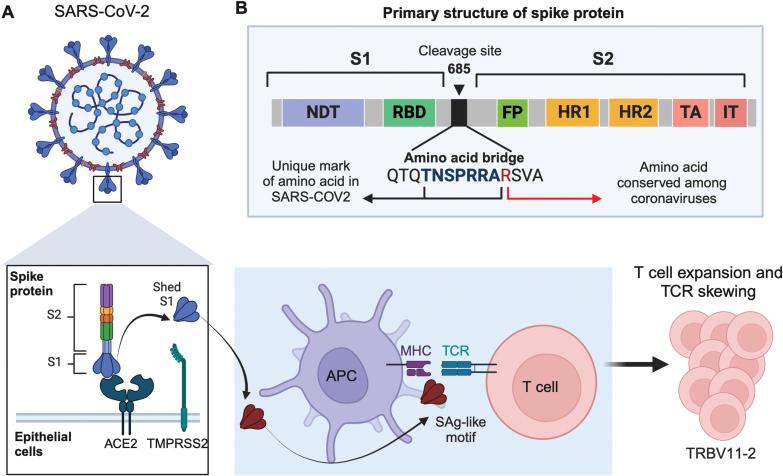
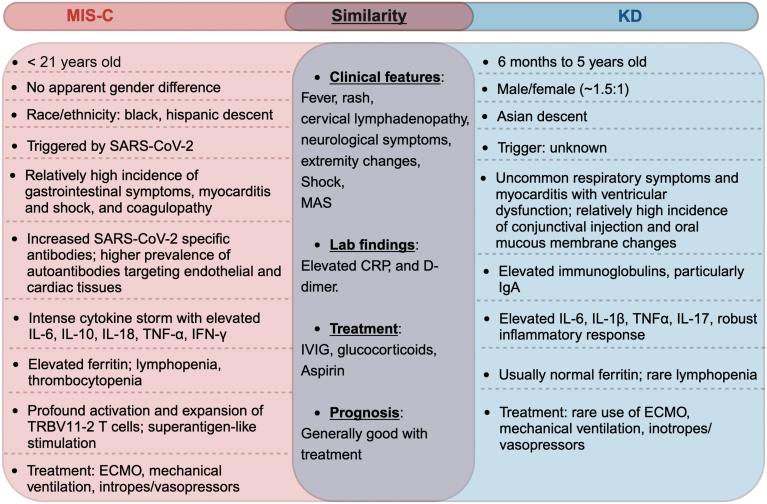
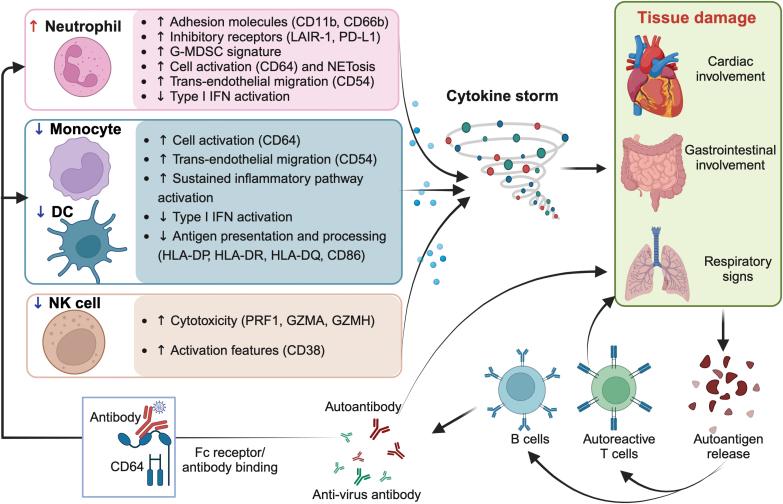
The immune responses following SARS-CoV-2 infection in children are still under investigation. While coronavirus disease 2019 (COVID-19) is usually mild in the paediatric population, some children develop severe clinical manifestations or multisystem inflammatory syndrome in children (MIS-C) after infection. MIS-C, typically emerging 2-6 weeks after SARS-CoV-2 exposure, is characterized by a hyperinflammatory response affecting multiple organs. This review aims to explore the complex landscape of immune dysregulation in MIS-C, focusing on innate, T cell-, and B cell-mediated immunity, and discusses the role of SARS-CoV-2 spike protein as a superantigen in MIS-C pathophysiology. Understanding these mechanisms is crucial for improving the management and outcomes for affected children.
SARS-CoV-2感染后儿童的免疫反应仍在研究中。虽然2019冠状病毒病(COVID-19)在儿科人群中通常症状较轻,但一些儿童在感染后会出现严重的临床表现或儿童多系统炎症综合征(MIS-C)。MIS-C通常在接触SARS-CoV-2后2-6周出现,其特征是影响多个器官的过度炎症反应。本综述旨在探讨MIS-C中免疫失调的复杂情况,重点关注先天免疫、T细胞介导的免疫和B细胞介导的免疫,并讨论SARS-CoV-2刺突蛋白作为超抗原在MIS-C病理生理学中的作用。了解这些机制对于改善受影响儿童的治疗和预后至关重要。
 Zotero 插件