
肠道中性粒细胞胞外诱捕网会加剧肠道屏障损伤,加重2型糖尿病患者的内毒素血症、全身炎症反应及糖尿病视网膜病变进展。
Intestinal neutrophil extracellular traps promote gut barrier damage exacerbating endotoxaemia, systemic inflammation and progression of diabetic retinopathy in type 2 diabetes.
作者信息
Floyd Jason L, Prasad Ram, Dupont Mariana D, Adu-Rutledge Yvonne, Anshumali Shambhavi, Paul Sarbodeep, Li Calzi Sergio, Qi Xiaoping, Malepati Akanksha, Johnson Emory, Jumbo-Lucioni Patricia, Crosson Jason N, Mason John O, Boulton Michael E, Welner Robert S, Grant Maria B
机构信息
Department of Ophthalmology and Visual Sciences, Heersink School of Medicine, University of Alabama at Birmingham, Birmingham, AL, USA.
Pharmaceutical, Social and Administrative Sciences, Samford University, Birmingham, AL, USA.
出版信息
Diabetologia. 2025 Apr;68(4):866-889. doi: 10.1007/s00125-024-06349-4. Epub 2025 Jan 28.
AIMS/HYPOTHESIS: Within the small intestine, neutrophils play an integral role in preventing bacterial infection. Upon interaction with bacteria or bacteria-derived antigens, neutrophils initiate a multi-staged response of which the terminal stage is NETosis, formation of protease-decorated nuclear DNA into extracellular traps. NETosis has a great propensity to elicit ocular damage and has been associated with diabetic retinopathy and diabetic macular oedema (DME) progression. Here, we interrogate the relationship between gut barrier dysfunction, endotoxaemia and systemic and intestinal neutrophilia in diabetic retinopathy.
METHODS
In a cohort of individuals with type 2 diabetes (n=58) with varying severity of diabetic retinopathy and DME, we characterised the abundance of circulating neutrophils by flow cytometry and markers of gut permeability and endotoxaemia by plasma ELISA. In a mouse model of type 2 diabetes, we examined the effects of diabetes on abundance and function of intestinal, blood and bone marrow neutrophils, gut barrier integrity, endotoxaemia and diabetic retinopathy severity. Pharmacological inhibition of NETosis was achieved by i.p. injection of the peptidyl arginine deiminase 4 inhibitor (PAD4i) GSK484 daily for 4 weeks between 6 and 7 months of type 2 diabetes.
RESULTS
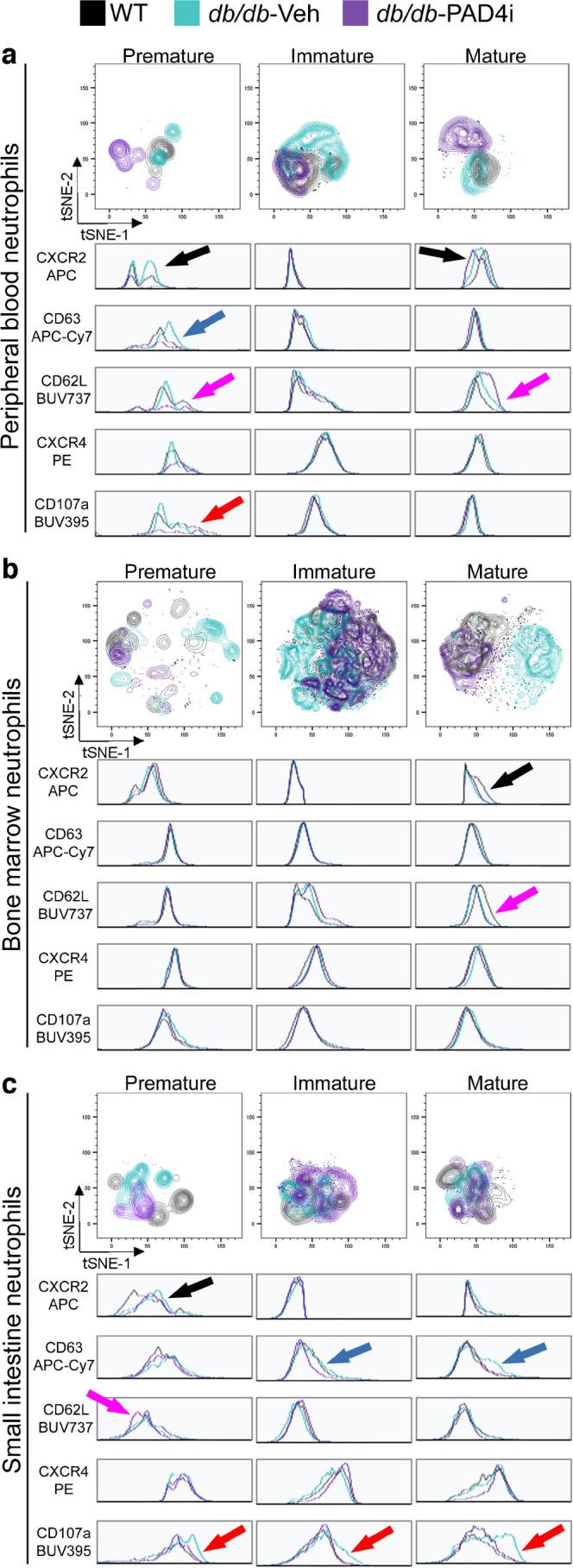
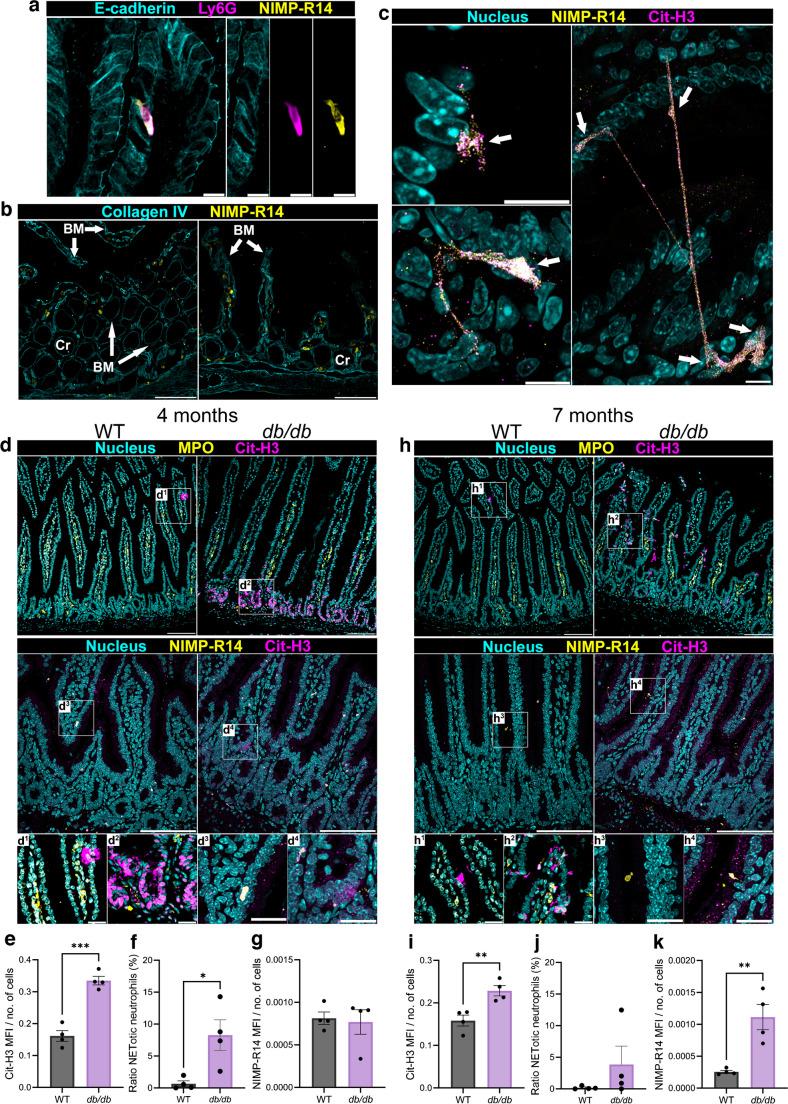
In human participants, neutrophilia was unique to individuals with type 2 diabetes with diabetic retinopathy and DME and was accompanied by heightened circulating markers of gut permeability. At late-stage diabetes, neutrophilia and gut barrier dysfunction were seen in db/db mice. The db/db mice exhibited an increase in stem-like pre-neutrophils in the intestine and bone marrow and a decrease in haematopoietic vascular reparative cells. In the db/db mouse intestine, enhanced loss of gut barrier integrity was associated with elevated intestinal NETosis. Inhibition of NETosis by the PAD4i GSK484 resulted in decreased abundance of premature neutrophils in the intestine and blood and resulted in neutrophil retention in the bone marrow compared with vehicle-treated db/db mice. Additionally, the PAD4i decreased senescence within the gut epithelium and yielded a slowing of diabetic retinopathy progression.
CONCLUSIONS/INTERPRETATION: Severity of diabetic retinopathy and DME were associated with peripheral neutrophilia, gut barrier dysfunction and endotoxaemia in the human participants. db/db mice exhibited intestinal neutrophilia, specifically stem-like pre-neutrophils, which was associated with elevated NETosis and decreased levels of vascular reparative cells. Chronic inhibition of NETosis in db/db mice reduced intestinal senescence and NETs in the retina. These changes were associated with reduced endotoxaemia and an anti-inflammatory bone marrow milieu with retention of pre-neutrophils in the bone marrow and increased gut infiltration of myeloid angiogenic cells. Collectively, PAD-4i treatment decreased gut barrier dysfunction, restoring physiological haematopoiesis and levels of haematopoietic vascular reparative cells.
目的/假设:在小肠内,中性粒细胞在预防细菌感染中发挥着不可或缺的作用。与细菌或细菌衍生抗原相互作用后,中性粒细胞会启动多阶段反应,其终末阶段是中性粒细胞胞外诱捕网形成,即蛋白酶修饰的核DNA形成细胞外陷阱。中性粒细胞胞外诱捕网形成极易引发眼部损伤,并与糖尿病视网膜病变和糖尿病性黄斑水肿(DME)进展相关。在此,我们探究糖尿病视网膜病变中肠道屏障功能障碍、内毒素血症与全身及肠道嗜中性粒细胞增多之间的关系。
方法
在一组患有2型糖尿病(n = 58)且糖尿病视网膜病变和DME严重程度各异的个体中,我们通过流式细胞术对循环中性粒细胞的丰度进行了表征,并通过血浆ELISA对内毒素血症和肠道通透性标志物进行了检测。在2型糖尿病小鼠模型中,我们研究了糖尿病对肠道、血液和骨髓中性粒细胞的丰度和功能、肠道屏障完整性、内毒素血症以及糖尿病视网膜病变严重程度的影响。通过在2型糖尿病6至7个月期间每天腹腔注射肽基精氨酸脱亚氨酶4抑制剂(PAD4i)GSK484,持续4周,实现对中性粒细胞胞外诱捕网形成的药理学抑制。
结果
在人类参与者中,嗜中性粒细胞增多是2型糖尿病伴糖尿病视网膜病变和DME个体所特有的,同时伴有肠道通透性循环标志物升高。在糖尿病晚期,db/db小鼠出现嗜中性粒细胞增多和肠道屏障功能障碍。db/db小鼠肠道和骨髓中干细胞样前体中性粒细胞增加,造血血管修复细胞减少。在db/db小鼠肠道中,肠道屏障完整性的增强丧失与肠道中性粒细胞胞外诱捕网形成增加有关。与用载体处理的db/db小鼠相比,PAD4i GSK484对中性粒细胞胞外诱捕网形成的抑制导致肠道和血液中未成熟中性粒细胞丰度降低,并导致中性粒细胞滞留在骨髓中。此外,PAD4i减少了肠道上皮内的衰老,并减缓了糖尿病视网膜病变的进展。
结论/解读:在人类参与者中,糖尿病视网膜病变和DME的严重程度与外周嗜中性粒细胞增多、肠道屏障功能障碍和内毒素血症相关。db/db小鼠表现出肠道嗜中性粒细胞增多,特别是干细胞样前体中性粒细胞,这与中性粒细胞胞外诱捕网形成增加和血管修复细胞水平降低有关。对db/db小鼠中性粒细胞胞外诱捕网形成的长期抑制减少了视网膜中的肠道衰老和中性粒细胞胞外诱捕网。这些变化与内毒素血症减少以及抗炎性骨髓微环境相关,中性粒细胞前体保留在骨髓中,骨髓血管生成细胞的肠道浸润增加。总体而言,PAD - 4i治疗减少了肠道屏障功能障碍,恢复了生理性造血和造血血管修复细胞水平。




 Zotero 插件