
通过对小鼠进行螯合试验发现,阿尔茨海默病中与铁相关的脂质过氧化在脂筏中增加,同时铁死亡抑制因子减少。
Iron-associated lipid peroxidation in Alzheimer's disease is increased in lipid rafts with decreased ferroptosis suppressors, tested by chelation in mice.
作者信息
Thorwald Max A, Godoy-Lugo Jose A, Garcia Gilberto, Silva Justine, Kim Minhoo, Christensen Amy, Mack Wendy J, Head Elizabeth, O'Day Peggy A, Benayoun Bérénice A, Morgan Todd E, Pike Christian J, Higuchi-Sanabria Ryo, Forman Henry Jay, Finch Caleb E
机构信息
Leonard Davis School of Gerontology, University of Southern California, Los Angeles, California, USA.
Department of Pathology and Laboratory Medicine, University of California, Irvine, California, USA.
出版信息
Alzheimers Dement. 2025 Jan;21(1):e14541. doi: 10.1002/alz.14541.
INTRODUCTION
Iron-mediated cell death (ferroptosis) is a proposed mechanism of Alzheimer's disease (AD) pathology. While iron is essential for basic biological functions, its reactivity generates oxidants which contribute to cell damage and death.
METHODS
To further resolve mechanisms of iron-mediated toxicity in AD, we analyzed post mortem human brain and ApoEFAD mice.
RESULTS
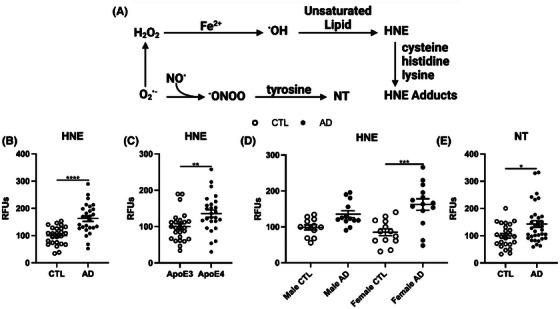
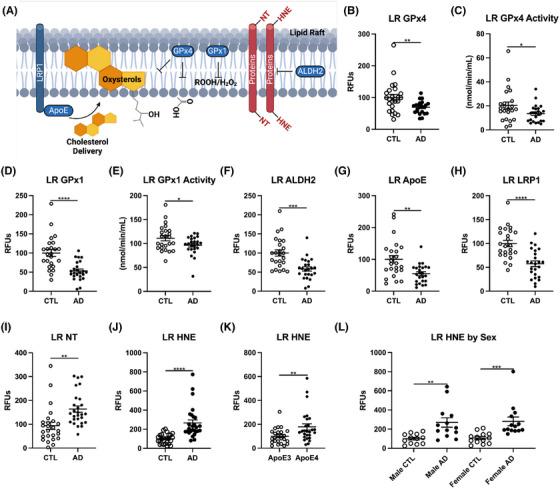
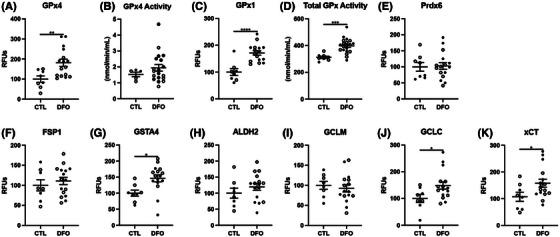
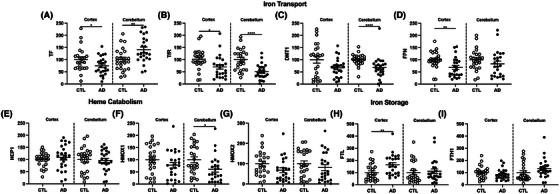
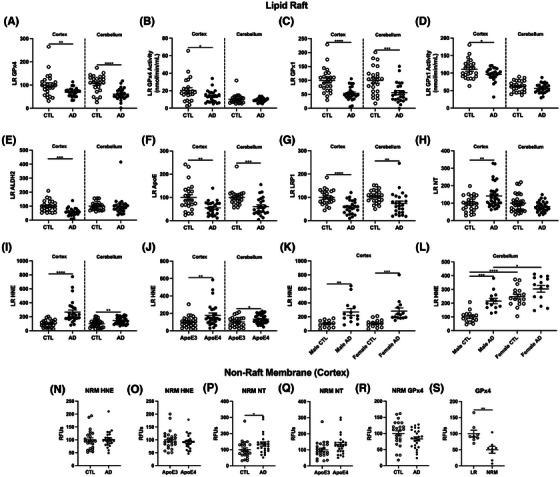
AD brains had decreased antioxidant enzymes, including those mediated by glutathione (GSH). Subcellular analyses of AD brains showed greater oxidative damage and lower antioxidant enzymes in lipid rafts, the site of amyloid processing, than in the non-raft membrane fraction. Apolipoprotein E ε4 carriers had lower lipid raft yield with greater membrane oxidation. The hypothesized role of iron in AD pathology was tested in ApoEFAD mice by iron chelation with deferoxamine, which decreased fibrillar amyloid and lipid peroxidation, together with increased GSH-mediated antioxidants.
DISCUSSION
These novel molecular pathways highlight iron-mediated damage to lipid rafts during AD.
HIGHLGHTS
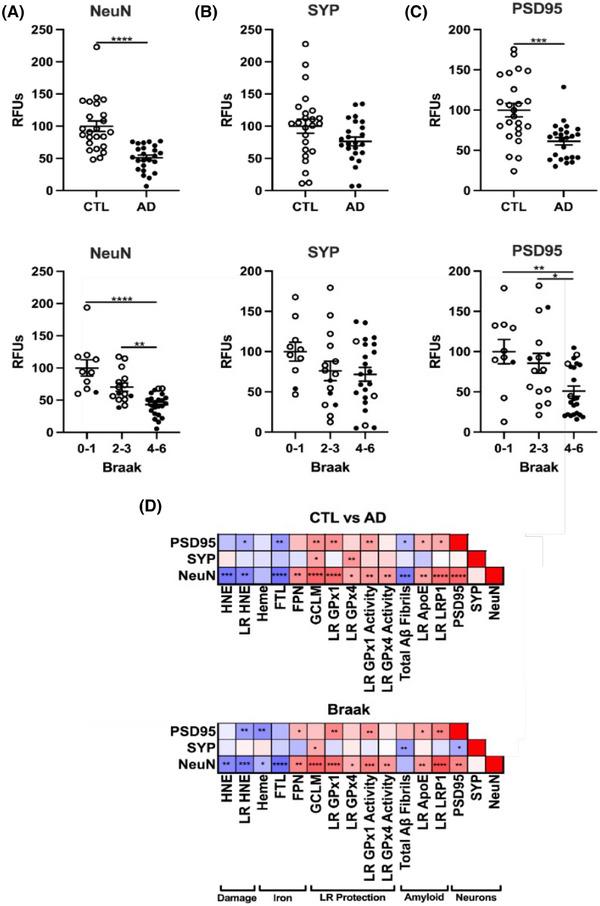
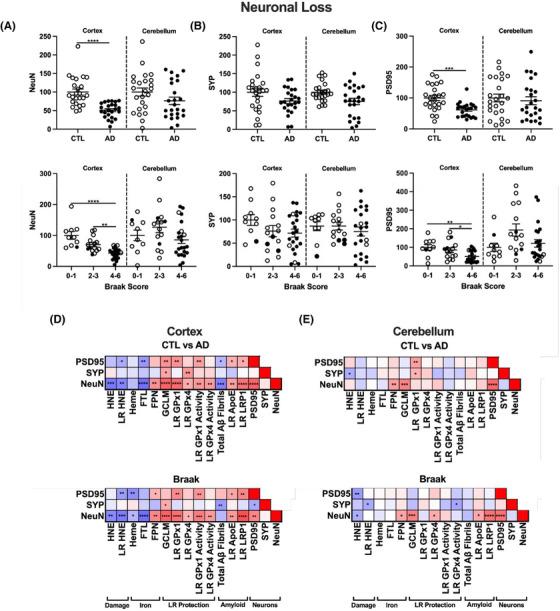
Alzheimer's disease (AD) brains have numerous markers for ferroptosis, including increased lipid peroxidation, reduced antioxidant levels, and increased iron storage. Lipid rafts in AD cases have increased oxidative damage and reduced antioxidant enzyme levels and activity which are most severe in apolipoprotein E ε4 carriers. Neuronal markers are correlated with lipid peroxidation, antioxidant defense, and iron signaling proteins suggesting that neuronal loss is linked to these events. Chelation of iron in the early-onset familial AD model reduces iron-mediated lipid peroxidation and fibrillar amyloid.
引言
铁介导的细胞死亡(铁死亡)是阿尔茨海默病(AD)病理过程的一种潜在机制。虽然铁对基本生物学功能至关重要,但其反应活性会产生氧化剂,导致细胞损伤和死亡。
方法
为进一步解析AD中铁介导的毒性机制,我们分析了人死后的大脑组织以及载脂蛋白E转基因阿尔茨海默病(ApoEFAD)小鼠。
结果
AD患者大脑中的抗氧化酶减少,包括那些由谷胱甘肽(GSH)介导的酶。对AD患者大脑的亚细胞分析表明,在淀粉样蛋白加工位点的脂筏中,氧化损伤更大,抗氧化酶水平更低,而非脂筏膜部分则不然。载脂蛋白Eε4携带者的脂筏产量较低,膜氧化程度更高。通过用去铁胺进行铁螯合,在ApoEFAD小鼠中测试了铁在AD病理过程中的假定作用,结果显示这降低了纤维状淀粉样蛋白和脂质过氧化,同时增加了GSH介导的抗氧化剂。
讨论
这些新的分子途径突出了AD期间铁介导的对脂筏的损伤。
要点
阿尔茨海默病(AD)患者大脑有许多铁死亡标志物,包括脂质过氧化增加、抗氧化剂水平降低和铁储存增加。AD病例中的脂筏氧化损伤增加,抗氧化酶水平和活性降低,在载脂蛋白Eε4携带者中最为严重。神经元标志物与脂质过氧化、抗氧化防御和铁信号蛋白相关,表明神经元丢失与这些事件有关。在早发性家族性AD模型中进行铁螯合可减少铁介导的脂质过氧化和纤维状淀粉样蛋白。









 Zotero 插件