
合成分枝菌酸衍生物以解析蛋白质分枝菌酰化,这是细菌中一种独特的翻译后修饰。
Synthetic mycolates derivatives to decipher protein mycoloylation, a unique post-translational modification in bacteria.
作者信息
Lesur Emilie, Zhang Yijie, Dautin Nathalie, Dietrich Christiane, Li de la Sierra-Gallay Ines, Augusto Luis A, Rollando Paulin, Lazar Noureddine, Urban Dominique, Doisneau Gilles, Constantinesco-Becker Florence, Van Tilbeurgh Herman, Guianvarc'h Dominique, Bourdreux Yann, Bayan Nicolas
机构信息
Université Paris-Saclay, CNRS, Institut de Chimie Moléculaire et des Matériaux d'Orsay (ICMMO), Orsay, France.
Université Paris-Saclay, CEA, CNRS, Institute for Integrative Biology of the Cell (I2BC), Gif-sur-Yvette, France.
出版信息
J Biol Chem. 2025 Mar;301(3):108243. doi: 10.1016/j.jbc.2025.108243. Epub 2025 Jan 27.
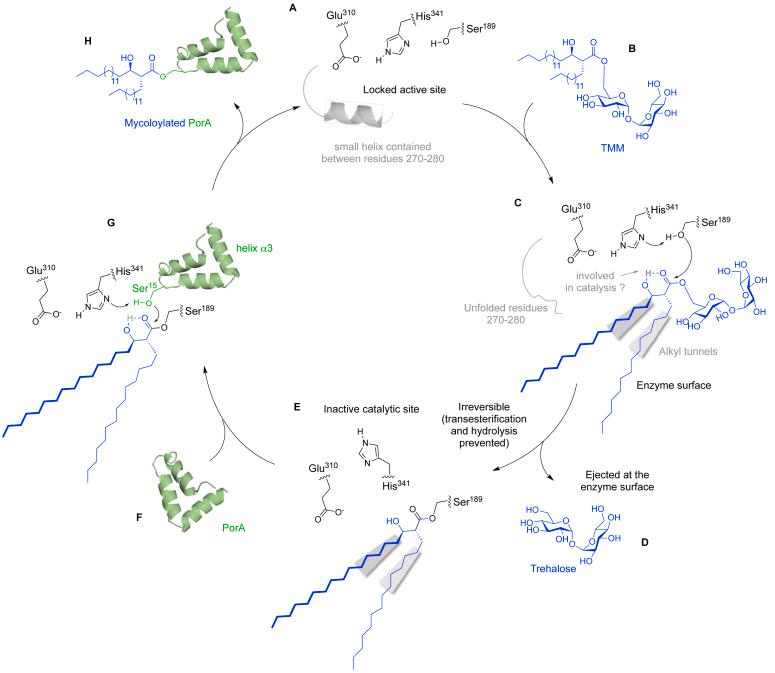
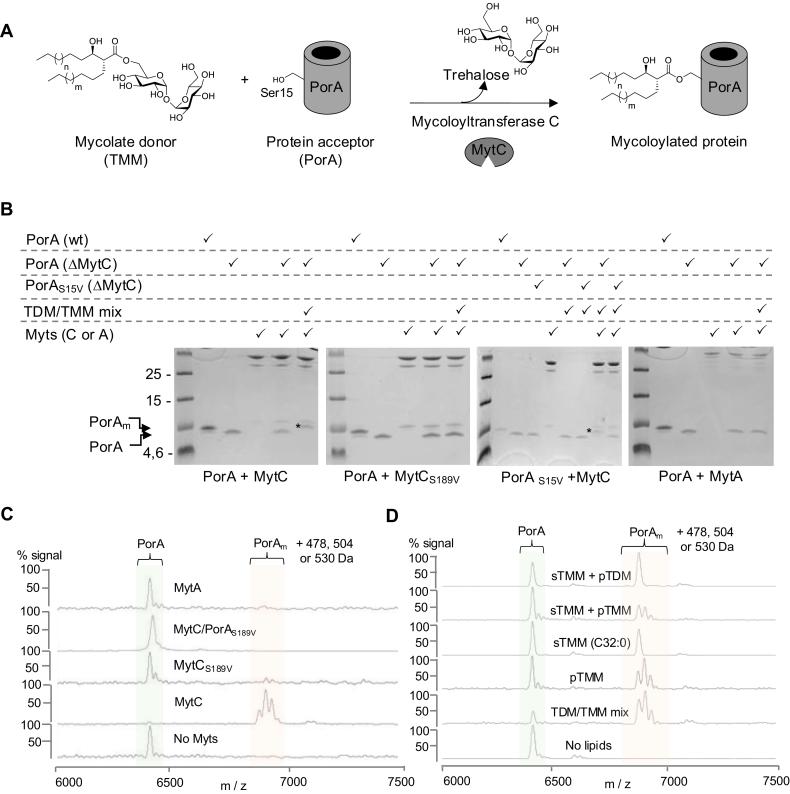
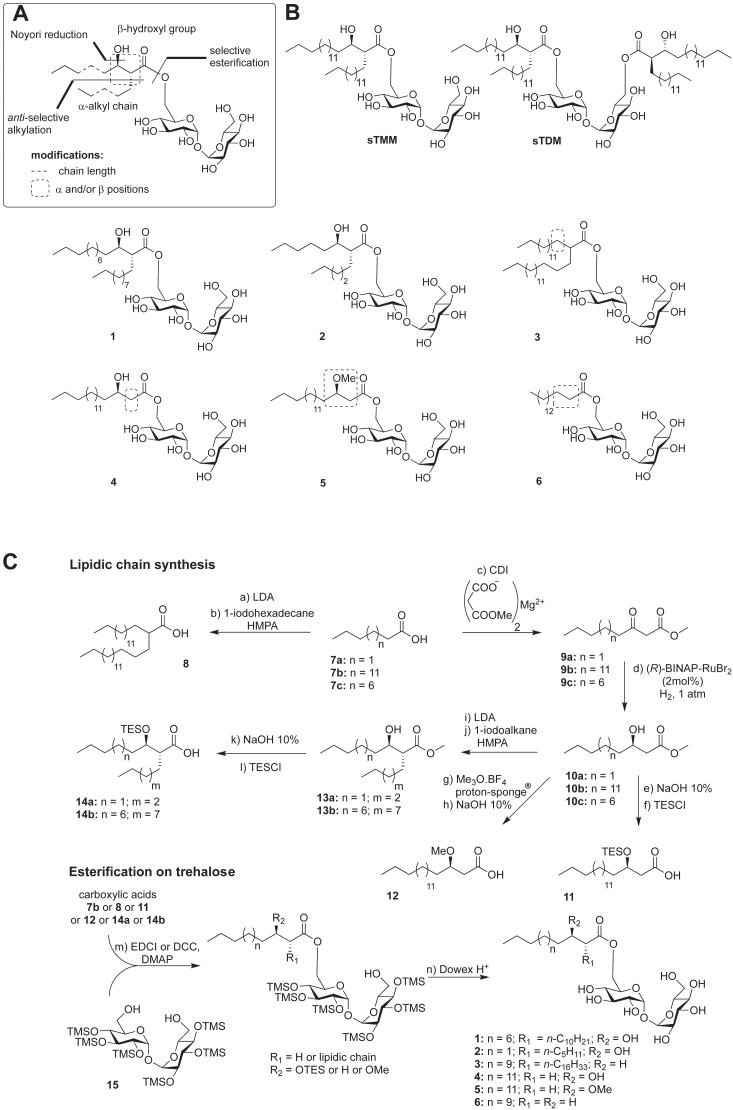
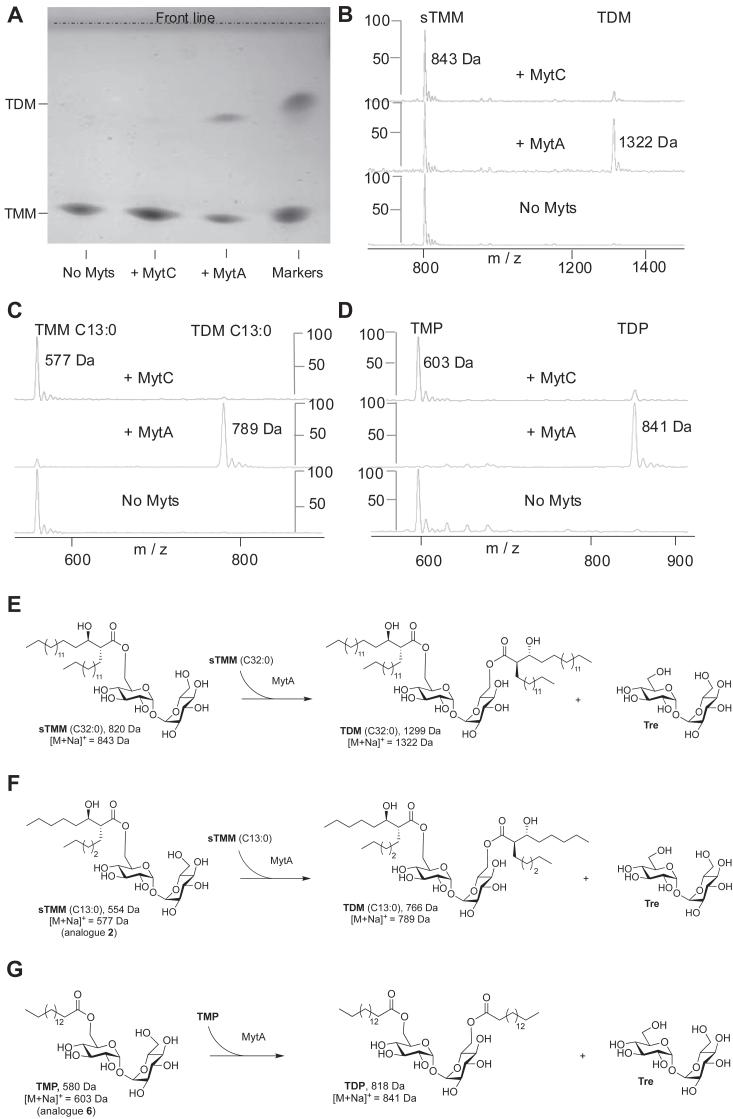
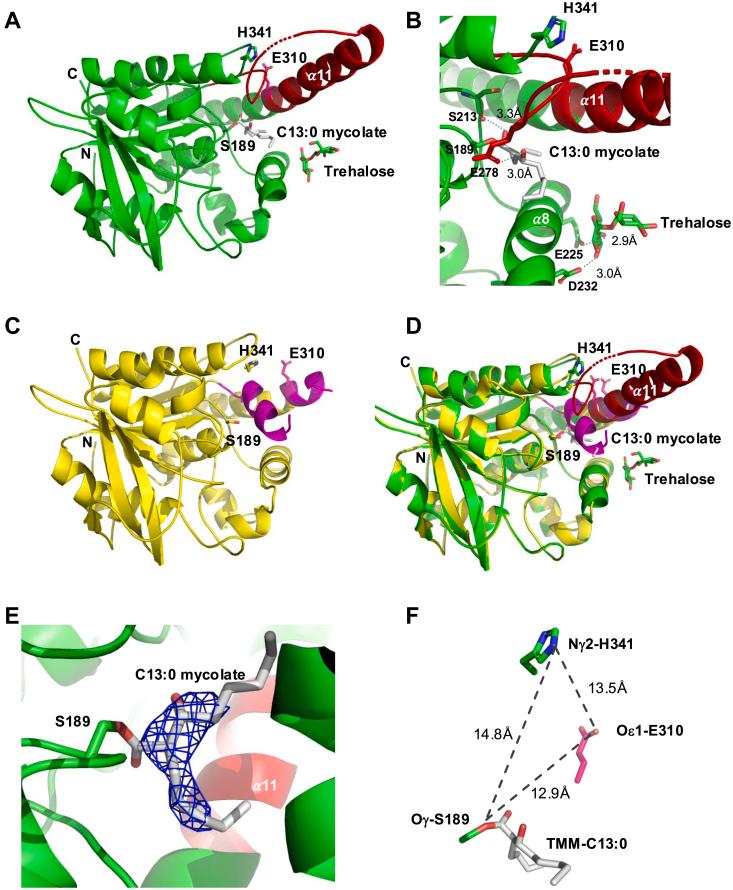
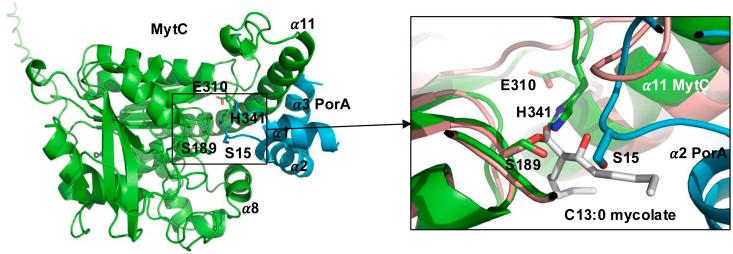
Protein mycoloylation is a newly characterized post-translational modification (PTM) specifically found in Corynebacteriales, an order of bacteria that includes numerous human pathogens. Their envelope is composed of a unique outer membrane, the so-called mycomembrane made of very-long chain fatty acids, named mycolic acids. Recently, some mycomembrane proteins including PorA have been unambiguously shown to be covalently modified with mycolic acids in the model organism Corynebacterium glutamicum by a mechanism that relies on the mycoloyltransferase MytC. This PTM represents the first example of protein O-acylation in prokaryotes and the first example of protein modification by mycolic acid. Through the design and synthesis of trehalose monomycolate (TMM) analogs, we prove that i) MytC is the mycoloyltransferase directly involved in this PTM, ii) TMM, but not trehalose dimycolate (TDM), is a suitable mycolate donor for PorA mycoloylation, iii) MytC is able to discriminate between an acyl and a mycoloyl chain in vitro unlike other trehalose mycoloyltransferases. We also solved the structure of MytC acyl-enzyme obtained with a soluble short TMM analogs which constitutes the first mycoloyltransferase structure covalently linked to an authentic mycolic acid moiety. These data highlight the great conformational flexibility of the active site of MytC during the reaction cycle and pave the way for a better understanding of the catalytic mechanism of all members of the mycoloyltransferase family including the essential Antigen85 enzymes in Mycobacteria.
蛋白质霉菌酰化是一种新发现的翻译后修饰(PTM),专门存在于棒杆菌目中,该目细菌包含众多人类病原体。它们的包膜由独特的外膜组成,即所谓的霉菌膜,由非常长链脂肪酸(称为霉菌酸)构成。最近,在模式生物谷氨酸棒杆菌中,一些包括PorA在内的霉菌膜蛋白已被明确证明通过依赖霉菌酰基转移酶MytC的机制与霉菌酸发生共价修饰。这种PTM代表了原核生物中蛋白质O-酰化的首个例子以及霉菌酸对蛋白质修饰的首个例子。通过海藻糖单霉菌酸酯(TMM)类似物的设计与合成,我们证明:i)MytC是直接参与这种PTM的霉菌酰基转移酶;ii)TMM而非海藻糖二霉菌酸酯(TDM)是PorA霉菌酰化的合适霉菌酸供体;iii)与其他海藻糖霉菌酰基转移酶不同,MytC在体外能够区分酰基链和霉菌酰基链。我们还解析了用可溶性短TMM类似物获得的MytC酰基酶的结构,这构成了首个与真实霉菌酸部分共价连接的霉菌酰基转移酶结构。这些数据突出了MytC活性位点在反应循环中的巨大构象灵活性,并为更好地理解霉菌酰基转移酶家族所有成员(包括分枝杆菌中必需的抗原85酶)的催化机制铺平了道路。

 Zotero 插件