
一种基于酵母的反向遗传学系统,用于产生编码第八个亚基因组RNA的人冠状病毒OC43报告病毒。
A yeast-based reverse genetics system to generate HCoV-OC43 reporter viruses encoding an eighth subgenomic RNA.
作者信息
Duguay Brett A, Tooley Trinity H, Pringle Eric S, Rohde John R, McCormick Craig
机构信息
Department of Microbiology and Immunology, Dalhousie University, Halifax, Nova Scotia, Canada.
出版信息
J Virol. 2025 Feb 25;99(2):e0167124. doi: 10.1128/jvi.01671-24. Epub 2025 Jan 30.
UNLABELLED
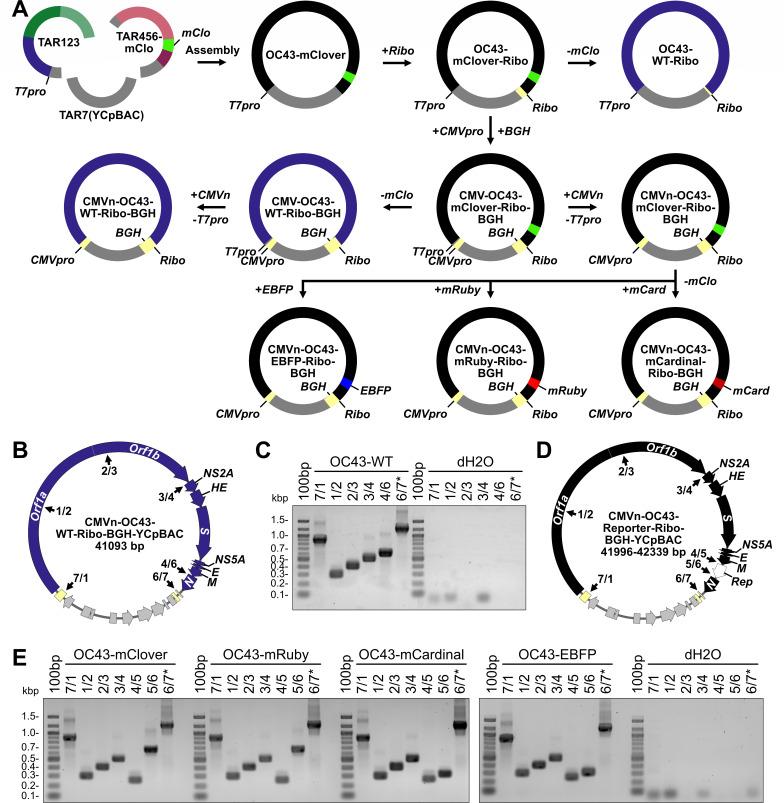
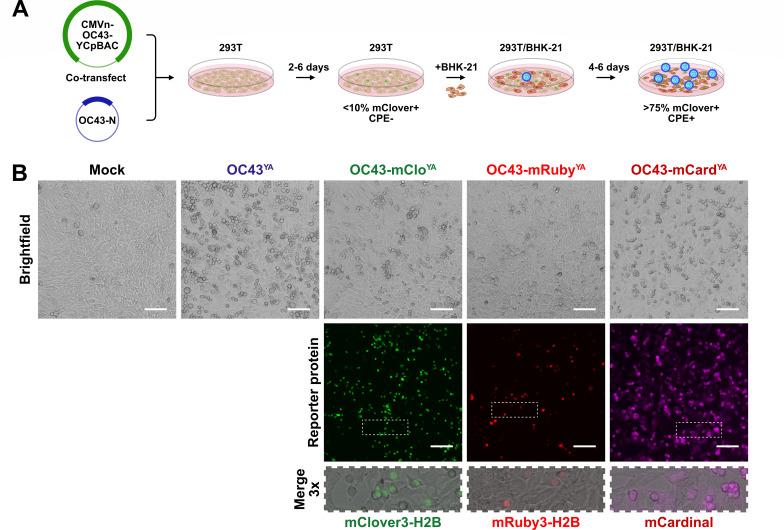
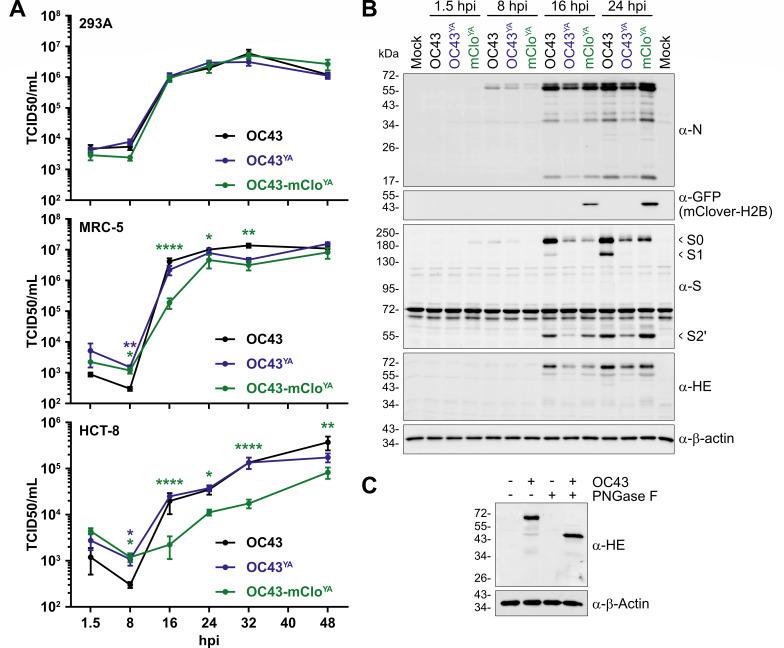
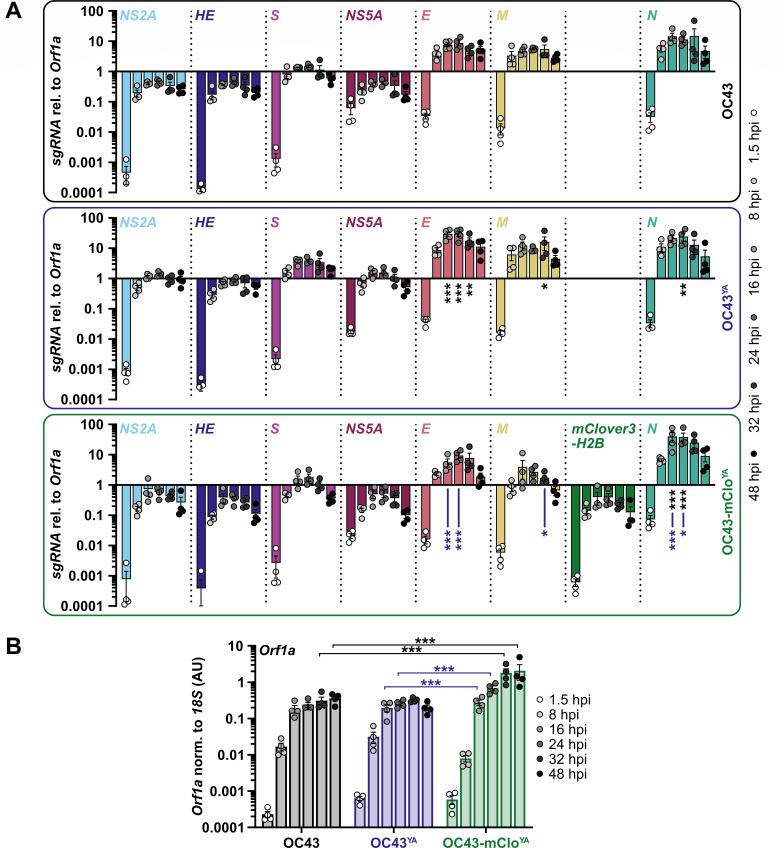
Coronaviruses have large, positive-sense single-stranded RNA genomes that challenge conventional strategies for mutagenesis. Yeast genetics has been used to manipulate large viral genomes, including those of herpesviruses and coronaviruses. This method, known as transformation-associated recombination (TAR), involves assembling complete viral genomes from dsDNA copies of viral genome fragments via homologous recombination in . Here, we report our development of a TAR assembly and mutagenesis system for the endemic, seasonal human coronavirus (HCoV) strain OC43. HCoV-OC43 generally causes mild respiratory symptoms and is classified as a biosafety level 2 agent, making it useful for studying fundamental aspects of coronavirus biology and for comparative studies of more highly pathogenic betacoronaviruses. Following cDNA synthesis from HCoV-OC43 viral RNA, we generated five plasmids encompassing ~7.2 kb portions of the gene, the to segment, or the gene and structured to facilitate reporter gene insertions in the -to- intergenic region. Using these plasmids, we completed independent assemblies of yeast centromeric plasmids encoding , to , as well as full-length HCoV-OC43 plasmids. A wild-type virus (OC43), as well as mClover3-H2B (OC43-mClo), mRuby3-H2B (OC43-mRuby), and mCardinal (OC43-mCard) reporter viruses, were rescued. The OC43-mClo reporter virus replicated comparably to an OC43 reference strain and produced the mClover3-H2B protein from a novel subgenomic RNA through insertion of an eighth body transcription regulatory sequence, preventing the need to delete or mutate viral genes. This updated HCoV-OC43 reverse genetics system will contribute to a better understanding of betacoronavirus host-pathogen interactions and can accelerate studies of novel antivirals.
IMPORTANCE
Coronaviruses are ubiquitous pathogens that infect humans resulting in both mild and severe respiratory infections. Human coronavirus strain OC43 (HCoV-OC43) is one of many viruses responsible for common colds and is a useful model of more severe coronavirus infections. In this study, we describe an updated HCoV-OC43 mutagenesis system that uses yeast to capture six DNA fragments of the viral RNA genome and assemble them into full-length genomes in yeast/bacterial plasmids. The design of this system allowed for the rapid assembly and rescue of functional HCoV-OC43 viruses, including fluorescent reporter viruses with expanded genetic capacity. This updated reverse genetics system will enhance our ability to monitor viral replication, through building new reporter viruses, while also enhancing the study of betacoronavirus biology through the generation of mutant HCoV-OC43 viruses.
未加标签
冠状病毒具有庞大的正链单链RNA基因组,这对传统的诱变策略提出了挑战。酵母遗传学已被用于操纵大型病毒基因组,包括疱疹病毒和冠状病毒的基因组。这种方法称为转化相关重组(TAR),涉及通过酵母中的同源重组从病毒基因组片段的双链DNA拷贝组装完整的病毒基因组。在此,我们报告了我们针对地方性季节性人类冠状病毒(HCoV)OC43株开发的TAR组装和诱变系统。HCoV-OC43通常引起轻度呼吸道症状,被归类为生物安全2级病原体,这使其可用于研究冠状病毒生物学的基本方面以及对致病性更强的β冠状病毒进行比较研究。从HCoV-OC43病毒RNA合成cDNA后,我们生成了五个质粒,它们包含基因约7.2 kb的部分、基因2到基因3的片段或基因7,并构建成便于在基因2到基因3的基因间区域插入报告基因。使用这些质粒,我们完成了编码基因2、基因2到基因3以及全长HCoV-OC43质粒的酵母着丝粒质粒组装。拯救出了野生型病毒(OC43)以及mClover3-H2B(OC43-mClo)、mRuby3-H2B(OC 43-mRuby)和mCardinal(OC43-mCard)报告病毒。OC43-mClo报告病毒的复制与OC43参考株相当,并通过插入第八个亚基因组转录调控序列从新的亚基因组RNA产生mClover3-H2B蛋白,无需删除或突变病毒基因。这个更新的HCoV-OC43反向遗传学系统将有助于更好地理解β冠状病毒宿主-病原体相互作用,并可加速新型抗病毒药物的研究。
重要性
冠状病毒是普遍存在的病原体,可感染人类,导致轻度和重度呼吸道感染。人类冠状病毒OC43株(HCoV-OC43)是导致普通感冒的众多病毒之一,是更严重冠状病毒感染的有用模型。在本研究中,我们描述了一种更新的HCoV-OC43诱变系统,该系统利用酵母捕获病毒RNA基因组的六个DNA片段,并在酵母/细菌质粒中将它们组装成全长基因组。该系统的设计允许快速组装和拯救功能性HCoV-OC43病毒,包括具有扩展遗传能力的荧光报告病毒。这个更新的反向遗传学系统将通过构建新的报告病毒增强我们监测病毒复制的能力,同时也通过产生突变的HCoV-OC43病毒加强对β冠状病毒生物学的研究。




 Zotero 插件