
与阿尔茨海默病早期非认知功能障碍相关的皮质下脑区的突触和同步性损伤。
Synaptic and synchronic impairments in subcortical brain regions associated with early non-cognitive dysfunction in Alzheimer's disease.
作者信息
Riffo-Lepe Nicolás, González-Sanmiguel Juliana, Armijo-Weingart Lorena, Saavedra-Sieyes Paulina, Hernandez David, Ramos Gerson, Martín Loreto S San, Aguayo Luis G
机构信息
Laboratorio de Neurofisiología, Departamento de Fisiología, Universidad de Concepción, Concepción, Chile.
Facultad de Odontología y Ciencias de la Rehabilitación, Universidad San Sebastián, Concepción, Chile.
出版信息
Neural Regen Res. 2025 Jan 29;21(1):248-64. doi: 10.4103/NRR.NRR-D-24-01052.
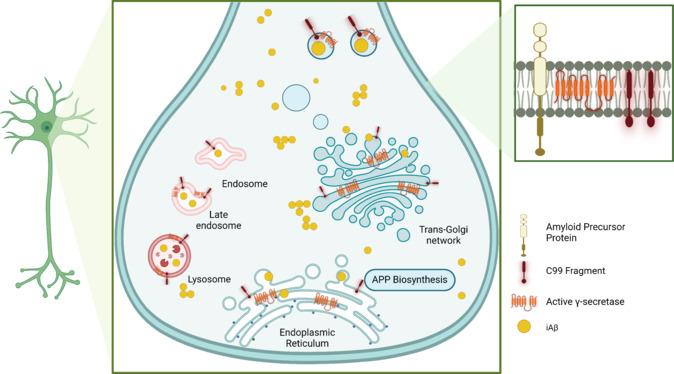
For many decades, Alzheimer's disease research has primarily focused on impairments within cortical and hippocampal regions, which are thought to be related to cognitive dysfunctions such as memory and language deficits. The exact cause of Alzheimer's disease is still under debate, making it challenging to establish an effective therapy or early diagnosis. It is widely accepted that the accumulation of amyloid-beta peptide in the brain parenchyma leads to synaptic dysfunction, a critical step in Alzheimer's disease development. The traditional amyloid cascade model is initiated by accumulating extracellular amyloid-beta in brain areas essential for memory and language. However, while it is possible to reduce the presence of amyloid-beta plaques in the brain with newer immunotherapies, cognitive symptoms do not necessarily improve. Interestingly, recent studies support the notion that early alterations in subcortical brain regions also contribute to brain damage and precognitive decline in Alzheimer's disease. A body of recent evidence suggests that early Alzheimer's disease is associated with alterations (e.g., motivation, anxiety, and motor impairment) in subcortical areas, such as the striatum and amygdala, in both human and animal models. Also, recent data indicate that intracellular amyloid-beta appears early in subcortical regions such as the nucleus accumbens, locus coeruleus, and raphe nucleus, even without extracellular amyloid plaques. The reported effects are mainly excitatory, increasing glutamatergic transmission and neuronal excitability. In agreement, data in Alzheimer's disease patients and animal models show an increase in neuronal synchronization that leads to electroencephalogram disturbances and epilepsy. The data indicate that early subcortical brain dysfunctions might be associated with non-cognitive symptoms such as anxiety, irritability, and motivation deficits, which precede memory loss and language alterations. Overall, the evidence reviewed suggests that subcortical brain regions could explain early dysfunctions and perhaps be targets for therapies to slow disease progression. Future research should focus on these non-traditional brain regions to reveal early pathological alterations and underlying mechanisms to advance our understanding of Alzheimer's disease beyond the traditionally studied hippocampal and cortical circuits.
几十年来,阿尔茨海默病的研究主要集中在皮质和海马区域的损伤,这些区域被认为与认知功能障碍有关,如记忆和语言缺陷。阿尔茨海默病的确切病因仍在争论中,这使得建立有效的治疗方法或早期诊断具有挑战性。人们普遍认为,脑实质中β-淀粉样肽的积累会导致突触功能障碍,这是阿尔茨海默病发展的关键步骤。传统的淀粉样蛋白级联模型是由在对记忆和语言至关重要的脑区中积累细胞外β-淀粉样蛋白引发的。然而,虽然用新的免疫疗法有可能减少大脑中β-淀粉样蛋白斑块的存在,但认知症状不一定会改善。有趣的是,最近的研究支持这样一种观点,即皮质下脑区的早期改变也会导致阿尔茨海默病中的脑损伤和认知前衰退。最近的一系列证据表明,在人类和动物模型中,早期阿尔茨海默病与皮质下区域(如纹状体和杏仁核)的改变(如动机、焦虑和运动障碍)有关。此外,最近的数据表明,细胞内β-淀粉样蛋白甚至在没有细胞外淀粉样蛋白斑块的情况下,也会在伏隔核、蓝斑和中缝核等皮质下区域早期出现。报道的影响主要是兴奋性的,增加了谷氨酸能传递和神经元兴奋性。与此一致的是,阿尔茨海默病患者和动物模型的数据显示神经元同步性增加,导致脑电图紊乱和癫痫。数据表明,早期皮质下脑功能障碍可能与焦虑、易怒和动机缺陷等非认知症状有关,这些症状先于记忆丧失和语言改变出现。总体而言,所审查的证据表明,皮质下脑区可以解释早期功能障碍,也许是减缓疾病进展的治疗靶点。未来的研究应聚焦于这些非传统脑区,以揭示早期病理改变和潜在机制,从而在传统研究的海马和皮质回路之外,推进我们对阿尔茨海默病的理解。



 Zotero 插件