
埃塞俄比亚臀位分娩中的剖宫产率:一项系统评价与荟萃分析
Rate of cesarean section among breech deliveries in Ethiopia: a systematic review and meta-analysis.
作者信息
Mussa Ibsa, Debella Adera, Regassa Lemma Demissie, Ahamed Badhasa, Jibro Usmael, Eyeberu Addis
机构信息
School of Public Health, College of Health and Medical Sciences, Haramaya University, Harar, Ethiopia.
School of Nursing and Midwifery, College of Health and Medical Sciences, Haramaya University, Harar, Ethiopia.
出版信息
Front Surg. 2025 Jan 17;11:1283965. doi: 10.3389/fsurg.2024.1283965. eCollection 2024.
BACKGROUND
Breech deliveries are a significant public health concern in developing countries. The World Health Organization (WHO) declared that the cesarean section rate should not be higher than 10%-15%. As unnecessary C-sections may be associated with an increased risk of maternal and neonatal mortality, this meta-analysis was aimed at determining the rate of caesarean sections among breech deliveries in Ethiopia.
METHODS
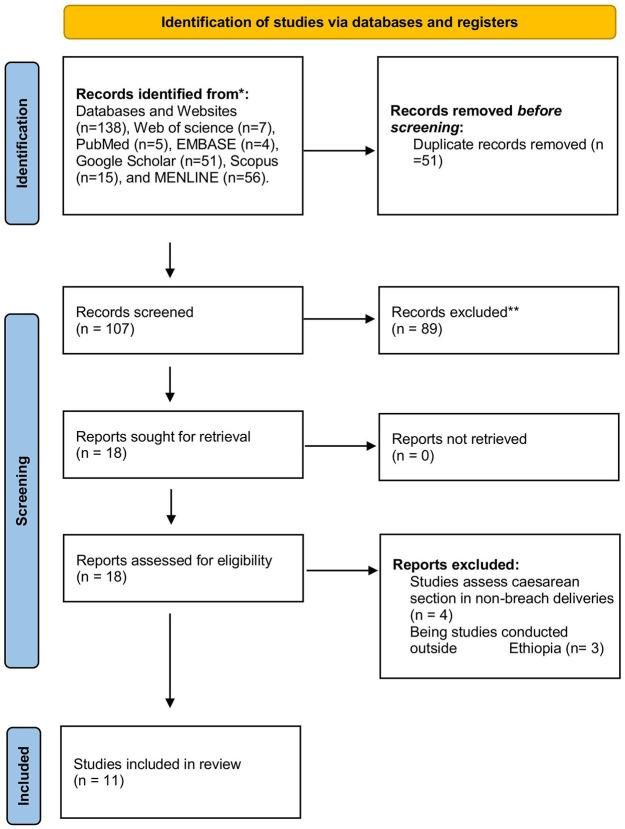
All published and unpublished articles were obtained from legitimate databases and websites. The PRISMA guidelines were used to conduct this systematic review and meta-analysis. The meta-analysis of the primary and secondary outcomes was performed using STATA version 18. The overall effect size with a 95% CI was estimated using the random effect model with the Der Simonian Liard method. A sensitivity analysis using a leave-one-out meta-analysis was computed.
RESULTS
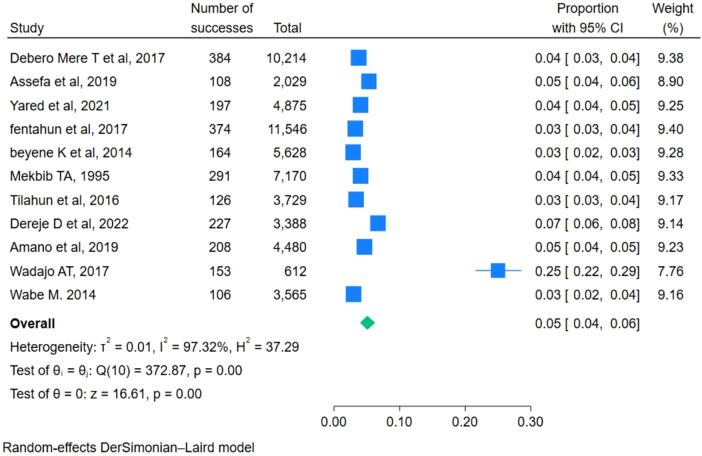
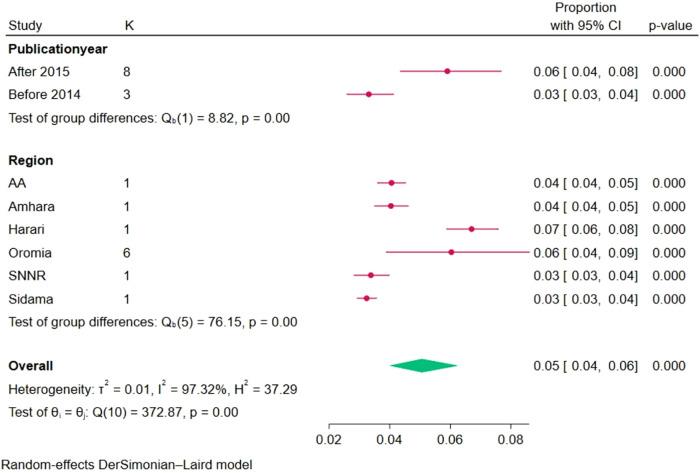
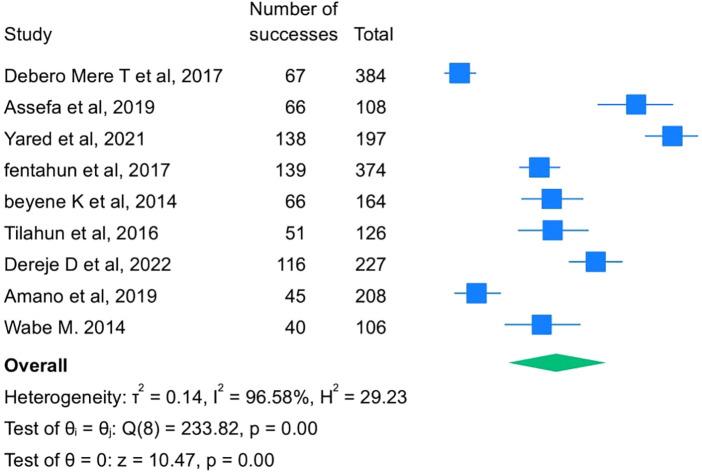
This meta-analysis included a total of 57,236 mothers who had breech deliveries. The pooled prevalence of breech deliveries among women in Ethiopia was 5% [95% CI: 4, 6]. The overall pooled cesarean section rate among breech deliveries in Ethiopia was 41% (95% CI: 29-54).
CONCLUSIONS
In this review, the pooled prevalence of breech deliveries among women in Ethiopia was 5%, and the overall rate of caesarian section among the breech deliveries was 41%. This finding pointed out that two out of every five pregnant women with breech presentation gave birth by cesarean section in Ethiopia. Therefore, the finding implies that both the government and all the concerned stakeholders shall be given particular emphasis made on strengthening antenatal care services and ensure more women have access to skilled healthcare professionals during childbirth. This can help in providing appropriate interventions, support to women and reducing the need for emergency and unnecessary breech deliveries. The result of this research are a baseline data for future researchers to conduct further studies to better understand the reasons behind the high rates and identify potential interventions and solutions specific to the African context.
背景
臀位分娩在发展中国家是一个重大的公共卫生问题。世界卫生组织(WHO)宣称剖宫产率不应高于10%-15%。由于不必要的剖宫产可能会增加孕产妇和新生儿死亡风险,本荟萃分析旨在确定埃塞俄比亚臀位分娩的剖宫产率。
方法
所有已发表和未发表的文章均从合法数据库和网站获取。采用PRISMA指南进行本系统评价和荟萃分析。使用STATA 18版本对主要和次要结局进行荟萃分析。采用Der Simonian Liard方法的随机效应模型估计95%置信区间的总体效应量。使用逐一剔除荟萃分析进行敏感性分析。
结果
本荟萃分析共纳入57236名臀位分娩的母亲。埃塞俄比亚女性中臀位分娩的合并患病率为5%[95%置信区间:4,6]。埃塞俄比亚臀位分娩的总体剖宫产率为41%(95%置信区间:29-54)。
结论
在本综述中,埃塞俄比亚女性中臀位分娩的合并患病率为5%,臀位分娩的总体剖宫产率为41%。这一发现指出,在埃塞俄比亚,每五名臀位妊娠的孕妇中就有两名通过剖宫产分娩。因此,这一发现意味着政府和所有相关利益攸关方应特别重视加强产前护理服务,并确保更多女性在分娩时有机会获得熟练的医疗保健专业人员的帮助。这有助于提供适当的干预措施,为女性提供支持,并减少紧急和不必要的臀位分娩需求。本研究结果为未来研究人员进行进一步研究提供了基线数据,以便更好地理解高剖宫产率背后的原因,并确定针对非洲背景的潜在干预措施和解决方案。

 Zotero 插件