
生物聚合物:进化、功能及意义
Biological Polymers: Evolution, Function, and Significance.
作者信息
Matange Kavita, Marland Eliav, Frenkel-Pinter Moran, Williams Loren Dean
机构信息
Institute of Chemistry, The Hebrew University of Jerusalem, Jerusalem 91904, Israel.
The Center for Nanoscience and Nanotechnology, The Hebrew University of Jerusalem, Jerusalem 9190401, Israel.
出版信息
Acc Chem Res. 2025 Mar 4;58(5):659-672. doi: 10.1021/acs.accounts.4c00546. Epub 2025 Feb 5.
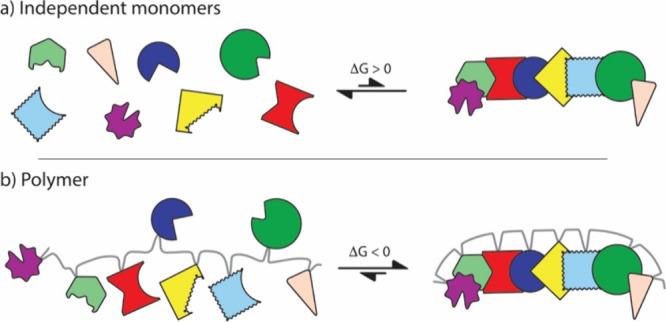
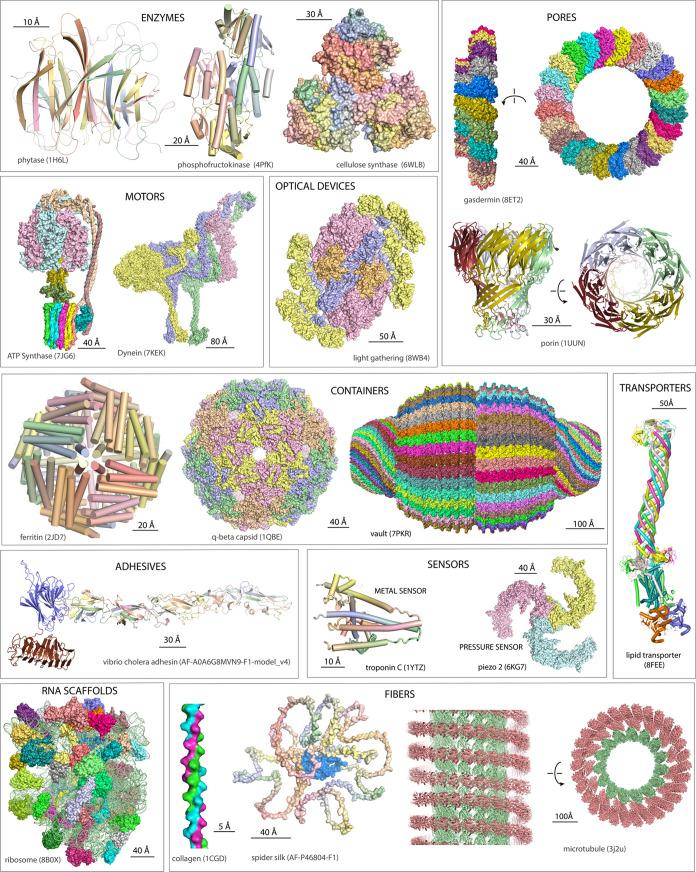
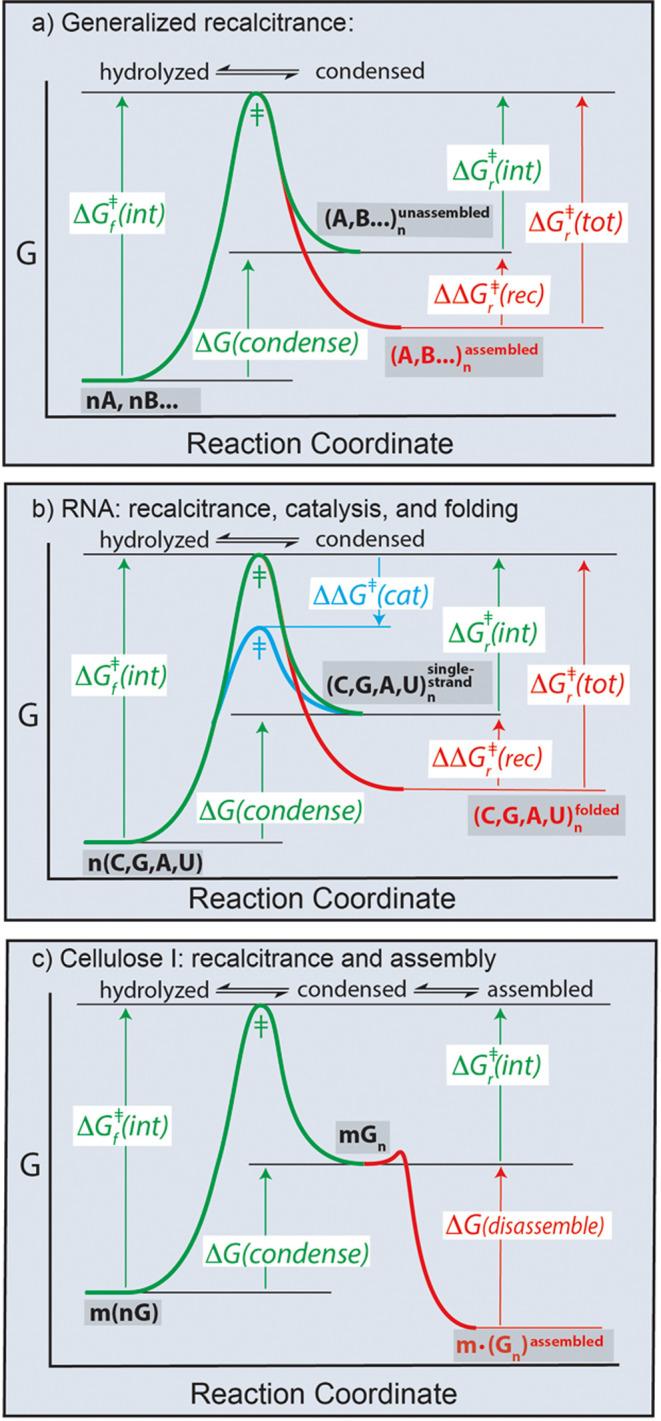
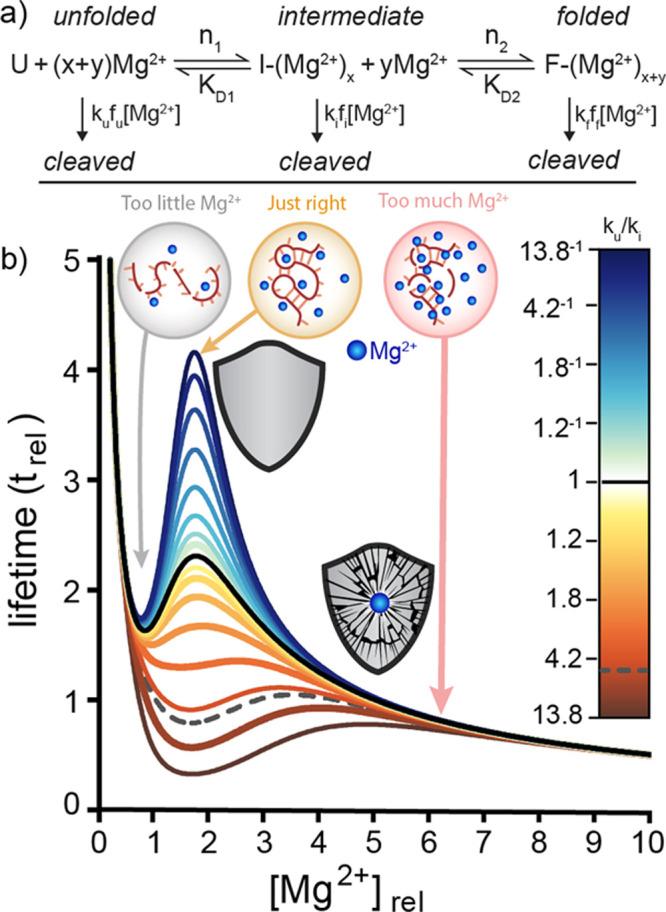
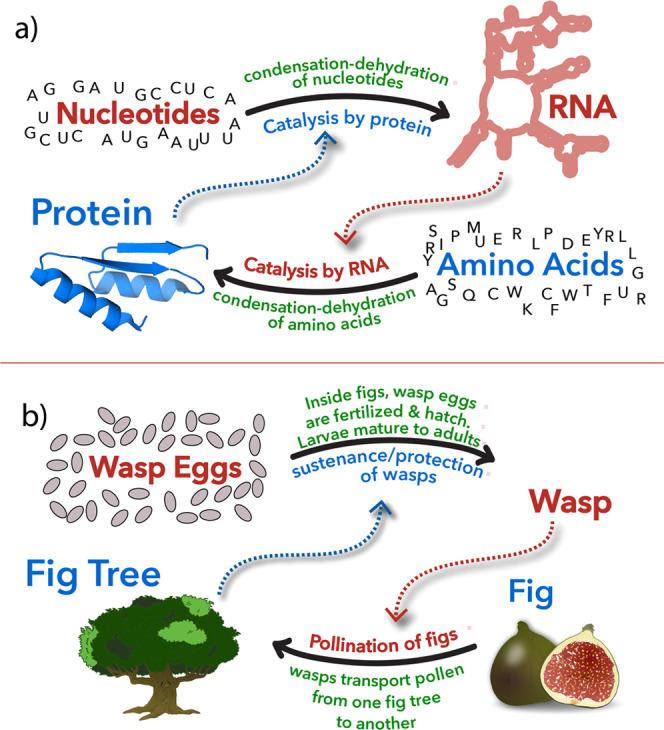
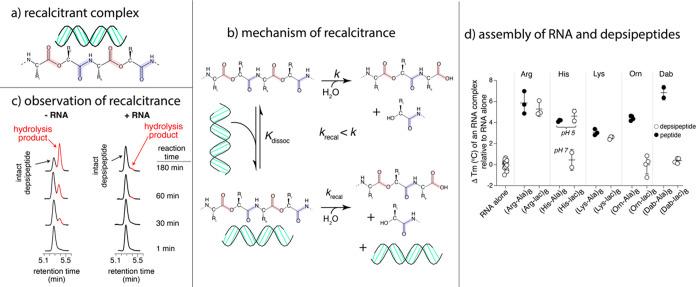
A holistic description of biopolymers and their evolutionary origins will contribute to our understanding of biochemistry, biology, the origins of life, and signatures of life outside our planet. While biopolymer sequences evolve through known Darwinian processes, the origins of the backbones of polypeptides, polynucleotides, and polyglycans are less certain. We frame this topic through two questions: (i) Do the characteristics of biopolymer backbones indicate evolutionary origins? (ii) Are there reasonable mechanistic models of such pre-Darwinian evolutionary processes? To address these questions, we have established criteria to distinguish chemical species produced by evolutionary mechanisms from those formed by nonevolutionary physical, chemical, or geological processes. We compile and evaluate properties shared by all biopolymer backbones rather than isolating a single type. Polypeptide, polynucleotide, and polyglycan backbones are kinetically trapped and thermodynamically unstable in aqueous media. Each biopolymer forms a variety of elaborate assemblies with diverse functions, a phenomenon we call polyfunction. Each backbone changes structure and function upon subtle chemical changes such as the reduction of ribose or a change in the linkage site or stereochemistry of polymerized glucose, a phenomenon we call function-switching. Biopolymers display homo- and heterocomplementarity, enabling atomic-level control of structure and function. Biopolymer backbones access recalcitrant states, where assembly modulates kinetics and thermodynamics of hydrolysis. Biopolymers are emergent; the properties of biological building blocks change significantly upon polymerization. In cells, biopolymers compose mutualistic networks; a cell is an Amazon Jungle of molecules. We conclude that biopolymer backbones exhibit hallmarks of evolution. Neither chemical, physical, nor geological processes can produce molecules consistent with observations. We are faced with the paradox that Darwinian evolution relies on evolved backbones but cannot alter biopolymer backbones. This Darwinian constraint is underlined by the observation that across the tree of life, ribosomes are everywhere and always have been composed of RNA and protein. Our data suggest that chemical species on the Hadean Earth underwent non-Darwinian coevolution driven in part by hydrolytic stress, ultimately leading to biopolymer backbones. We argue that highly evolved biopolymer backbones facilitated a seamless transition from chemical to Darwinian evolution. This model challenges convention, where backbones are products of direct prebiotic synthesis. In conventional models, biopolymer backbones retain vestiges of prebiotic chemistry. Our findings, however, align with models where chemical species underwent iterative and recursive sculpting, selection, and exaptation. This model supports Orgel's "gloomy" prediction that modern biochemistry has discarded vestiges of prebiotic chemistry. But there is hope. We believe an understanding of biopolymer origins will progress during the challenging and exciting integration of chemical sciences and evolutionary theory. These efforts can provide new perspectives on pre-Darwinian mechanisms and can deepen our understanding of evolution and of chemical sciences. Our working definition of chemical evolution is continuous chemical change with exploration of new chemical spaces and avoidance of equilibrium. In alignment with our model, we observe chemical evolution in complex mixtures undergoing wet-dry cycling, which does appear to undergo continuous chemical change and exploration of new chemical spaces while avoiding equilibrium.
对生物聚合物及其进化起源进行全面描述,将有助于我们理解生物化学、生物学、生命起源以及地球以外星球上的生命特征。虽然生物聚合物序列通过已知的达尔文过程进化,但多肽、多核苷酸和多糖骨干的起源却不太确定。我们通过两个问题来阐述这个主题:(i)生物聚合物骨干的特征是否表明其进化起源?(ii)是否存在关于这种前达尔文进化过程的合理机制模型?为了解决这些问题,我们制定了标准,以区分由进化机制产生的化学物种与由非进化的物理、化学或地质过程形成的化学物种。我们汇总并评估所有生物聚合物骨干共有的特性,而不是孤立地研究某一种类型。多肽、多核苷酸和多糖骨干在水性介质中动力学上被捕获且热力学上不稳定。每种生物聚合物都会形成具有多种功能的各种精细组装体,我们将这种现象称为多功能性。每个骨干在发生微妙的化学变化(如核糖的还原或聚合葡萄糖的连接位点或立体化学的变化)时,其结构和功能都会发生改变,我们将这种现象称为功能转换。生物聚合物表现出同型和异型互补性,能够在原子水平上控制结构和功能。生物聚合物骨干会进入顽固状态,在这种状态下,组装会调节水解的动力学和热力学。生物聚合物是涌现性的;生物构建模块的性质在聚合后会发生显著变化。在细胞中,生物聚合物构成互利网络;细胞是一个分子的亚马逊丛林。我们得出结论,生物聚合物骨干具有进化的特征。化学、物理或地质过程都无法产生与观察结果一致的分子。我们面临着这样一个悖论:达尔文进化依赖于已经进化的骨干,但却无法改变生物聚合物骨干。整个生命树中核糖体无处不在且一直由RNA和蛋白质组成这一观察结果凸显了这种达尔文式的限制。我们的数据表明,冥古宙地球上的化学物种经历了部分由水解应激驱动的非达尔文协同进化,最终导致了生物聚合物骨干的形成。我们认为,高度进化的生物聚合物骨干促进了从化学进化到达尔文进化的无缝过渡。这个模型挑战了传统观念,即骨干是直接的益生元合成产物。在传统模型中,生物聚合物骨干保留了益生元化学的痕迹。然而,我们的发现与化学物种经历迭代和递归塑造、选择和适应的模型一致。这个模型支持了奥格尔的“悲观”预测,即现代生物化学已经摒弃了益生元化学的痕迹。但仍有希望。我们相信,在化学科学与进化理论充满挑战且令人兴奋的整合过程中,对生物聚合物起源的理解将会取得进展。这些努力可以为前达尔文机制提供新的视角,并能加深我们对进化和化学科学的理解。我们对化学进化的工作定义是持续的化学变化,包括对新化学空间的探索和对平衡的避免。与我们的模型一致,我们在经历干湿循环的复杂混合物中观察到了化学进化,这种混合物似乎确实经历了持续的化学变化和对新化学空间的探索,同时避免了平衡。

 Zotero 插件