
通过积极的老龄化认知、生活质量提升和社会支持来促进老年人对室内辅助技术的接受和准备度以改善老年人生活:横断面研究
Enhancing Older Adults' Lives Through Positive Aging Perception, Quality-of-Life Enhancement, and Social Support to Drive Acceptance and Readiness Toward Indoor Assistive Technology: Cross-Sectional Study.
作者信息
Wong Ka Po, Teh Pei-Lee, Lim Weng Marc, Lee Shaun Wen Huey
机构信息
Department of Applied Social Sciences, The Hong Kong Polytechnic University, Hong Kong, China (Hong Kong).
Gerontechnology Laboratory and School of Business, Monash University Malaysia, Sunway City, Malaysia.
出版信息
JMIR Aging. 2025 Feb 5;8:e59665. doi: 10.2196/59665.
BACKGROUND
The growing aging population faces increasing mobility limitations, highlighting the need for assistive technologies as potential solutions. These technologies support the independence and well-being of older adults and individuals with mobility challenges. Indoor mobility is essential for daily activities and significantly impacts their lives. Limited indoor mobility can reduce quality of life and heighten the risk of falls.
OBJECTIVE
This study explores how positive aging perceptions, quality-of-life enhancements, and social support influence the acceptance and readiness of indoor assistive technologies among older adults.
METHODS
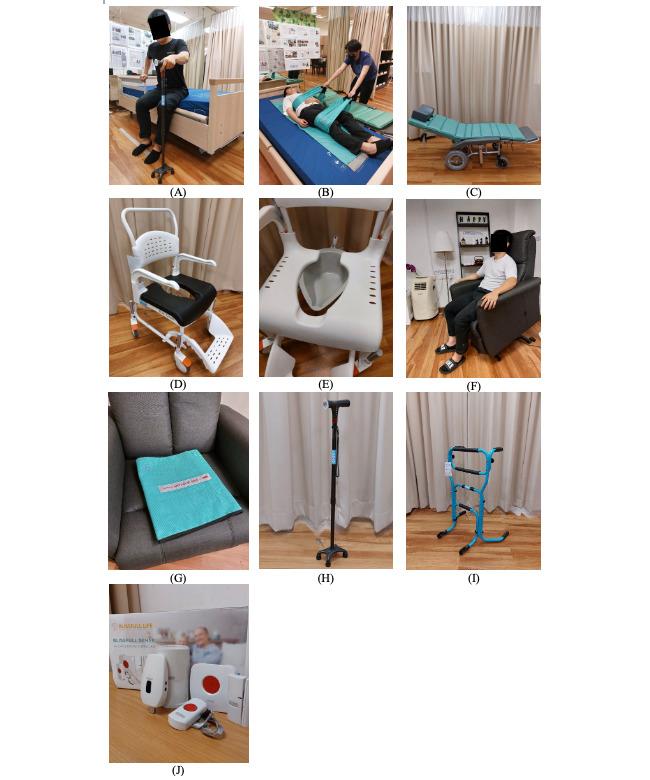
A cross-sectional study was conducted at a gerontechnology laboratory, requiring participants to visit the facility in person. Each 60-minute session included demonstrations of various indoor assistive technologies and the completion of a questionnaire. The assistive technologies showcased encompassed a wide range of devices. Participants' positive aging perceptions, quality-of-life enhancements, social support, technology acceptance, and readiness were measured using validated scales. Data were analyzed with AMOS (version 28; IBM Corp) and SPSS (version 28; IBM Corp), using structural equation modeling and multivariate analysis of covariance to assess the effects of predictors while controlling for demographic factors.
RESULTS
A total of 104 older adults aged 60 years and older participated, with a mean age of 67.92 (SD 5.68) years. Structural equation modeling indicated that positive aging perception has a significant influence on older adults' control beliefs (P=.095), comfort (P=.047), and confidence (P<.001) in gerontechnology. Multivariate analysis revealed significant combined effects of quality-of-life enhancement (P=.01) and social support (P=.03) on technology acceptance and readiness, wherein quality-of-life enhancement (P=.001) and social support (P=.008) negatively impacted security perception. Among demographic variables, educational level significantly impacted gerontechnology confidence (P=.004) while ethnicity influenced optimism (P=.003).
CONCLUSIONS
This study sheds light on key factors affecting older adults' acceptance and readiness to adopt indoor assistive technologies. Findings highlight the importance of fostering positive aging perceptions through these technologies. Addressing issues related to control beliefs, comfort, and confidence in gerontechnology is essential to enhance technology acceptance and readiness among older adults. Future research should investigate the underlying mechanisms and create targeted interventions to support successful technology adoption in this population.
背景
老龄化人口不断增加,行动受限问题日益突出,这凸显了对辅助技术作为潜在解决方案的需求。这些技术有助于老年人和行动不便者保持独立并提高生活质量。室内行动能力对于日常活动至关重要,且会对他们的生活产生重大影响。室内行动能力受限会降低生活质量并增加跌倒风险。
目的
本研究探讨积极的老龄化观念、生活质量的提高以及社会支持如何影响老年人对室内辅助技术的接受程度和准备情况。
方法
在一个老年技术实验室进行了一项横断面研究,要求参与者亲自到该场所。每次60分钟的环节包括展示各种室内辅助技术并完成一份问卷。展示的辅助技术涵盖了广泛的设备。使用经过验证的量表来测量参与者的积极老龄化观念、生活质量的提高、社会支持、技术接受程度和准备情况。使用AMOS(版本28;IBM公司)和SPSS(版本28;IBM公司)对数据进行分析,采用结构方程模型和多变量协方差分析来评估预测因素的影响,同时控制人口统计学因素。
结果
共有104名60岁及以上的老年人参与,平均年龄为67.92(标准差5.68)岁。结构方程模型表明,积极的老龄化观念对老年人对老年技术的控制信念(P = 0.095)、舒适度(P = 0.047)和信心(P < 0.001)有显著影响。多变量分析显示,生活质量的提高(P = 0.01)和社会支持(P = 0.03)对技术接受程度和准备情况有显著的综合影响,其中生活质量的提高(P = 0.001)和社会支持(P = 0.008)对安全感知有负面影响。在人口统计学变量中,教育水平对老年技术信心有显著影响(P = 0.004),而种族影响乐观情绪(P = 0.003)。
结论
本研究揭示了影响老年人接受和准备采用室内辅助技术的关键因素。研究结果强调了通过这些技术培养积极老龄化观念的重要性。解决与老年技术的控制信念、舒适度和信心相关的问题对于提高老年人对技术的接受程度和准备情况至关重要。未来的研究应调查其潜在机制,并制定有针对性的干预措施,以支持这一人群成功采用技术。

 Zotero 插件