
具有细胞毒性的提取物的化学表征与包封
Chemical characterization and encapsulation of extract with cytotoxic properties.
作者信息
Šťastný Jan, Morellá-Aucejo Ángela, Skala Tomáš, Bernardos Andrea, Maršík Petr, Lérida-Viso Araceli, Matějka Jaroslav, Mascellani Bergo Anna, Marcos María Dolores, Martínez-Máñez Ramón, Jablonský Ivan, Klouček Pavel
机构信息
Department of Food Science, Faculty of Agrobiology, Food and Natural Resources, Czech University of Life Sciences Prague, Prague, Czechia.
Instituto Interuniversitario de Investigación de Reconocimiento Molecular y Desarrollo Tec-nológico (IDM), Universitat Politècnica de València-Universitat de València, Valencia, Spain.
出版信息
Front Pharmacol. 2025 Jan 23;16:1526502. doi: 10.3389/fphar.2025.1526502. eCollection 2025.
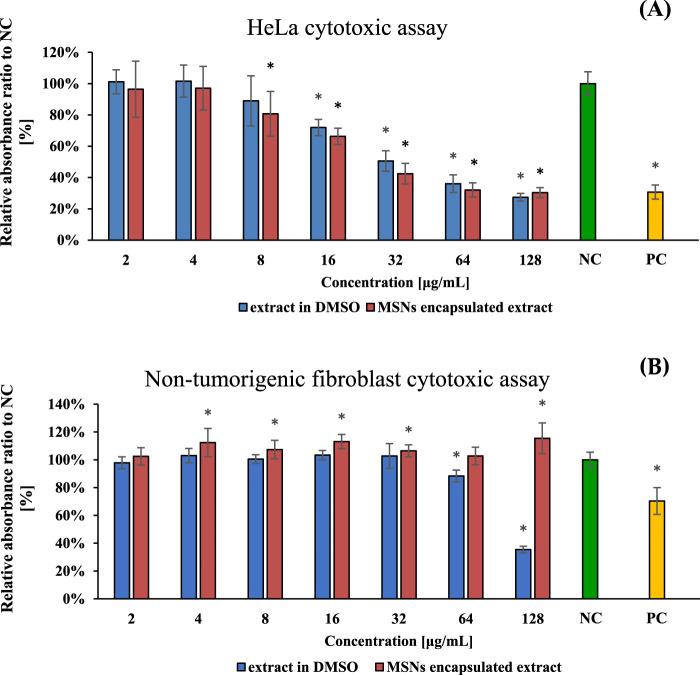
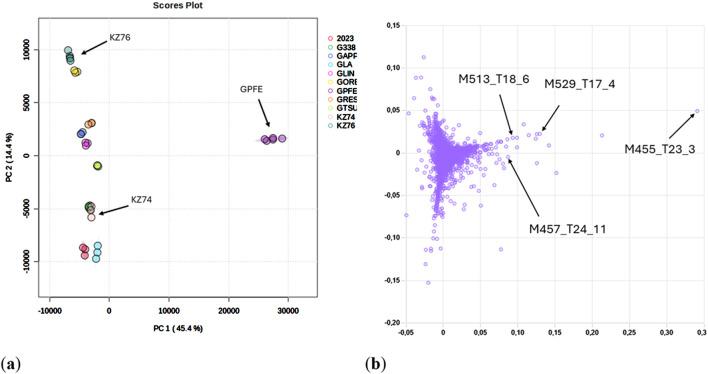
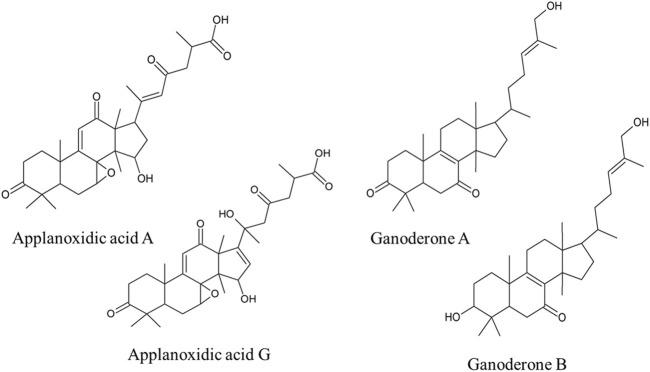
Mushrooms of the genus are known for diverse biological activities, demonstrated both traditionally and experimentally. Their secondary metabolites have shown cytotoxic potential across different cancer cell lines. Besides exploration of the most active components in different species or genotypes, new formulation techniques are in development. In recent years, there has been a growing interest in the use of nanomaterials because of significant potential for pharmacology applications as substance carriers. Applying nanoparticles may enhance the medicinal effect of the mushroom substances. This study investigated the cytotoxic properties of species methanolic extracts against the HeLa cancer cell line. Notably, the extract obtained from demonstrated the highest activity and was further used for encapsulation within synthesized mesoporous silica nanoparticles MCM-41. Subsequently, the cytotoxic effect of the loaded MCM-41 to the free form of extract was compared. The obtained results indicate successful encapsulation, and similar activity comparing encapsulated form to free extracts (IC 16.6 μg/mL and 20.5 μg/mL, respectively). In addition, the four unique compounds were identified as applanoxidic acid A, applanoxidic acid G, ganoderone A, and ganoderone B in the This study is an essential prerequisite for further steps like nanoparticle functionalization for sustained or on-command delivery of these natural extracts.
属的蘑菇以其多样的生物活性而闻名,这在传统和实验中都得到了证明。它们的次生代谢产物在不同癌细胞系中显示出细胞毒性潜力。除了探索不同物种或基因型中最具活性的成分外,新的制剂技术也在不断发展。近年来,由于纳米材料作为物质载体在药理学应用方面具有巨大潜力,人们对其的兴趣与日俱增。应用纳米颗粒可能会增强蘑菇物质的药用效果。本研究调查了种甲醇提取物对HeLa癌细胞系的细胞毒性特性。值得注意的是,从获得的提取物显示出最高活性,并进一步用于封装在合成的介孔二氧化硅纳米颗粒MCM-41中。随后,比较了负载MCM-41与提取物游离形式的细胞毒性作用。获得的结果表明成功封装,并且封装形式与游离提取物相比具有相似的活性(IC分别为16.6μg/mL和20.5μg/mL)。此外,在中鉴定出四种独特的化合物,分别为扁芝酸A、扁芝酸G、灵芝酮A和灵芝酮B。本研究是进一步开展纳米颗粒功能化以实现这些天然提取物的持续或按需递送等步骤的重要前提。



 Zotero 插件