
完整及经历缺血再灌注损伤的大鼠脑亚区域中的谷氨酸/γ-氨基丁酸/谷氨酰胺比率,缺血预处理的影响
Glutamate/GABA/glutamine ratios in intact and ischemia reperfusion challenged rat brain subregions, the effect of ischemic preconditioning.
作者信息
Baranovicova Eva, Kalenska Dagmar, Lehotsky Jan
机构信息
Biomedical Centre Martin, Jessenius Faculty of Medicine in Martin, Comenius University Bratislava, Mala Hora 4, 036 01, Martin, Slovakia.
Department of Anatomy, Jessenius Faculty of Medicine in Martin, Comenius University Bratislava, Mala Hora 4, 036 01, Martin, Slovakia.
出版信息
Metab Brain Dis. 2025 Feb 7;40(2):121. doi: 10.1007/s11011-024-01511-8.
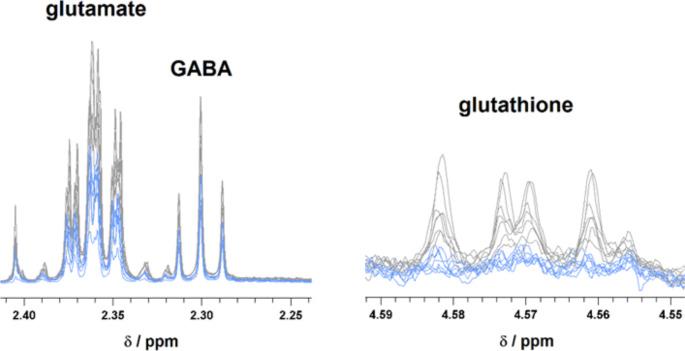
The proper function of the brain is entirely dependent on intact neurotransmission, where glutamate (Glu) and γ-aminobutyric acid (GABA) are the two most present neurotransmitters. Maintenance of these neurotransmitters pools is strictly relying on the de novo synthesis of glutamine in astrocytes. Cerebral ischemic events disrupt the balance in uptake and re-synthesis, altering Glu, GABA, and glutamine (Gln) levels. We focused on the determining of the ratios of glutamate, GABA and glutamine in the brain of rats in the intact state, the early changes and temporal development of changes towards the recovery after disruption of balance by global cerebral ischemia. Animals underwent 15 min of global cerebral ischemia, and changes in Glu/GABA/Gln ratios in the hippocampus, cortex, and cerebellum were assessed at 3 h, 24 h, and 72 h post-reperfusion using high-resolution NMR. Ischemic preconditioning was also used to induce tolerance. In an intact rat brain, glutamate level was about twice that of glutamine in all substructures, about sevenfold compared to GABA in the hippocampus and cortex, and almost eightfold compared to GABA in the cerebellum. There were three to four times as much glutamine compared to GABA. After severe cerebral ischemia, Glu/Gln as well as GABA/Gln ratios extensively dropped in early reperfusion (3 h) and gradually increased in 72 h reperfusion time, however, only the Glu/Gln ratio recovered to the level of controls. Glu/GABA ratio remained in all three reperfusion times over the level of control animals. We observed a decrease in glutathione NMR peak in brain tissue homogenates after ischemia. The obtained data suggest the accelerated accumulation of intraparenchymal glutamate after ischemia, which was even more pronounced in the preconditioned animals three days after an ischemic event. The postischemic GABA level restoration did not achieve the level before ischemia in 72 h reperfusion, which could be one of the limiting factors in the complete postischemic GABA transmission recovery. Presented data may be of advantage not only when comparing glutamate and GABA homeostasis and neurotransmission, but also for glutamine reserve display as neurotransmitter precursor and ammonia transfer buffer in glutamate/GABA/glutamine cycle within the intact brain substructures as well after ischemic insult in rats.
大脑的正常功能完全依赖于完整的神经传递,其中谷氨酸(Glu)和γ-氨基丁酸(GABA)是两种含量最为丰富的神经递质。这些神经递质库的维持严格依赖于星形胶质细胞中谷氨酰胺的从头合成。脑缺血事件会破坏摄取和再合成的平衡,改变Glu、GABA和谷氨酰胺(Gln)的水平。我们着重于测定完整状态下大鼠大脑中谷氨酸、GABA和谷氨酰胺的比例,以及在全脑缺血破坏平衡后向恢复状态转变过程中的早期变化和变化的时间发展情况。对动物进行15分钟的全脑缺血处理,并在再灌注后3小时、24小时和72小时使用高分辨率核磁共振评估海马体、皮质和小脑中Glu/GABA/Gln比例的变化。还采用缺血预处理来诱导耐受性。在完整的大鼠大脑中,所有亚结构中谷氨酸水平约为谷氨酰胺的两倍,在海马体和皮质中约为GABA的七倍,在小脑中约为GABA的八倍。谷氨酰胺的含量是GABA的三到四倍。严重脑缺血后,Glu/Gln以及GABA/Gln比例在再灌注早期(3小时)大幅下降,并在再灌注72小时时逐渐升高,然而,只有Glu/Gln比例恢复到对照水平。在所有三个再灌注时间点,Glu/GABA比例均高于对照动物的水平。我们观察到缺血后脑组织匀浆中谷胱甘肽核磁共振峰降低。所获得的数据表明缺血后实质内谷氨酸加速积累,这在缺血事件三天后的预处理动物中更为明显。再灌注72小时后缺血后GABA水平的恢复未达到缺血前的水平,这可能是缺血后GABA传递完全恢复的限制因素之一。所呈现的数据不仅在比较谷氨酸和GABA体内平衡及神经传递时可能具有优势,而且对于在完整脑亚结构以及大鼠缺血性损伤后,作为谷氨酸/GABA/谷氨酰胺循环中神经递质前体和氨转运缓冲剂的谷氨酰胺储备展示也具有优势。




 Zotero 插件