Nowicki Marcin, Nowakowska Marzena, Nowak Katarzyna, Szczechura Wojciech, Kaminski Piotr
Department of Entomology and Plant Pathology, University of Tennessee, Knoxville, Tennessee, United States of America.
Department of Horticultural Crop Breeding, The National Institute of Horticulture, Skierniewice, Poland.
PLoS One. 2025 Feb 7;20(2):e0318753. doi: 10.1371/journal.pone.0318753. eCollection 2025.
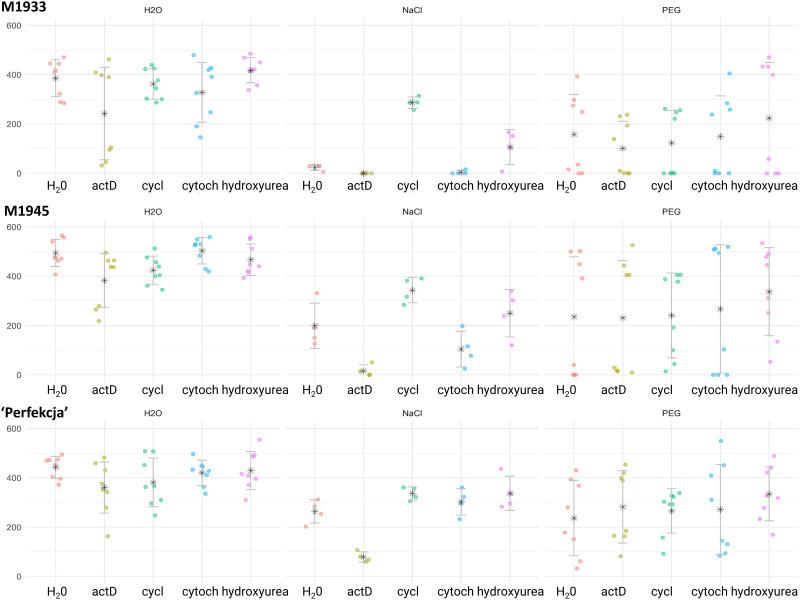
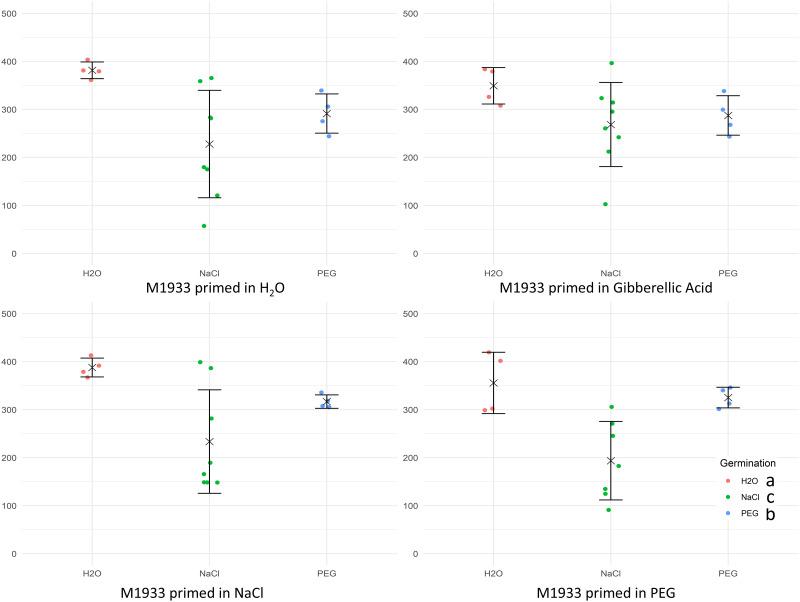
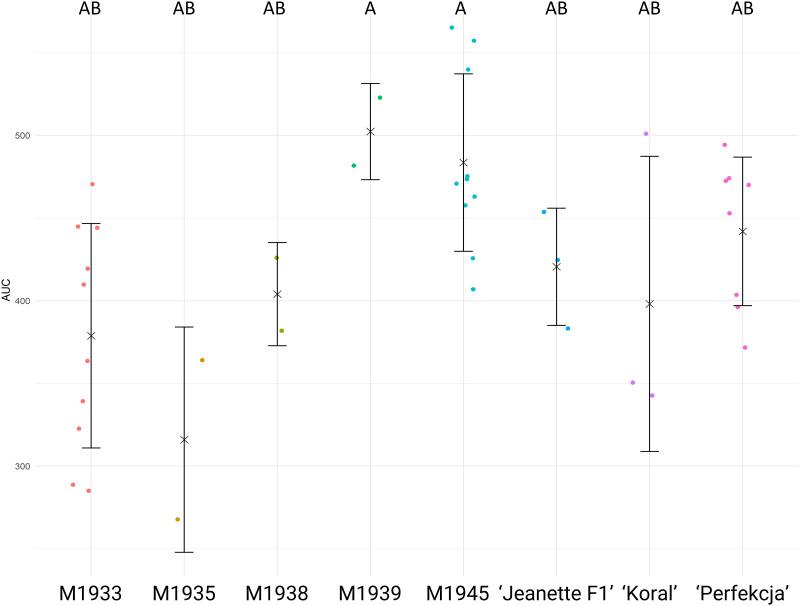
Climate change necessitates the development of improved crops capable of withstanding future weather patterns. Carrots (Daucus carota L.), a crucial vegetable crop of global importance, face unique challenges in seed germination and seedling development due to their complex pollination biology and outcrossing reproduction mode with severe inbreeding depression if selfed. This study investigated the effects of salinity and drought stress on carrot seed germination and seedling development, with focus on the roles of seed priming, cellular processes inhibitors, and biochemical responses. Seed priming agents were hypothesized to enhance stress tolerance by modulating specific cellular and biochemical pathways, such as improving osmotic balance, enhancing antioxidant defense mechanisms, and activating stress-responsive genes. We also hypothesized that specific cellular processes and biochemical pathways influence the germination and early seedling growth of carrot seeds under salinity or drought stress. To test that hypothesis, we evaluated the effects of seed priming with various agents (e.g., water, NaCl, PEG, GA3) on germination rates and seedling vigor. Additionally, we investigated the impact of inhibitors (actinomycin D-inhibitor of transcription, cycloheximide-inhibitor of translation, hydroxyurea-inhibitor of DNA synthesis, cytochalasin-inhibitor of actin polymerization) on seed germination under stress conditions. Biochemical responses, including reactive oxygen species (ROS) levels and antioxidant enzyme activities, were analyzed to identify genotype-specific adaptations indicative of stress tolerance. Our results revealed significant variability in germination rates and seedling growth among the studied carrot experimental lines and commercial cultivars under salinity or drought stress Seed priming enhanced germination and seedling vigor by up to 35% under salinity stress and 28% under drought stress, with notable differences observed across the priming agents. The application of inhibitors highlighted the involvement of specific cellular processes in regulation of seed germination under stress. For instance, actinomycin D reduced germination by 40% under salinity stress. Biochemical analyses indicated genotype-specific responses, with variations in ROS levels and antioxidant enzyme activities such as superoxide dismutase and peroxidase. ROS levels increased by 50% under drought stress, whereas antioxidant enzyme activities varied substantially among genotypes. These findings underscored the importance of genotype-specific adaptations in conferring salinity or drought tolerance in carrot seedlings. Future research integrating omics approaches (e.g., transcriptomics, proteomics, metabolomics) will provide deeper insights into the molecular mechanisms that regulate stress tolerance, to aid in the development of more resilient carrot varieties suitable for cultivation under adverse environmental conditions.
气候变化使得有必要培育出能够抵御未来气候模式的改良作物。胡萝卜(Daucus carota L.)是一种具有全球重要性的关键蔬菜作物,由于其复杂的授粉生物学特性以及异花授粉繁殖方式(自交时会出现严重的近亲衰退),在种子萌发和幼苗发育方面面临独特挑战。本研究调查了盐度和干旱胁迫对胡萝卜种子萌发和幼苗发育的影响,重点关注种子引发、细胞过程抑制剂和生化反应的作用。种子引发剂被假定通过调节特定的细胞和生化途径来增强胁迫耐受性,例如改善渗透平衡、增强抗氧化防御机制以及激活胁迫响应基因。我们还假定特定的细胞过程和生化途径会影响盐度或干旱胁迫下胡萝卜种子的萌发和早期幼苗生长。为了验证这一假设,我们评估了用各种试剂(如水、NaCl、PEG、GA3)进行种子引发对发芽率和幼苗活力的影响。此外,我们研究了抑制剂(放线菌素D - 转录抑制剂、环己酰亚胺 - 翻译抑制剂、羟基脲 - DNA合成抑制剂、细胞松弛素 - 肌动蛋白聚合抑制剂)在胁迫条件下对种子萌发的影响。分析了包括活性氧(ROS)水平和抗氧化酶活性在内的生化反应,以确定表明胁迫耐受性的基因型特异性适应性。我们的结果显示,在所研究的胡萝卜实验品系和商业品种中,盐度或干旱胁迫下的发芽率和幼苗生长存在显著差异。种子引发在盐度胁迫下使发芽率和幼苗活力提高了35%,在干旱胁迫下提高了28%,不同引发剂之间存在显著差异。抑制剂的应用突出了特定细胞过程在胁迫下种子萌发调控中的作用。例如,放线菌素D在盐度胁迫下使发芽率降低了40%。生化分析表明存在基因型特异性反应,ROS水平以及超氧化物歧化酶和过氧化物酶等抗氧化酶活性存在差异。干旱胁迫下ROS水平增加了50%,而抗氧化酶活性在不同基因型之间差异很大。这些发现强调了基因型特异性适应性在赋予胡萝卜幼苗盐度或干旱耐受性方面的重要性。未来整合组学方法(如转录组学、蛋白质组学、代谢组学)的研究将更深入地洞察调节胁迫耐受性的分子机制,以帮助培育出更能适应在不利环境条件下种植的胡萝卜品种。

 Zotero 插件