
肿瘤微生物组:在肿瘤发生、发展和治疗中的作用。
Tumor microbiome: roles in tumor initiation, progression, and therapy.
作者信息
Zhang Shengxin, Huang Jing, Jiang Zedong, Tong Huan, Ma Xuelei, Liu Yang
机构信息
Department of Biotherapy, Cancer Center and State Key Laboratory of Biotherapy, West China Hospital, Sichuan University, Chengdu, 610041, Sichuan Province, China.
Department of Medical Ultrasound, West China Hospital of Sichuan University, 37 Guoxue Lane, Wuhou District, Chengdu, 610041, Sichuan Province, China.
出版信息
Mol Biomed. 2025 Feb 8;6(1):9. doi: 10.1186/s43556-025-00248-9.
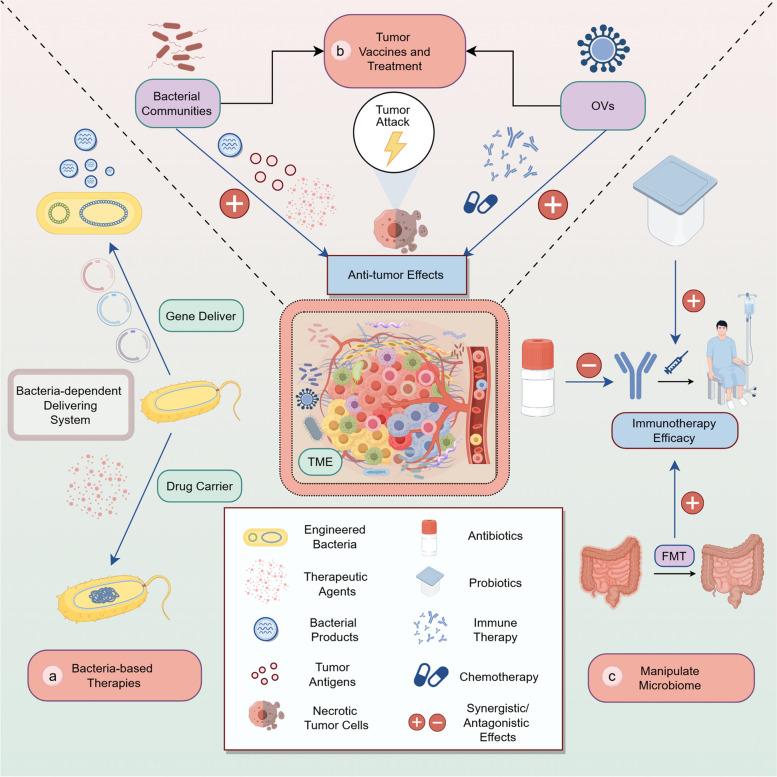
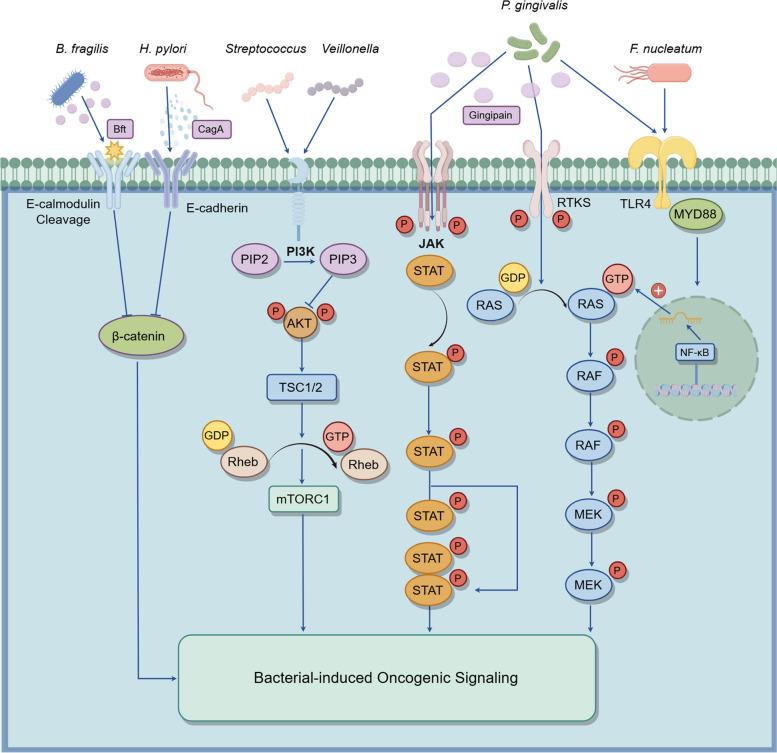
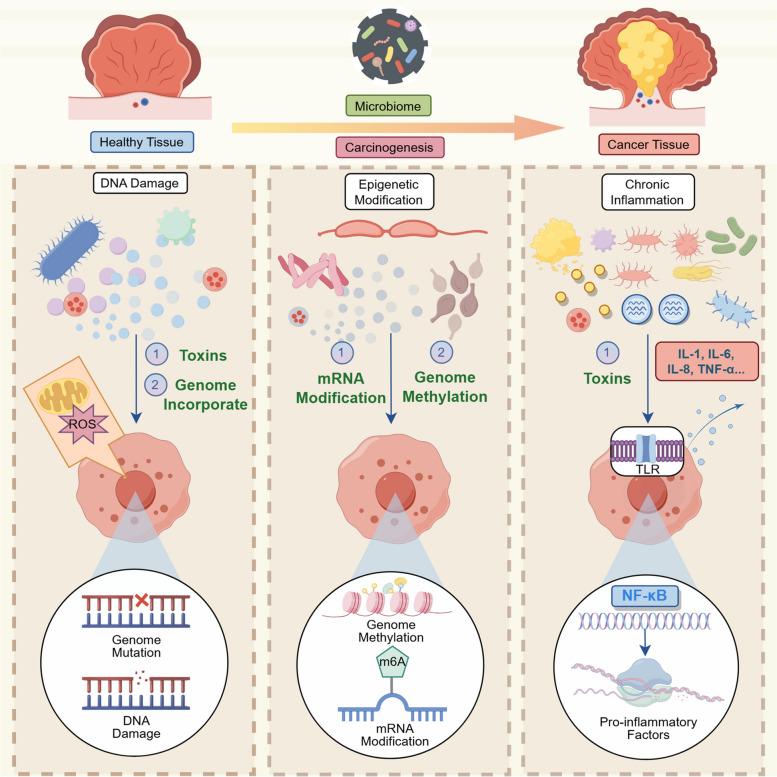
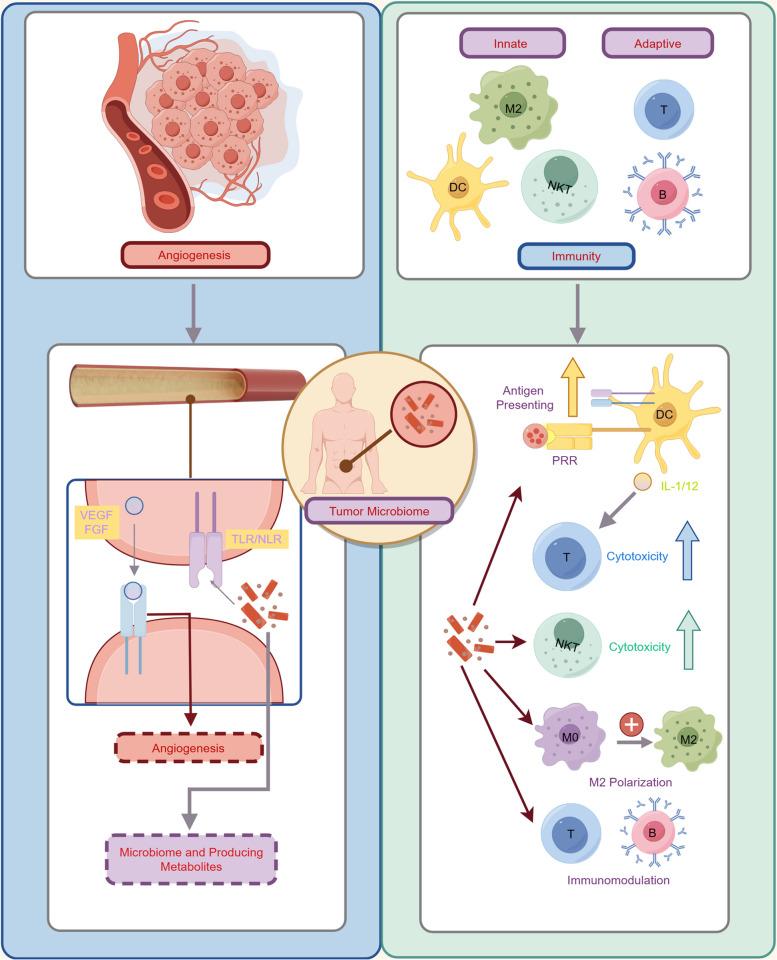
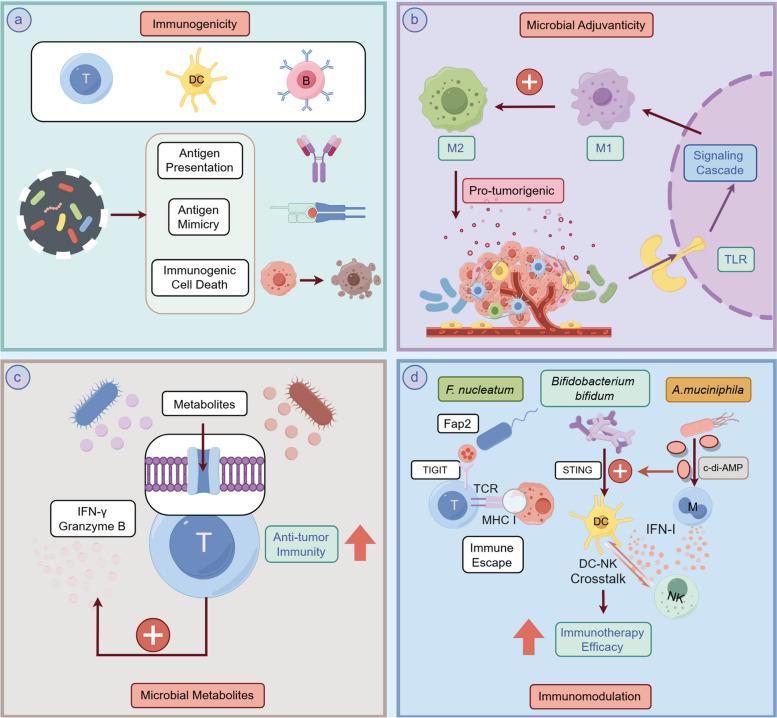
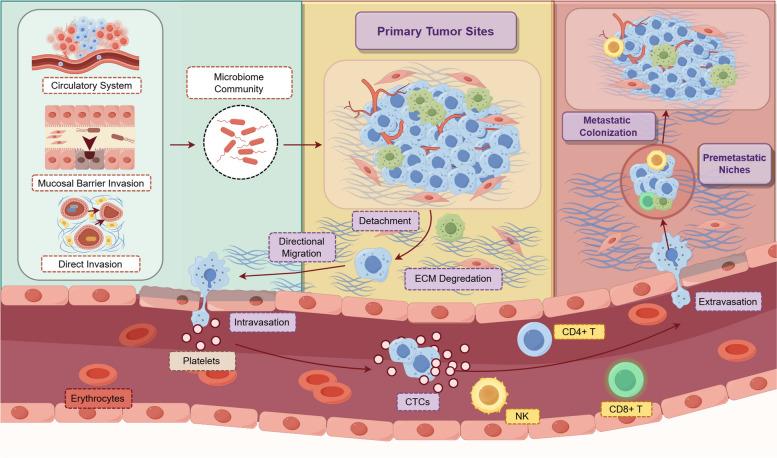
Over the past few years, the tumor microbiome is increasingly recognized for its multifaceted involvement in cancer initiation, progression, and metastasis. With the application of 16S ribosomal ribonucleic acid (16S rRNA) sequencing, the intratumoral microbiome, also referred to as tumor-intrinsic or tumor-resident microbiome, has also been found to play a significant role in the tumor microenvironment (TME). Understanding their complex functions is critical for identifying new therapeutic avenues and improving treatment outcomes. This review first summarizes the origins and composition of these microbial communities, emphasizing their adapted diversity across a diverse range of tumor types and stages. Moreover, we outline the general mechanisms by which specific microbes induce tumor initiation, including the activation of carcinogenic pathways, deoxyribonucleic acid (DNA) damage, epigenetic modifications, and chronic inflammation. We further propose the tumor microbiome may evade immunity and promote angiogenesis to support tumor progression, while uncovering specific microbial influences on each step of the metastatic cascade, such as invasion, circulation, and seeding in secondary sites. Additionally, tumor microbiome is closely associated with drug resistance and influences therapeutic efficacy by modulating immune responses, drug metabolism, and apoptotic pathways. Furthermore, we explore innovative microbe-based therapeutic strategies, such as engineered bacteria, oncolytic virotherapy, and other modalities aimed at enhancing immunotherapeutic efficacy, paving the way for microbiome-centered cancer treatment frameworks.
在过去几年中,肿瘤微生物群因其在癌症发生、发展和转移中的多方面参与而越来越受到认可。随着16S核糖体核糖核酸(16S rRNA)测序技术的应用,肿瘤内微生物群,也被称为肿瘤内在或肿瘤驻留微生物群,也被发现对肿瘤微环境(TME)起着重要作用。了解它们的复杂功能对于确定新的治疗途径和改善治疗效果至关重要。本综述首先总结了这些微生物群落的起源和组成,强调了它们在不同肿瘤类型和阶段的适应性多样性。此外,我们概述了特定微生物诱导肿瘤发生的一般机制,包括致癌途径的激活、脱氧核糖核酸(DNA)损伤、表观遗传修饰和慢性炎症。我们进一步提出,肿瘤微生物群可能逃避免疫并促进血管生成以支持肿瘤进展,同时揭示特定微生物对转移级联反应每个步骤的影响,如侵袭、循环和在继发部位定植。此外,肿瘤微生物群与耐药性密切相关,并通过调节免疫反应、药物代谢和凋亡途径影响治疗效果。此外,我们探索了基于微生物的创新治疗策略,如工程菌、溶瘤病毒疗法和其他旨在提高免疫治疗效果的方法,为以微生物群为中心的癌症治疗框架铺平道路。

 Zotero 插件