
卡维地洛对棕榈酸诱导的原代大鼠肝细胞氧化应激的保护作用。
Protective Effect of Carvedilol Against Oxidative Stress Induced by Palmitic Acid in Primary Rat Hepatocytes.
作者信息
Salas Sandra A Serna, Damba Turtushikh, Buist-Homan Manon, Moshage Han
机构信息
Department of Gastroenterology and Hepatology, University Medical Center Groningen, University of Groningen, Groningen, the Netherlands.
School of Pharmacy, Mongolian National University of Medical Sciences, Ulaanbaatar, Mongolia.
出版信息
Cell Biochem Funct. 2025 Feb;43(2):e70057. doi: 10.1002/cbf.70057.
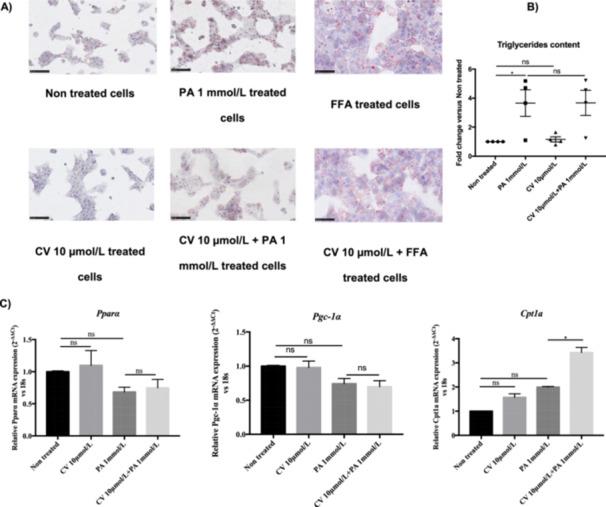
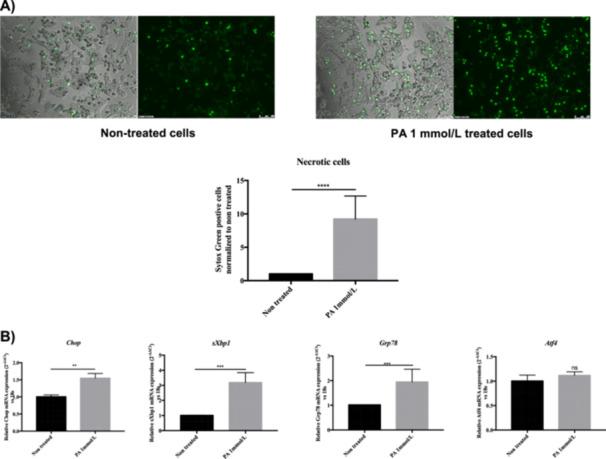
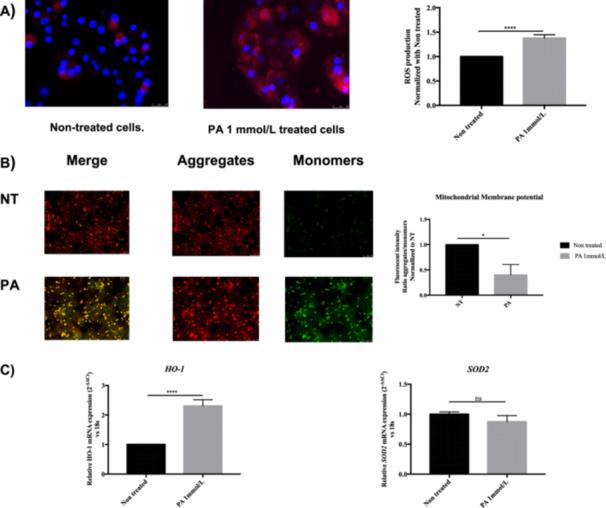
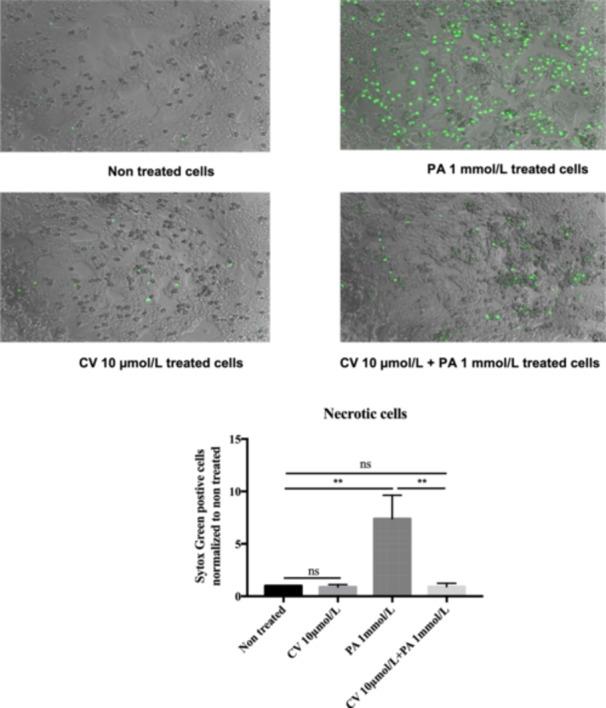
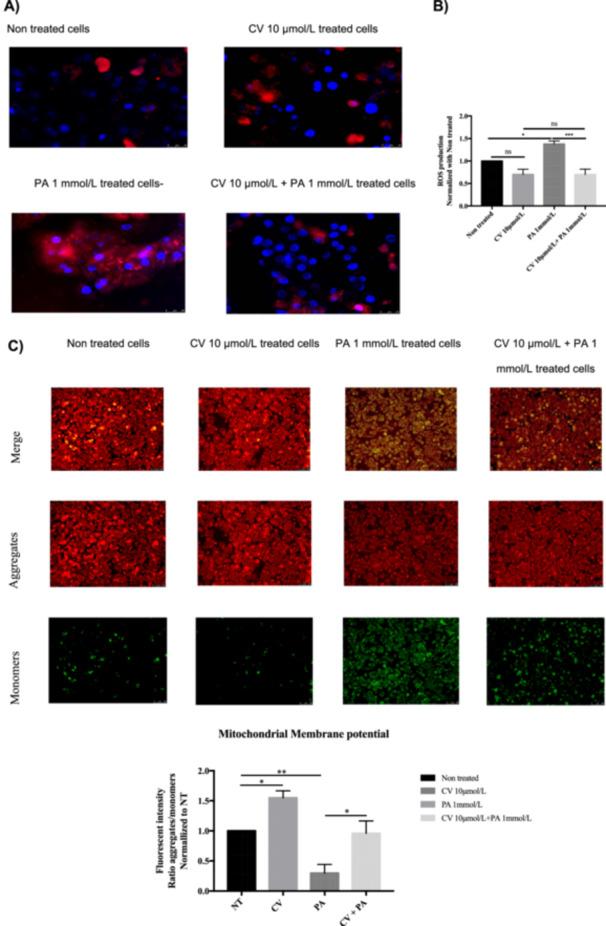
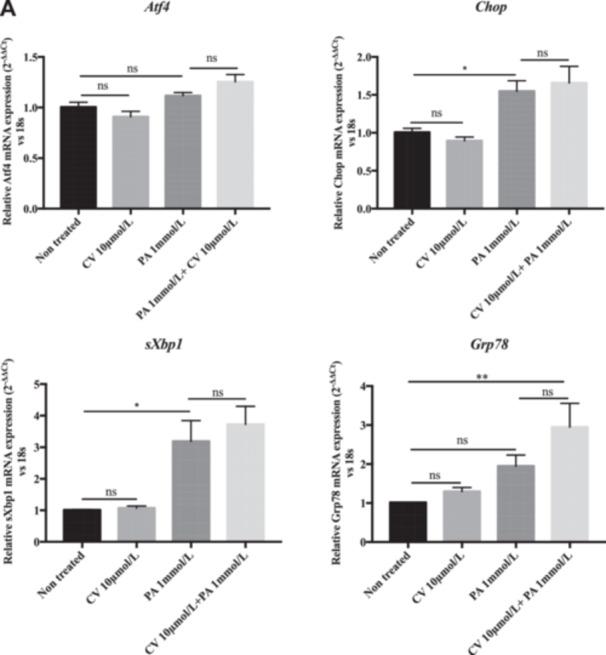
Hepatocyte lipotoxicity (HL) is an important factor in the pathogenesis of Metabolic Dysfunction-Associated Steatotic Liver Disease (MASLD). It is defined as the detrimental effects of exposure to (excessive) amounts of toxic lipid species, leading to increased mitochondrial β-oxidation, oxidative stress (OxS), and organellar dysfunction. Carvedilol (CV) is a β-adrenergic blocker with antioxidant properties. To elucidate whether CV protects hepatocytes against lipotoxicity induced by palmitic acid (PA) by reducing OxS and endoplasmic reticulum (ER) stress. Primary rat hepatocytes (rHep) were used. Lipotoxicity was induced by PA (1 mmol/L). Cell damage was evaluated by Sytox Green staining. Mitochondrial generation of reactive oxygen species (mROS) was assessed by MitoSox. mRNA and protein expression were measured by qPCR and Western blot, respectively. Lipid accumulation was measured by Oil Red O staining and triglyceride (TG) content. PA induced cell death in > 80% of cells and increased mROS generation. PA increased mRNA expression of ER stress markers CHOP and sXBP1 and slightly increased lipid accumulation. Expression of the β-oxidation-related gene Cpt1a was increased. CV (10 µmol/L) significantly reduced PA-induced cell death to control levels (< 8% of total cells), and mROS generation and expression of the mitochondrial antioxidant enzymes Sod2 and Cat were increased by 40% by CV in the presence of PA. CV did not change the expression of ER stress markers. CV, added before PA, protects rHep against PA-induced cytotoxicity by reducing OxS and increasing the expression of antioxidant enzymes without any additional protective effect on ER stress or lipid accumulation.
肝细胞脂肪毒性(HL)是代谢功能障碍相关脂肪性肝病(MASLD)发病机制中的一个重要因素。它被定义为暴露于(过量)有毒脂质种类所产生的有害影响,导致线粒体β氧化增加、氧化应激(OxS)和细胞器功能障碍。卡维地洛(CV)是一种具有抗氧化特性的β肾上腺素能阻滞剂。为了阐明CV是否通过降低OxS和内质网(ER)应激来保护肝细胞免受棕榈酸(PA)诱导的脂肪毒性。使用原代大鼠肝细胞(rHep)。PA(1 mmol/L)诱导脂肪毒性。通过Sytox Green染色评估细胞损伤。通过MitoSox评估线粒体活性氧(mROS)的生成。分别通过qPCR和蛋白质印迹法测量mRNA和蛋白质表达。通过油红O染色和甘油三酯(TG)含量测量脂质积累。PA诱导超过80%的细胞死亡并增加mROS生成。PA增加了ER应激标志物CHOP和sXBP1的mRNA表达,并略微增加了脂质积累。β氧化相关基因Cpt1a的表达增加。CV(10 μmol/L)显著将PA诱导的细胞死亡降低至对照水平(<总细胞数的8%),并且在存在PA的情况下,CV使mROS生成以及线粒体抗氧化酶Sod2和Cat的表达增加了40%。CV没有改变ER应激标志物的表达。在PA之前添加CV,通过降低OxS和增加抗氧化酶的表达来保护rHep免受PA诱导的细胞毒性,而对ER应激或脂质积累没有任何额外的保护作用。


 Zotero 插件