
阿联酋α-甘露糖苷贮积症患者临床和基因特征的回顾性研究
Retrospective Study of Clinical and Genetic Profiles of Alpha-Mannosidosis Patients From the UAE.
作者信息
Saad Ali K, Al-Hammadi Tasneem, Al-Ameri Shaikha, Al-Shamsi Aisha, Al-Dhaheri Noura, Al Tenaiji Amal, Al Jasmi Fatma
机构信息
Department of Genetics and Genomics College of Medicine and Health Sciences Al Ain UAE.
Genetic Division, Department of Pediatrics Tawam Hospital Al Ain UAE.
出版信息
JIMD Rep. 2025 Feb 6;66(2):e70001. doi: 10.1002/jmd2.70001. eCollection 2025 Mar.
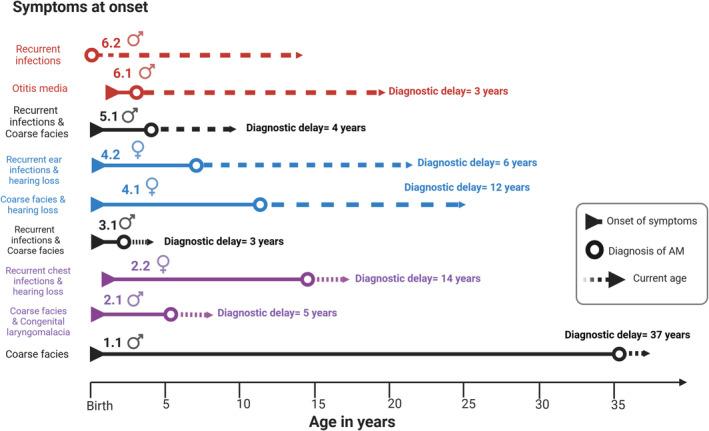
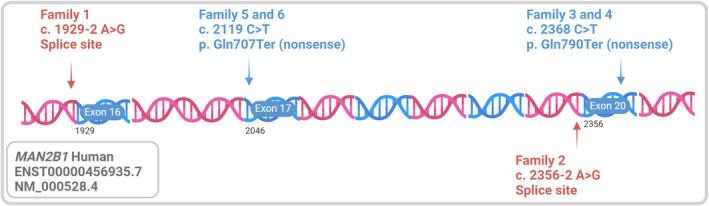
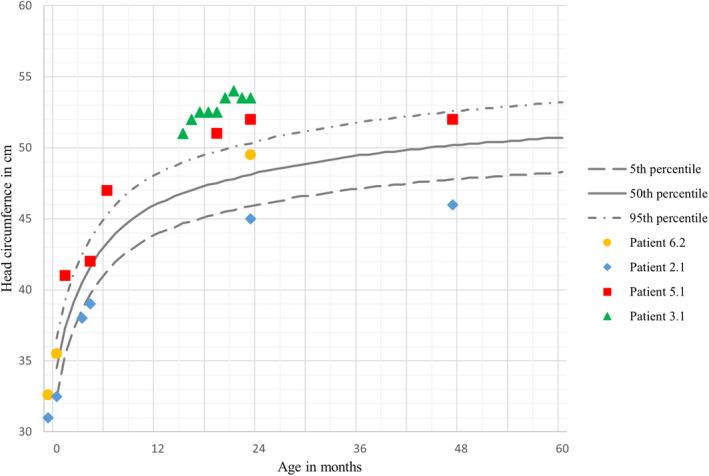
Alpha-mannosidosis (AM; OMIM 248500) is a rare autosomal recessive lysosomal storage disorder caused by mutations in , which codes for the lysosomal alpha-mannosidase enzyme (LAMAN; EC:3.2.1.24). Clinical characteristics include developmental delay, hearing impairment, and recurrent infections. A retrospective analysis of nine case series of patients with AM (23 months-42 years) from six consanguineous families in the United Arab Emirates (UAE) was conducted. In two Emirati families, homozygous nonsense mutations were present: c.2368C> T, p.(Gln790*) and c.2119C> T, p.(Gln707*). Further, in the Emirati and Syrian families two splicing variants c.2356-2A>G and c.1929-2A>G were present, respectively. All patients had infantile-onset and common clinical features, including coarse facies, developmental delays, hearing loss, and recurrent infections. Macrocephaly was observed in all patients with documented head circumference, except one microcephalic patient who had a dual genetic diagnosis. Hepatosplenomegaly and autoimmune diseases were reported in one and three patients, respectively. Additionally, psychiatric manifestations were noted in two adult patients. The mean age of diagnosis was 14 years for adults (> 16 years) and 2 years for pediatric patients (< 16 years). Significant diagnostic delay comparing older and younger generations is likely due to the increasing awareness of genetic disorders and the availability of genetic testing. In terms of treatment, enzyme replacement therapy (ERT) was administered to two patients, alleviating recurrent infections. Two patients underwent hematopoietic stem cell transplantation (HSCT), whereas one patient underwent combined ERT and HSCT. This retrospective analysis identified different truncating mutations associated with early-onset AM. The clinical presentations of these mutations range from attenuated to moderate. Our analysis clearly highlights the high birth prevalence of AM in the UAE, indicating the need for awareness and genetic counseling for prevention.
α-甘露糖苷贮积症(AM;OMIM 248500)是一种罕见的常染色体隐性溶酶体贮积症,由编码溶酶体α-甘露糖苷酶(LAMAN;EC:3.2.1.24)的基因突变引起。临床特征包括发育迟缓、听力障碍和反复感染。对来自阿拉伯联合酋长国(UAE)六个近亲家庭的9个AM患者病例系列(年龄在23个月至42岁之间)进行了回顾性分析。在两个阿联酋家庭中,存在纯合无义突变:c.2368C>T,p.(Gln790*)和c.2119C>T,p.(Gln707*)。此外,在阿联酋和叙利亚家庭中,分别存在两个剪接变体c.2356-2A>G和c.1929-2A>G。所有患者均为婴儿期起病,具有常见的临床特征,包括面容粗糙、发育迟缓、听力丧失和反复感染。在所有有记录头围的患者中均观察到巨头症,但有一名小头症患者有双重基因诊断。分别有1例和3例患者报告有肝脾肿大和自身免疫性疾病。此外,两名成年患者有精神症状表现。成人(>16岁)的平均诊断年龄为14岁,儿科患者(<16岁)为2岁。老一代和年轻一代之间存在显著的诊断延迟,这可能是由于对遗传疾病的认识增加以及基因检测的可及性提高。在治疗方面,两名患者接受了酶替代疗法(ERT),缓解了反复感染。两名患者接受了造血干细胞移植(HSCT),而一名患者接受了ERT和HSCT联合治疗。这项回顾性分析确定了与早发性AM相关的不同截短突变。这些突变的临床表现从轻度到中度不等。我们的分析清楚地突出了AM在阿联酋的高出生患病率,表明需要提高认识并进行遗传咨询以预防该病。
 Zotero 插件