
肝脏类器官在实验性再生医学中的进展、挑战及未来应用
Advances, challenges and future applications of liver organoids in experimental regenerative medicine.
作者信息
Gong Da, Mo Jiaye, Zhai Mei, Zhou Fulin, Wang Guocai, Ma Shaohua, Dai Xiaoyong, Deng Xuesong
机构信息
Department of Hepatobiliary Surgery, the First Affiliated Hospital of Shenzhen University, Health Science Center, Shenzhen Second People's Hospital, Shenzhen, China.
Guangxi University of Chinese Medicine, Nanning, China.
出版信息
Front Med (Lausanne). 2025 Jan 24;11:1521851. doi: 10.3389/fmed.2024.1521851. eCollection 2024.
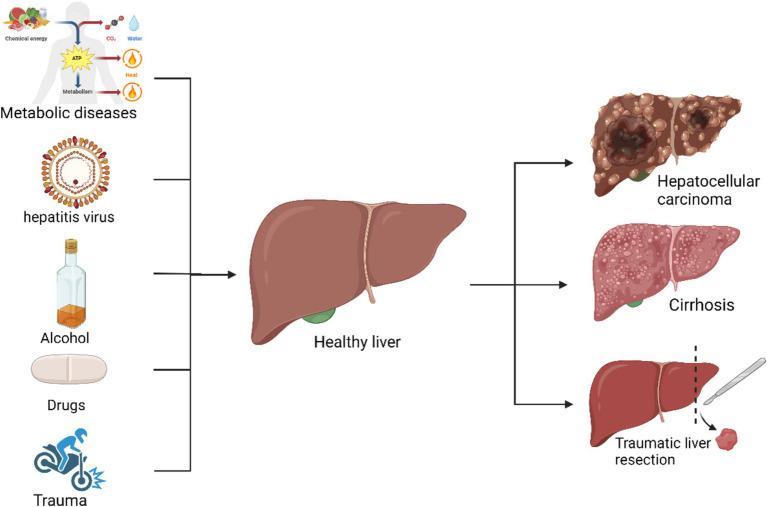
The liver is a vital organ responsible for numerous metabolic processes in the human body, including the metabolism of drugs and nutrients. After liver damage, the organ can rapidly return to its original size if the causative factor is promptly eliminated. However, when the harmful stimulus persists, the liver's regenerative capacity becomes compromised. Substantial theoretical feasibility has been demonstrated at the levels of gene expression, molecular interactions, and intercellular dynamics, complemented by numerous successful animal studies. However, a robust model and carrier that closely resemble human physiology are still lacking for translating these theories into practice. The potential for liver regeneration has been a central focus of ongoing research. Over the past decade, the advent of organoid technology has provided improved models and materials for advancing research efforts. Liver organoid technology represents a novel culture system. After several years of refinement, human liver organoids can now accurately replicate the liver's morphological structure, nutrient and drug metabolism, gene expression, and secretory functions, providing a robust model for liver disease research. Regenerative medicine aims to replicate human organ or tissue functions to repair or replace damaged tissues, restore their structure or function, or stimulate the regeneration of tissues or organs within the body. Liver organoids possess the same structure and function as liver tissue, offering the potential to serve as a viable replacement for the liver, aligning with the goals of regenerative medicine. This review examines the role of liver organoids in regenerative medicine.
肝脏是人体中负责众多代谢过程的重要器官,包括药物和营养物质的代谢。肝脏受损后,如果致病因素能迅速消除,该器官可迅速恢复到原来大小。然而,当有害刺激持续存在时,肝脏的再生能力就会受到损害。在基因表达、分子相互作用和细胞间动态水平上已证明了大量的理论可行性,众多成功的动物研究也为此提供了补充。然而,目前仍缺乏一个与人体生理学非常相似的强大模型和载体,无法将这些理论转化为实际应用。肝脏再生的潜力一直是正在进行的研究的核心焦点。在过去十年中,类器官技术的出现为推进研究工作提供了更好的模型和材料。肝脏类器官技术代表了一种新型培养系统。经过数年完善,人类肝脏类器官现在能够准确复制肝脏的形态结构、营养和药物代谢、基因表达及分泌功能,为肝病研究提供了一个强大的模型。再生医学旨在复制人体器官或组织功能,以修复或替换受损组织,恢复其结构或功能,或刺激体内组织或器官的再生。肝脏类器官具有与肝脏组织相同的结构和功能,有可能成为肝脏的可行替代物,这与再生医学的目标相符。本综述探讨了肝脏类器官在再生医学中的作用。

 Zotero 插件