
埃塞俄比亚西北部贡德尔大学综合与专科医院糖尿病患者中糖尿病酮症酸中毒的患病率及相关因素
Prevalence and associated factors of diabetic ketoacidosis among patients with diabetes mellitus at the University of Gondar Comprehensive and Specialized Referral Hospital Northwest, Ethiopia.
作者信息
Birhanu Abebe, Ambachew Sintayehu, Baye Netsanet, Getnet Emiyamrew, Admas Sintayehu, Gebrie Eshet, Worede Abebaw
机构信息
Department of Medical Microbiology, School of Biomedical and Laboratory Sciences, College of Medicine and Health Sciences, University of Gondar, Gondar, Ethiopia.
Department of Clinical Chemistry, School of Biomedical and Laboratory Sciences, College of Medicine and Health Sciences, University of Gondar, Gondar, Ethiopia.
出版信息
PLoS One. 2025 Feb 10;20(2):e0318775. doi: 10.1371/journal.pone.0318775. eCollection 2025.
BACKGROUND
Diabetes is a group of metabolic diseases characterized by hyperglycemia resulting from defects in insulin secretion, insulin action, or both. Diabetic ketoacidosis is one of the life-threatening complications in diabetic individuals with, high morbidity and mortality globally. However, the data related to the prevalence and associated factors of diabetic ketoacidosis are limited in the study setting.
OBJECTIVE
To assess the prevalence of diabetic ketoacidosis and its associated factors among diabetic mellitus patients at the University of Gondar Comprehensive Specialized Hospital.
METHODS
A hospital-based cross-sectional study was conducted from March 1 to September 30, 2021. A total of 405 diabetic patients aged 20 and above were selected using a systematic random sampling technique. A total of 810 blood and urine samples (each 405) were collected using sterile serum separator tubes and urine collection cups, respectively. Sociodemographic and clinical data was collected using a structured questionnaire. Chemical analysis of urine was done using urine reagent strips to determine urine ketone bodies and PH. BECKMAN COULTER DxC700 AU clinical chemistry analyzer instrument was used to determine electrolytes and metabolites. The data was entered using Epi-Data version 4.6 and transferred to SPSS version 25 for analysis. Bivariable and multivariable logistic regression analyses were used to determine the factors associated with the diabetic ketoacidosis. The results were considered statistically significant if the adjusted odds ratio was reported with a 95% confidence interval and a P-value below 0.05.
RESULTS
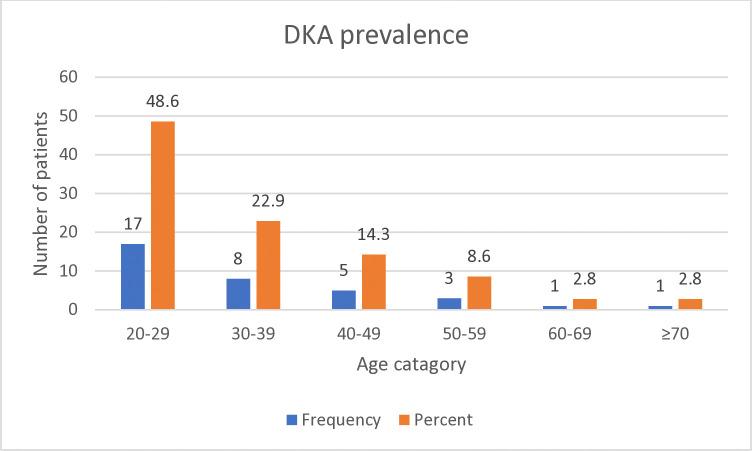
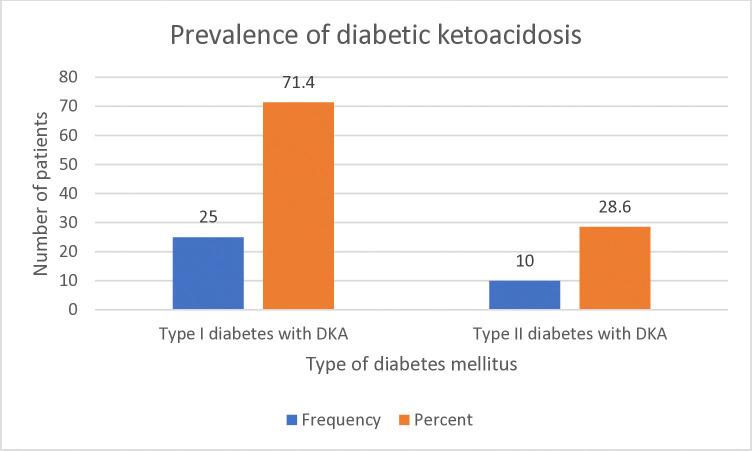
The overall prevalence of diabetic ketoacidosis among diabetic patients was 35/405 (8.6%, 95% CI: 6.0-11.0%). Of these cases, 25 (71.4%) had type 1 diabetes mellitus, while 10 (28.6%) had type 2 diabetes mellitus. Statistically significant factors associated with diabetic ketoacidosis included being a young adult aged 20-29 years (AOR = 2.262; 95% CI = 1.090-4.758; P = 0.013), unemployment (AOR = 2.578; 95% CI = 1.457-6.113; P = 0.017), the presence of infection (AOR = 2.819; 95% CI = 1.138-8.428; P = 0.024), and being T1DM (AOR = 3.106; 95% CI = 1.150-7.273; P = 0.003).
CONCLUSIONS AND RECOMMENDATIONS
The prevalence of diabetic ketoacidosis among follow-up diabetes patients in this study was high, particularly among those aged 20-29 years, unemployed, or with infections. Increased vigilance, regular monitoring, timely infection management, and comprehensive diabetes education are essential for early detection and prevention of DKA. Social and financial support for unemployed diabetic patients can further enhance access to care and reduce DKA risk.
背景
糖尿病是一组以胰岛素分泌缺陷、胰岛素作用缺陷或两者兼有所致高血糖为特征的代谢性疾病。糖尿病酮症酸中毒是糖尿病患者中危及生命的并发症之一,在全球范围内发病率和死亡率都很高。然而,在该研究环境中,与糖尿病酮症酸中毒的患病率及相关因素有关的数据有限。
目的
评估贡德尔大学综合专科医院糖尿病患者中糖尿病酮症酸中毒的患病率及其相关因素。
方法
于2021年3月1日至9月30日进行了一项基于医院的横断面研究。采用系统随机抽样技术选取了405名年龄在20岁及以上的糖尿病患者。分别使用无菌血清分离管和尿液收集杯收集了总共810份血液和尿液样本(各405份)。使用结构化问卷收集社会人口学和临床数据。使用尿试剂条对尿液进行化学分析以测定尿酮体和pH值。使用贝克曼库尔特DxC700 AU临床化学分析仪测定电解质和代谢产物。数据使用Epi-Data 4.6版本录入,并转移到SPSS 25版本进行分析。采用双变量和多变量逻辑回归分析来确定与糖尿病酮症酸中毒相关的因素。如果调整后的比值比以95%置信区间报告且P值低于0.05,则结果被认为具有统计学意义。
结果
糖尿病患者中糖尿病酮症酸中毒的总体患病率为35/405(8.6%,95%CI:6.0 - 11.0%)。在这些病例中,25例(71.4%)患有1型糖尿病,而10例(28.6%)患有2型糖尿病。与糖尿病酮症酸中毒相关的具有统计学意义的因素包括年龄在20 - 29岁的年轻成年人(AOR = 2.262;95%CI = 1.090 - 4.758;P = 0.013)、失业(AOR = 2.578;95%CI = 1.457 - 6.113;P = 0.017)、存在感染(AOR = 2.819;95%CI = 1.138 - 8.428;P = 0.024)以及患有1型糖尿病(AOR = 3.106;95%CI = 1.150 - 7.273;P = 0.003)。
结论与建议
本研究中随访的糖尿病患者中糖尿病酮症酸中毒的患病率较高,尤其是在20 - 29岁、失业或有感染的患者中。提高警惕、定期监测、及时的感染管理以及全面的糖尿病教育对于早期发现和预防糖尿病酮症酸中毒至关重要。为失业糖尿病患者提供社会和经济支持可以进一步改善就医机会并降低糖尿病酮症酸中毒风险。

 Zotero 插件