
detectEVE:快速、灵敏且精确地检测基因组数据中的内源性病毒元件
detectEVE: Fast, Sensitive and Precise Detection of Endogenous Viral Elements in Genomic Data.
作者信息
Brait Nadja, Hackl Thomas, Lequime Sebastian
机构信息
Cluster of Microbial Ecology, Groningen Institute for Evolutionary Life Sciences, University of Groningen, Groningen, the Netherlands.
出版信息
Mol Ecol Resour. 2025 May;25(4):e14083. doi: 10.1111/1755-0998.14083. Epub 2025 Feb 12.
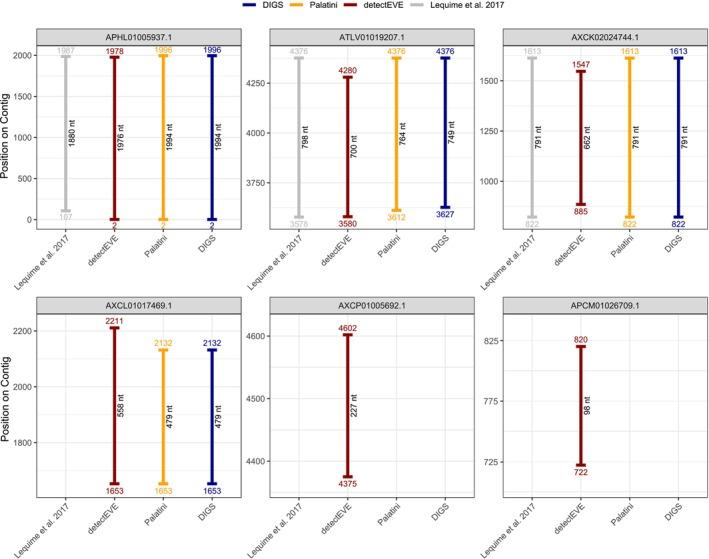
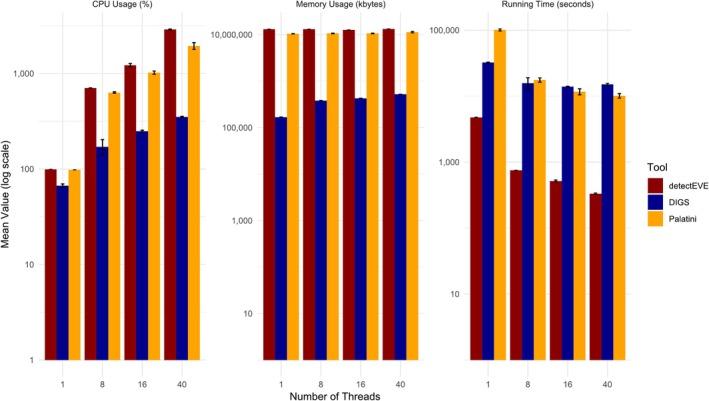
Endogenous viral elements (EVEs) are fragments of viral genomic material embedded within the host genome. Retroviruses contribute to the majority of EVEs because of their genomic integration during their life cycle; however, the latter can also arise from non-retroviral RNA or DNA viruses, then collectively known as non-retroviral (nr) EVEs. Detecting nrEVEs poses challenges because of their sequence and genomic structural diversity, contributing to the scarcity of specific tools designed for nrEVEs detection. Here, we introduce detectEVE, a user-friendly and open-source tool designed for the accurate identification of nrEVEs in genomic assemblies. detectEVE deviates from other nrEVE detection pipelines, which usually classify sequences in a more rigid manner as either virus-associated or not. Instead, we implemented a scaling system assigning confidence scores to hits in protein sequence similarity searches, using bit score distributions and search hints related to various viral characteristics, allowing for higher sensitivity and specificity. Our benchmarking shows that detectEVE is computationally efficient and accurate, as well as considerably faster than existing approaches, because of its resource-efficient parallel execution. Our tool can help to fill current gaps in both host-associated fields and virus-related studies. This includes (i) enhancing genome annotations with metadata for EVE loci, (ii) conducting large-scale paleo-virological studies to explore deep viral evolutionary histories, and (iii) aiding in the identification of actively expressed EVEs in transcriptomic data, reducing the risk of misinterpretations between exogenous viruses and EVEs.
内源性病毒元件(EVEs)是嵌入宿主基因组中的病毒基因组物质片段。逆转录病毒由于其在生命周期中的基因组整合而构成了大多数的EVEs;然而,后者也可能源自非逆转录RNA或DNA病毒,这些随后被统称为非逆转录(nr)EVEs。由于nrEVEs的序列和基因组结构多样性,检测它们具有挑战性,这导致了专门用于nrEVEs检测的工具稀缺。在这里,我们介绍了detectEVE,这是一个用户友好的开源工具,旨在准确识别基因组组装中的nrEVEs。detectEVE与其他nrEVE检测流程不同,其他流程通常以更严格的方式将序列分类为与病毒相关或不相关。相反,我们实施了一个缩放系统,在蛋白质序列相似性搜索中为命中结果分配置信度分数,使用与各种病毒特征相关的比特分数分布和搜索提示,从而实现更高的灵敏度和特异性。我们的基准测试表明,detectEVE在计算上高效且准确,并且由于其资源高效的并行执行,比现有方法快得多。我们的工具可以帮助填补宿主相关领域和病毒相关研究中的当前空白。这包括:(i)用EVE位点的元数据增强基因组注释;(ii)进行大规模古病毒学研究以探索深层病毒进化历史;(iii)帮助在转录组数据中识别活跃表达的EVEs,降低对外源病毒和EVEs之间误解的风险。

 Zotero 插件