
基于二次数据库分析的多囊卵巢综合征中线粒体DNA突变和功能障碍作用的综合综述
A Comprehensive Review of the Contribution of Mitochondrial DNA Mutations and Dysfunction in Polycystic Ovary Syndrome, Supported by Secondary Database Analysis.
作者信息
Kobayashi Hiroshi, Matsubara Sho, Yoshimoto Chiharu, Shigetomi Hiroshi, Imanaka Shogo
机构信息
Department of Gynecology and Reproductive Medicine, Ms.Clinic MayOne, 871-1 Shijo-cho, Kashihara 634-0813, Japan.
Department of Obstetrics and Gynecology, Nara Medical University, 840 Shijo-cho, Kashihara 634-8522, Japan.
出版信息
Int J Mol Sci. 2025 Jan 29;26(3):1172. doi: 10.3390/ijms26031172.
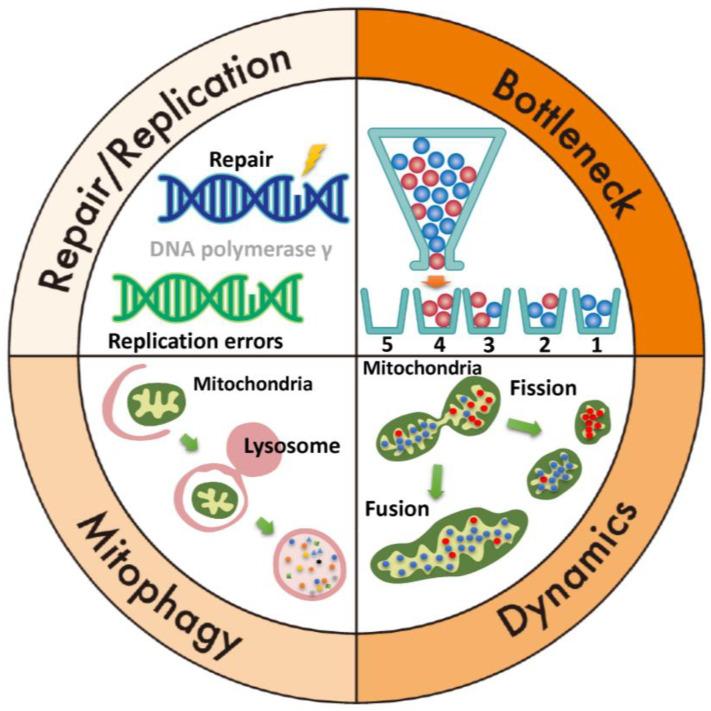
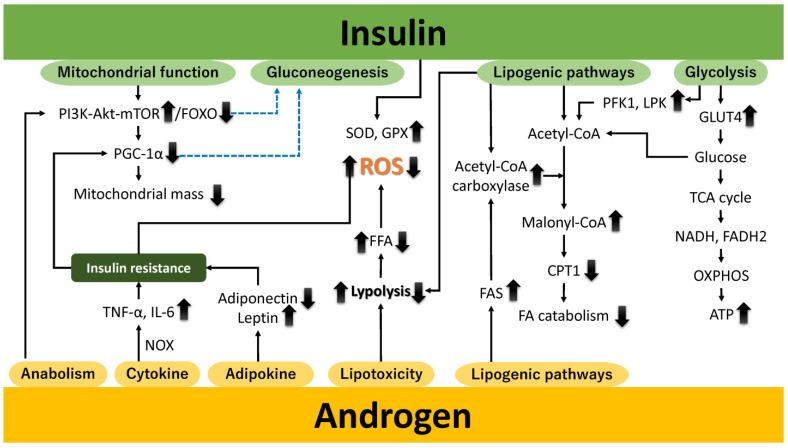
Polycystic ovary syndrome (PCOS) is a common endocrine disorder affecting women of reproductive age characterized by a spectrum of clinical, metabolic, reproductive, and psychological abnormalities. This syndrome is associated with significant long-term health risks, necessitating elucidation of its pathophysiology, early diagnosis, and comprehensive management strategies. Several contributory factors in PCOS, including androgen excess and insulin resistance, collectively enhance oxidative stress, which subsequently leads to mitochondrial dysfunction. However, the precise mechanisms through which oxidative stress induces mitochondrial dysfunction remain incompletely understood. Comprehensive searches of electronic databases were conducted to identify relevant studies published up to 30 September 2024. Mitochondria, the primary sites of reactive oxygen species (ROS) generation, play critical roles in energy metabolism and cellular homeostasis. Oxidative stress can inflict damage on components, including lipids, proteins, and DNA. Damage to mitochondrial DNA (mtDNA), which lacks efficient repair mechanisms, may result in mutations that impair mitochondrial function. Dysfunctional mitochondrial activity further amplifies ROS production, thereby perpetuating oxidative stress. These disruptions are implicated in the complications associated with the syndrome. Advances in genetic analysis technologies, including next-generation sequencing, have identified point mutations and deletions in mtDNA, drawing significant attention to their association with oxidative stress. Emerging data from mtDNA mutation analyses challenge conventional paradigms and provide new insights into the role of oxidative stress in mitochondrial dysfunction. We are rethinking the pathogenesis of PCOS based on these database analyses. In conclusion, this review explores the intricate relationship between oxidative stress, mtDNA mutations, and mitochondrial dysfunction, offers an updated perspective on the pathophysiology of PCOS, and outlines directions for future research.
多囊卵巢综合征(PCOS)是一种常见的内分泌紊乱疾病,影响育龄女性,其特征是一系列临床、代谢、生殖和心理异常。该综合征与重大的长期健康风险相关,因此有必要阐明其病理生理学、早期诊断和综合管理策略。PCOS的几个促成因素,包括雄激素过多和胰岛素抵抗,共同加剧氧化应激,进而导致线粒体功能障碍。然而,氧化应激诱导线粒体功能障碍的确切机制仍未完全了解。我们对电子数据库进行了全面检索,以确定截至2024年9月30日发表的相关研究。线粒体是活性氧(ROS)产生的主要部位,在能量代谢和细胞稳态中起关键作用。氧化应激可对脂质、蛋白质和DNA等成分造成损害。由于线粒体DNA(mtDNA)缺乏有效的修复机制,其损伤可能导致损害线粒体功能的突变。功能失调的线粒体活动进一步放大ROS的产生,从而使氧化应激持续存在。这些破坏与该综合征相关的并发症有关。包括下一代测序在内的基因分析技术的进展已经确定了mtDNA中的点突变和缺失,这引起了人们对它们与氧化应激关联的极大关注。mtDNA突变分析的新数据挑战了传统范式,并为氧化应激在线粒体功能障碍中的作用提供了新的见解。基于这些数据库分析,我们正在重新思考PCOS的发病机制。总之,本综述探讨了氧化应激、mtDNA突变和线粒体功能障碍之间的复杂关系,提供了关于PCOS病理生理学的最新观点,并概述了未来研究的方向。

 Zotero 插件