
赌博障碍和网络游戏障碍患者动态脑活动及连通性的跨诊断研究:赌博障碍和网络游戏障碍中的动态脑活动
Transdiagnostic study of dynamic brain activity and connectivity among people with gambling and internet gaming disorders: DYNAMIC BRAIN ACTIVITY IN GD AND IGD.
作者信息
Zhou Hui, He Yuwen, Liu Lulu, Yin Jingwen, Xiong Anita Yingxin, Leong Ka Heng, Wu Anise M S, Potenza Marc N
机构信息
Department of Psychology, School of Educational Sciences, Chongqing Normal University, Chongqing, China.
Centre for Cognitive and Brain Sciences, Institute of Collaborative Innovation, University of Macau, Macao, China.
出版信息
Int J Clin Health Psychol. 2025 Jan-Mar;25(1):100547. doi: 10.1016/j.ijchp.2025.100547. Epub 2025 Jan 29.
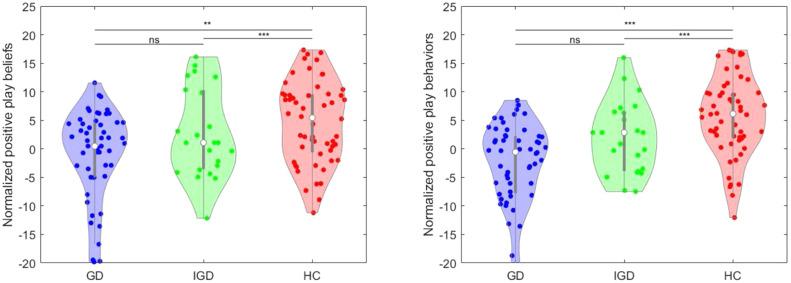
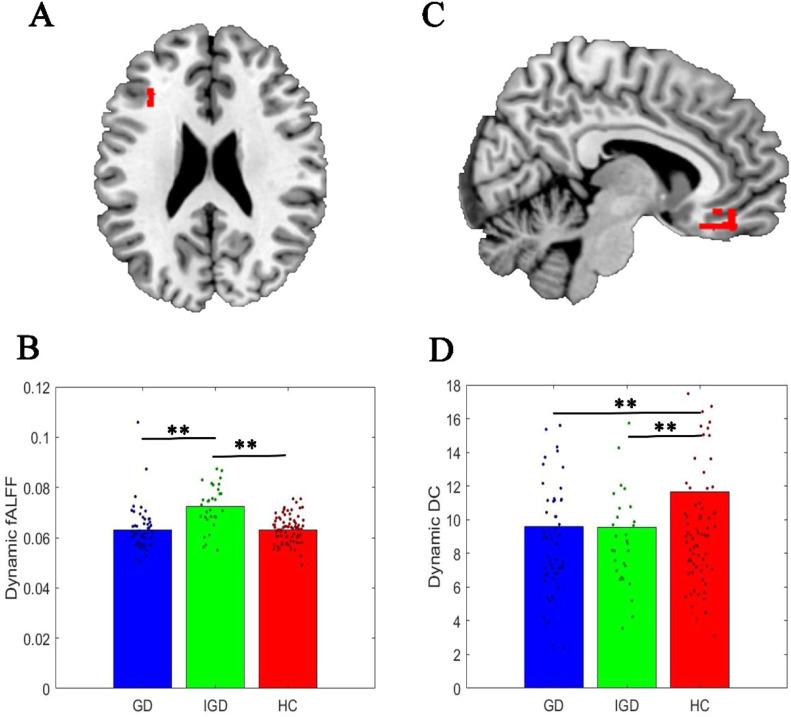
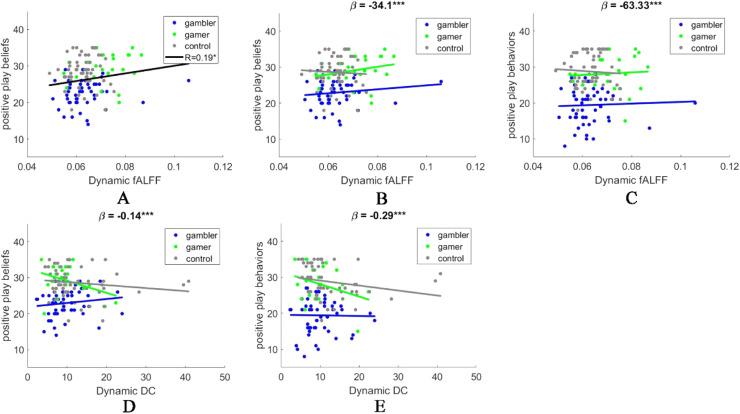
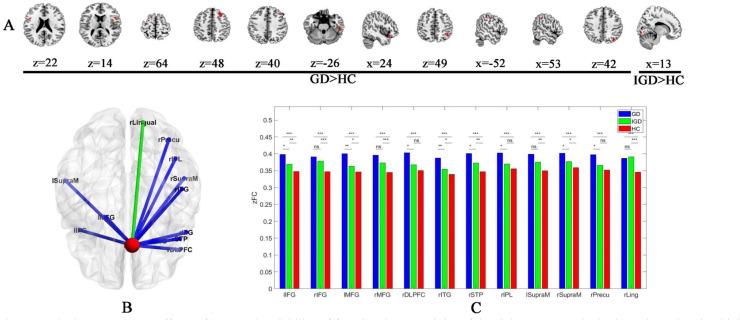
Despite both internet gaming disorder (IGD) and gambling disorder (GD) being officially recognized as medical conditions by the World Health Organization, controversies persist. A transdiagnostic study may help inform classification and intervention approaches. IGD and GD may share or have distinct neural and behavioral features. To investigate, resting-state functional magnetic resonance imaging (fMRI) and self-reported behavioral data were collected from 58 individuals with GD, 31 with IGD, and 83 healthy control (HC) participants. After controlling for demographics, both GD and IGD groups scored lower on measures of gambling-related positive play. Neural data revealed reduced brain connectivity in the right rectus/orbital frontal gyrus in GD and IGD groups compared to HC participants. IGD participants displayed increased dynamic brain activity in the left triangular inferior frontal gyrus compared with GD and HC participants. Relatively decreased modular flexibility was also observed in GD but not IGD participants, relative to HC participants. Multiclass classification results showed that the indicators of gambling-related positive play, as well as dynamic brain activity and connectivity patterns, were useful for classifying GD, IGD, and HC participants, outperforming the use of either neural signals or self-report indicators alone. The shared phenotypes of GD and IGD groups provide insight into common features of behavioral addictions, and the combination of self-report and neural measures may provide the most robust approach for classification of diagnostic groups.
尽管互联网游戏障碍(IGD)和赌博障碍(GD)均已被世界卫生组织正式确认为疾病,但争议仍然存在。一项跨诊断研究可能有助于为分类和干预方法提供信息。IGD和GD可能具有共同的或不同的神经及行为特征。为了进行调查,我们收集了58名患有GD的个体、31名患有IGD的个体以及83名健康对照(HC)参与者的静息态功能磁共振成像(fMRI)数据和自我报告的行为数据。在对人口统计学因素进行控制后,GD组和IGD组在与赌博相关的积极游戏测量指标上得分均较低。神经数据显示,与HC参与者相比,GD组和IGD组右侧直肌/眶额回的脑连接性降低。与GD组和HC参与者相比,IGD参与者左侧额下回三角区的动态脑活动增加。相对于HC参与者,GD参与者还观察到模块化灵活性相对降低,但IGD参与者未观察到。多类分类结果表明,与赌博相关的积极游戏指标以及动态脑活动和连接模式,对于区分GD组、IGD组和HC参与者很有用,其表现优于单独使用神经信号或自我报告指标。GD组和IGD组的共同表型有助于深入了解行为成瘾的共同特征,自我报告和神经测量的结合可能为诊断组的分类提供最可靠的方法。


 Zotero 插件