
二氢丹参酮I通过抑制STAT3/SOX2信号通路增强BRAF突变型黑色素瘤的治疗效果。
Dihydrotanshinone I enhanced BRAF mutant melanoma treatment efficacy by inhibiting the STAT3/SOX2 signaling pathway.
作者信息
Luo Xing, Duan Yi, He Jinwei, Huang CongGai, Liu Jun, Liu Yifan, Xu Mengdei, Dai Qiong, Yang Zhihui
机构信息
Department of Pathology, the Affiliated Hospital of Southwest Medical University, Luzhou, Sichuan, China.
School of Basic Medical Sciences, Southwest Medical University, Luzhou, Sichuan, China.
出版信息
Front Oncol. 2025 Jan 29;15:1429018. doi: 10.3389/fonc.2025.1429018. eCollection 2025.
BACKGROUND
The Food and Drug Administration has approved the Serine/threonine-protein kinase B-raf (BRAF) inhibitor and Mitogen-activated extracellular signal-regulated kinase (MEK) inhibitor combo as the first-line treatment for individuals with metastatic melanoma, although the majority of these patients exhibit primary or secondary drug resistance in the clinic. Dihydrotanshinone I (DHT) is a lipophilic compound extracted from the root of Salvia miltiorrhiza that has been linked to multiple antitumor activities. In this study, we investigated the effect of dihydrotanshinone I on the MAPK pathway inhibitor resistance of BRAF mutant malignant melanoma.
METHOD
After treating A375, A375R, and A2058 cells with DHT or a combination of DHT and BRAF/MEK inhibitors, WB and Real-Time RT-qPCR were used to confirm the activation of the MAPK and STAT3/SOX2 pathways. CCK-8 was used to assess cell viability, while flow cytometry was used to identify apoptosis. In addition, mice were inoculated with A375 cells to establish a model of tumour formation, and various drug groups and treatment models were utilized. The diameter and weight of tumours in each group were then measured, and IHC and HE staining were used to assess the expression of two pathways and cytotoxicity, respectively.
RESULTS
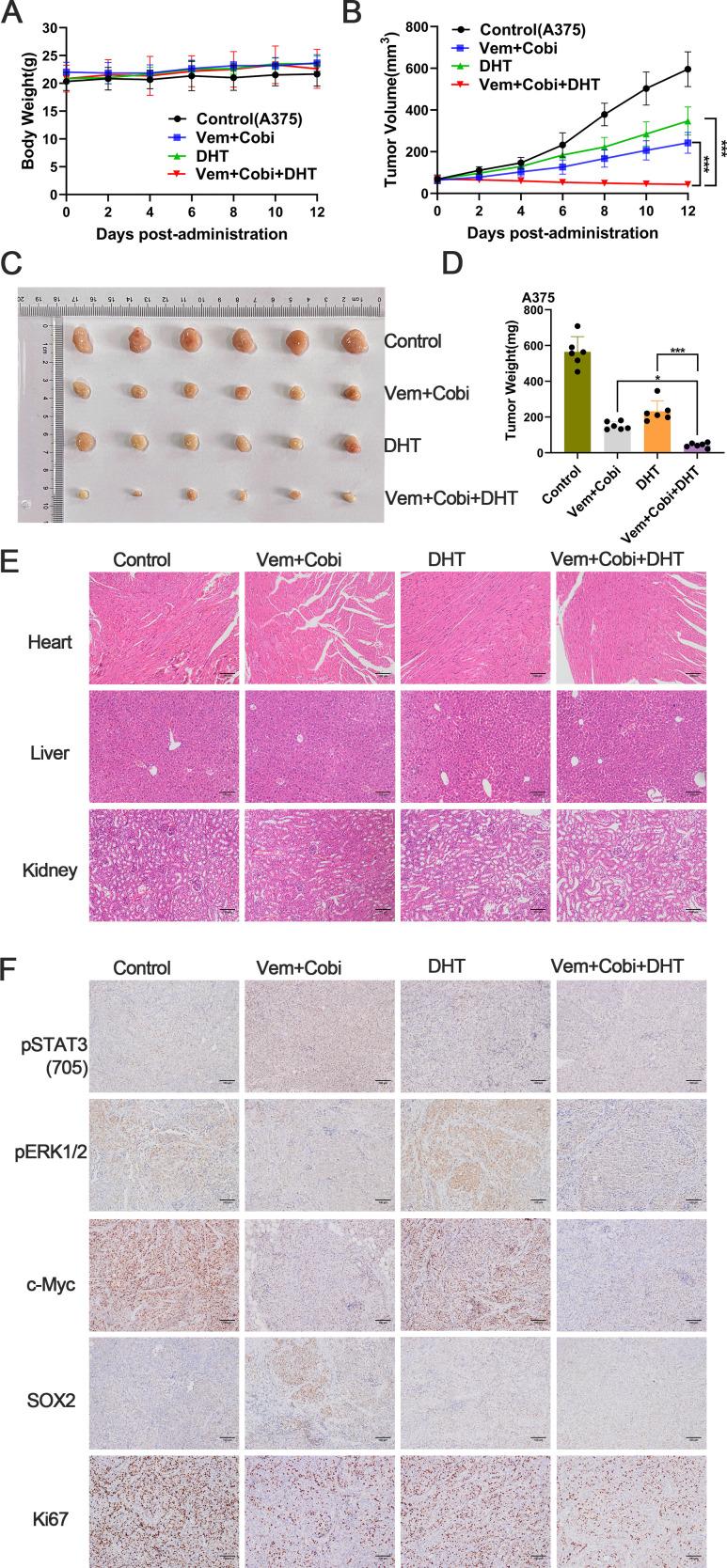
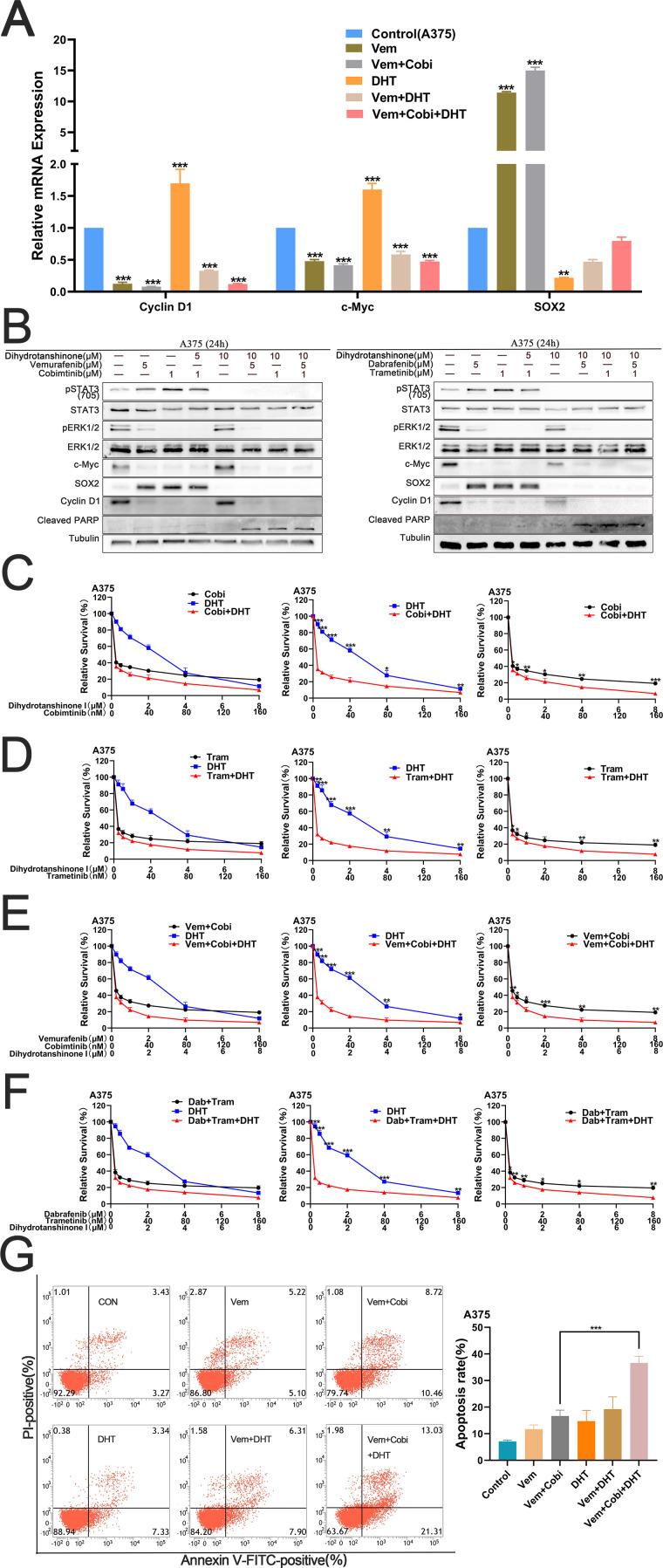
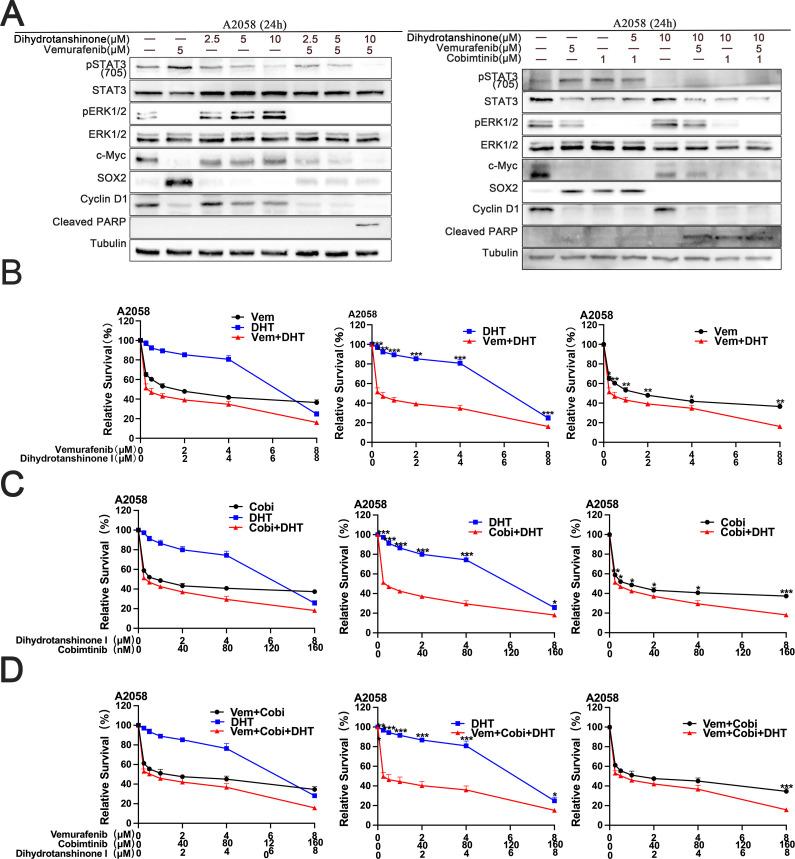
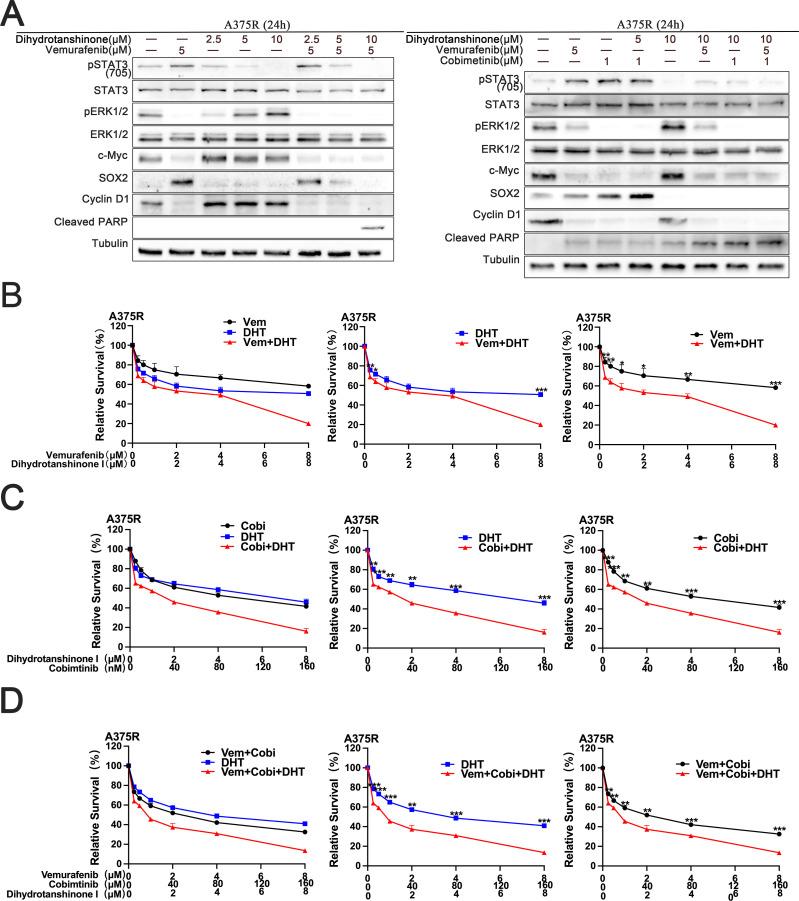
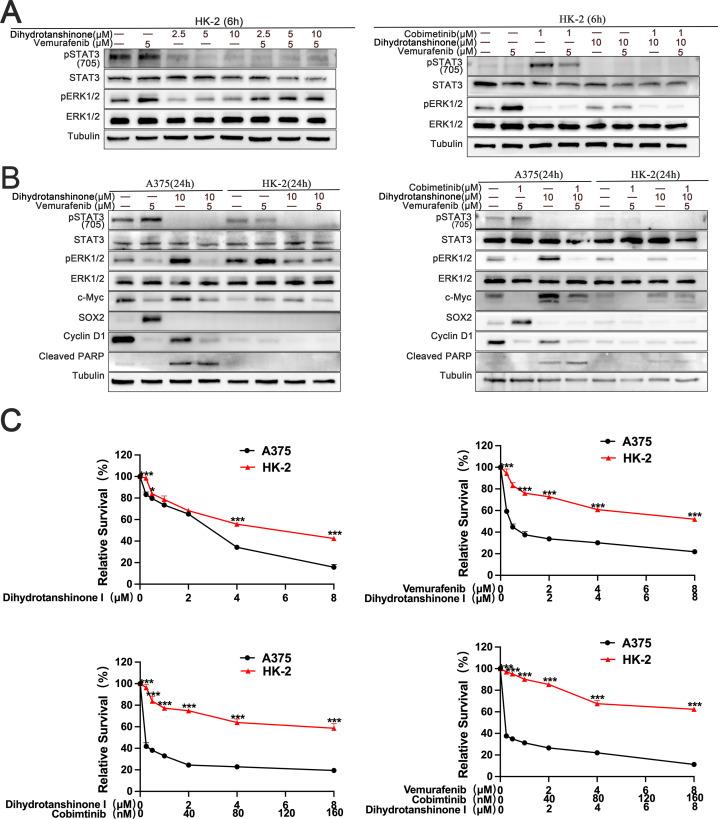
This study found that DHT directly interacts with STAT3 protein and it can stop the feedback activation of the STAT3/SOX2 pathway caused by the use of MAPK pathway inhibitors. In addition, the combination of DHT and BRAF/MEK inhibitors can inhibit the proliferation and growth of BRAF mutant melanoma cells and primary and secondary drug-resistant cells. Finally, we proved that the combined therapy of DHT and BRAF/MEK inhibitors is reliable and effective at animal and cell levels.
CONCLUSION
In BRAF mutant melanoma cells, DHT suppresses the STAT3/SOX2 signaling pathway. Combining DHT, BRAF inhibitors, and MEK inhibitors can help treat treatment-resistant BRAF mutant melanoma cells. Experimental results both and have shown that the combination of DHT and an inhibitor of the MAPK pathway is safer and more successful than using an inhibitor of the MAPK pathway alone when treating BRAF mutant melanoma.
背景
美国食品药品监督管理局已批准丝氨酸/苏氨酸蛋白激酶B-raf(BRAF)抑制剂和丝裂原活化细胞外信号调节激酶(MEK)抑制剂联合用药,作为转移性黑色素瘤患者的一线治疗方案,不过在临床上,这些患者中的大多数都表现出原发性或继发性耐药性。二氢丹参酮I(DHT)是一种从丹参根中提取的亲脂性化合物,具有多种抗肿瘤活性。在本研究中,我们调查了二氢丹参酮I对BRAF突变型恶性黑色素瘤MAPK通路抑制剂耐药性的影响。
方法
用DHT或DHT与BRAF/MEK抑制剂的组合处理A375、A375R和A2058细胞后,采用蛋白质免疫印迹法(WB)和实时定量逆转录聚合酶链反应(Real-Time RT-qPCR)来确认MAPK和STAT3/SOX2通路的激活情况。采用细胞计数试剂盒-8(CCK-8)评估细胞活力,同时用流式细胞术鉴定细胞凋亡情况。此外,给小鼠接种A375细胞以建立肿瘤形成模型,并采用各种药物组和治疗模型。然后测量每组肿瘤的直径和重量,并用免疫组织化学(IHC)和苏木精-伊红(HE)染色分别评估两条通路的表达和细胞毒性。
结果
本研究发现,DHT直接与STAT3蛋白相互作用,并且它可以阻止因使用MAPK通路抑制剂而引起的STAT3/SOX2通路的反馈激活。此外,DHT与BRAF/MEK抑制剂联合使用可抑制BRAF突变型黑色素瘤细胞以及原发性和继发性耐药细胞的增殖和生长。最后,我们证明了DHT与BRAF/MEK抑制剂联合治疗在动物和细胞水平上是可靠且有效的。
结论
在BRAF突变型黑色素瘤细胞中,DHT可抑制STAT3/SOX2信号通路。联合使用DHT、BRAF抑制剂和MEK抑制剂有助于治疗耐药性BRAF突变型黑色素瘤细胞。实验结果表明,在治疗BRAF突变型黑色素瘤时,DHT与MAPK通路抑制剂联合使用比单独使用MAPK通路抑制剂更安全、更有效。

 Zotero 插件