
一种基于基准浓度的策略,用于评估遗传毒性化合物在TK6细胞中的联合效应。
A benchmark concentration-based strategy for evaluating the combined effects of genotoxic compounds in TK6 cells.
作者信息
Sanders Julie, Anthonissen Roel, Johnson George E, Vanhaecke Tamara, Mertens Birgit
机构信息
Department of Chemical and Physical Health Risks, Sciensano, Brussels, Belgium.
Department of In Vitro Toxicology and Dermato-Cosmetology, Vrije Universiteit Brussel, Brussels, Belgium.
出版信息
Arch Toxicol. 2025 Apr;99(4):1581-1589. doi: 10.1007/s00204-025-03971-y. Epub 2025 Feb 13.
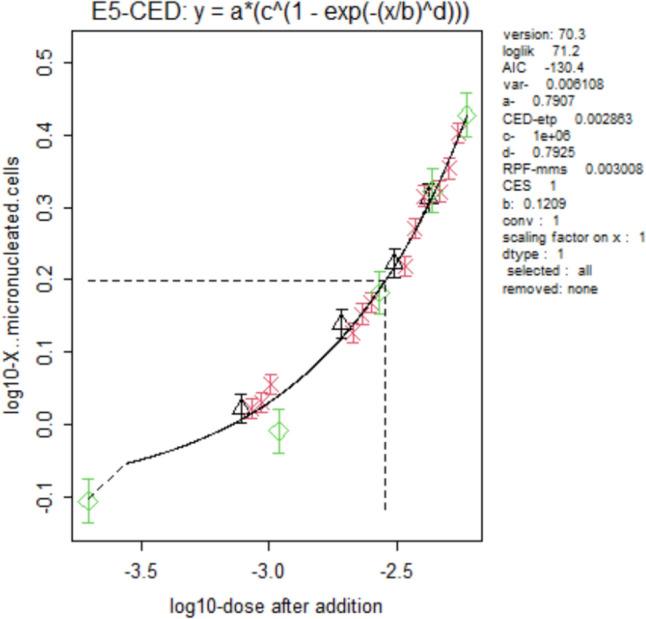
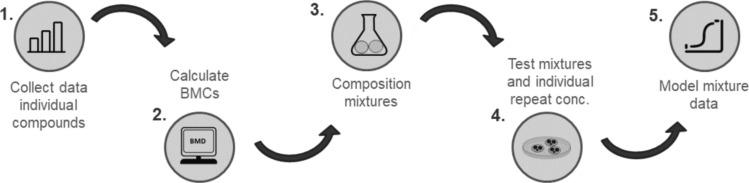
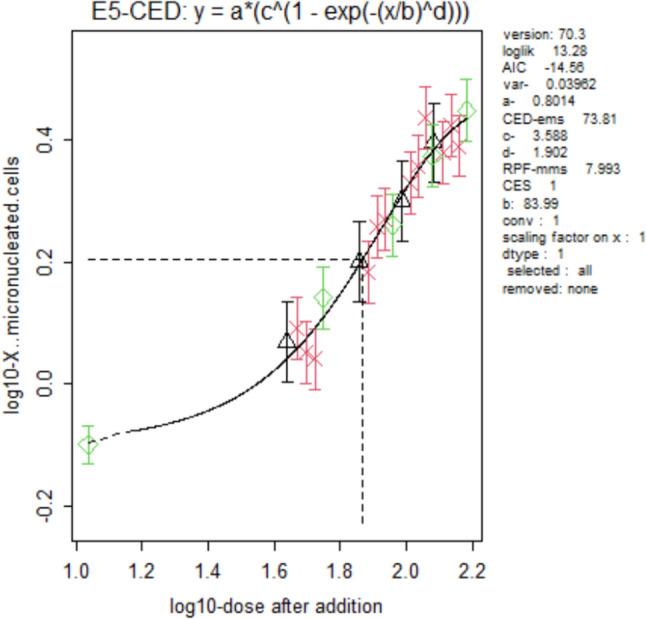
Chemical risk assessment has historically focused on single compounds, neglecting the implications of combined exposures. To bridge this gap, several methodologies, such as concentration addition (CA) and independent action (IA), have been developed. However, a systematic, consistent, and integrated approach across various legislative frameworks is still lacking. The assessment of combined effects of genotoxicants is even more challenging, as genotoxicity data are typically evaluated qualitatively, without considering the effect size. This study aimed to develop a quantitative approach for evaluating the combined effects of genotoxic compounds with both similar and dissimilar modes of action (MoA), based on the benchmark concentration (BMC) principle. A proof-of-concept study was conducted using the in vitro micronucleus (MNvit) test to examine two types of binary mixtures: ethyl methanesulfonate (EMS) and methyl methanesulfonate (MMS), which share similar MoA, and MMS and etoposide (ETP), which have dissimilar MoA. The methodology involved collecting data for individual compounds, calculating BMC values, composing mixtures with different ratios and inducing various effect levels, testing these mixtures, and comparing the experimental results with the modelled data to verify additivity. The findings indicated that for both mixtures, the experimental responses aligned with the predicted additive effects, supporting the validity of the additivity principle. This study highlights the potential of an optimized BMC-based approach as a robust framework for testing chemical mixtures. It should be adopted in future studies to evaluate a wider range of genotoxic compounds, offering a more comprehensive and quantitative strategy for assessing combined chemical exposures.
化学风险评估历来侧重于单一化合物,而忽视了联合暴露的影响。为了弥补这一差距,已经开发了几种方法,如浓度相加(CA)和独立作用(IA)。然而,仍然缺乏一种跨各种立法框架的系统、一致和综合的方法。对遗传毒性物质联合效应的评估更具挑战性,因为遗传毒性数据通常是定性评估的,而没有考虑效应大小。本研究旨在基于基准浓度(BMC)原则,开发一种定量方法来评估具有相似和不同作用模式(MoA)的遗传毒性化合物的联合效应。使用体外微核(MNvit)试验进行了一项概念验证研究,以检查两种类型的二元混合物:具有相似作用模式的甲磺酸乙酯(EMS)和甲磺酸甲酯(MMS),以及具有不同作用模式的MMS和依托泊苷(ETP)。该方法包括收集单个化合物的数据、计算BMC值、以不同比例组成混合物并诱导各种效应水平、测试这些混合物,以及将实验结果与模型数据进行比较以验证相加性。研究结果表明,对于这两种混合物,实验响应与预测的相加效应一致,支持了相加性原则的有效性。本研究强调了基于优化的BMC方法作为测试化学混合物的强大框架的潜力。未来的研究应采用该方法来评估更广泛的遗传毒性化合物,为评估联合化学暴露提供更全面和定量的策略。

 Zotero 插件