
粪便微生物群移植改善阿尔茨海默病小鼠模型的认知功能。
Fecal Microbiota Transplantation Improves Cognitive Function of a Mouse Model of Alzheimer's Disease.
作者信息
Jiang Xueqin, Zheng Yu, Sun Huaiqing, Dang Yini, Yin Mengmei, Xiao Ming, Wu Ting
机构信息
Department of Neurology, The First Affiliated Hospital of Nanjing Medical University, Nanjing, China.
Jiangsu Key Laboratory of Neurodegeneration, Nanjing Medical University, Nanjing, China.
出版信息
CNS Neurosci Ther. 2025 Feb;31(2):e70259. doi: 10.1111/cns.70259.
BACKGROUND
A growing body of evidence suggests a link between the gut microbiota and Alzheimer's disease (AD), although the underlying mechanisms remain elusive. This study aimed to investigate the impact of fecal microbiota transplantation (FMT) on cognitive function in a mouse model of AD.
METHODS
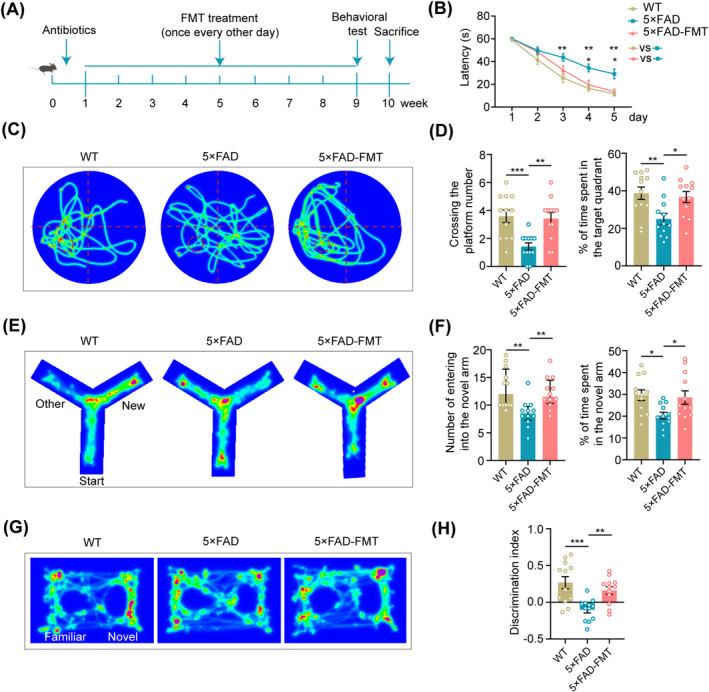
Four-month-old 5 × FAD (familial Alzheimer's disease) mice underwent antibiotic treatment to deplete their native gut microbiota. Subsequently, they received FMT either weekly or every other day. After 8 weeks, cognitive function and β-amyloid (Aβ) load were assessed through behavioral testing and pathological analysis, respectively. The composition of the gut microbiota was analyzed using 16S rRNA sequencing.
RESULTS
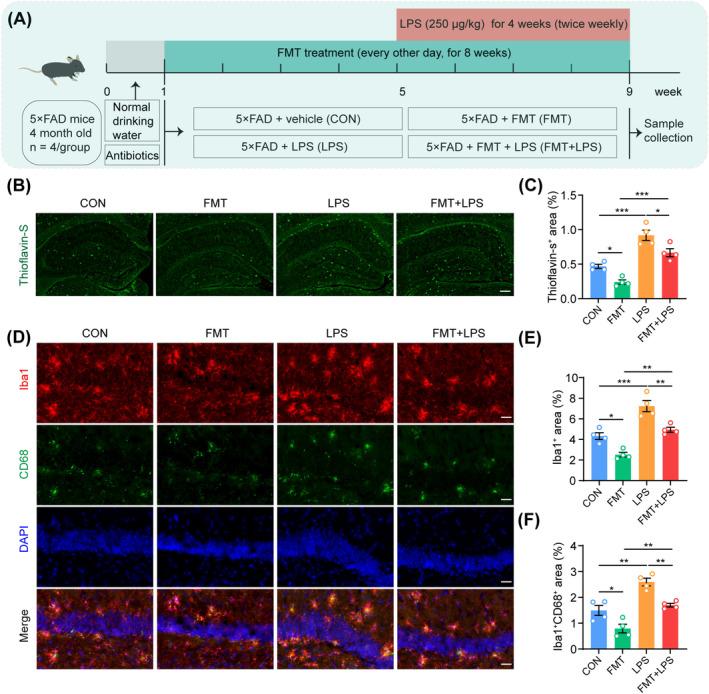
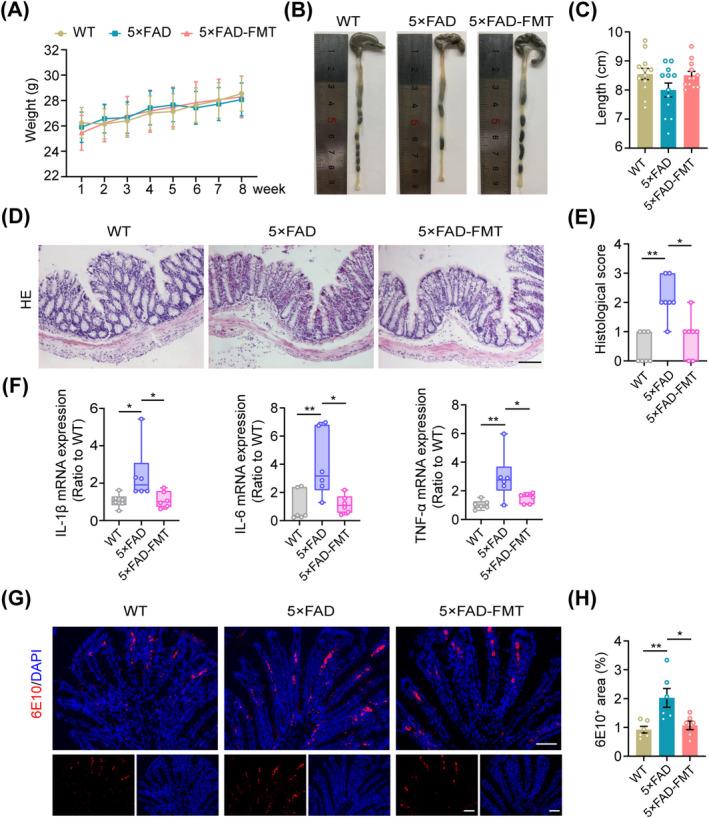
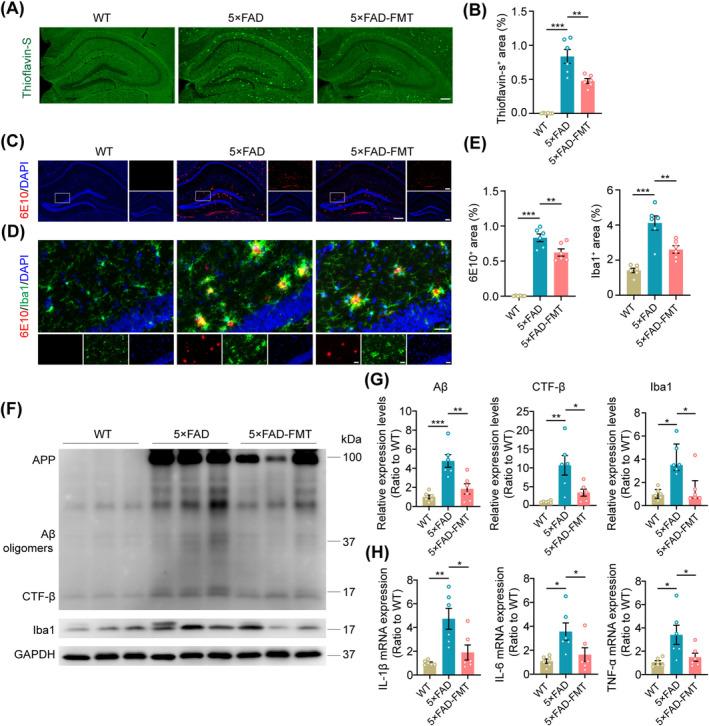
Initial weekly FMT failed to alleviate memory deficits or reduce brain Aβ pathology in 5 × FAD mice. In contrast, FMT administered every other day effectively restored gut dysbiosis in 5 × FAD mice and decreased Aβ pathology and lipopolysaccharide levels in the colon and hippocampus. Mechanistically, FMT reduced the expression of amyloid β precursor protein, β-site APP cleaving enzyme 1, and presenilin-1, potentially by inhibiting the Toll-like receptor 4/inhibitor of kappa B kinase β/nuclear factor kappa-B signaling pathway. However, the cognitive benefits of FMT on 5 × FAD mice diminished over time.
CONCLUSION
These findings demonstrate the dose- and time-dependent efficacy of FMT in mitigating AD-like pathology, underscoring the potential of targeting the gut microbiota for AD treatment.
背景
越来越多的证据表明肠道微生物群与阿尔茨海默病(AD)之间存在联系,尽管其潜在机制仍不清楚。本研究旨在探讨粪便微生物群移植(FMT)对AD小鼠模型认知功能的影响。
方法
对4个月大的5×FAD(家族性阿尔茨海默病)小鼠进行抗生素治疗,以耗尽其原生肠道微生物群。随后,它们每周或每隔一天接受一次FMT。8周后,分别通过行为测试和病理分析评估认知功能和β-淀粉样蛋白(Aβ)负荷。使用16S rRNA测序分析肠道微生物群的组成。
结果
最初每周进行的FMT未能减轻5×FAD小鼠的记忆缺陷或降低脑Aβ病理。相比之下,每隔一天进行的FMT有效恢复了5×FAD小鼠的肠道生态失调,并降低了结肠和海马中的Aβ病理和脂多糖水平。从机制上讲,FMT可能通过抑制Toll样受体4/κB激酶β抑制剂/核因子κB信号通路来降低淀粉样β前体蛋白、β位点APP裂解酶1和早老素-1的表达。然而,FMT对5×FAD小鼠的认知益处会随着时间的推移而减弱。
结论
这些发现证明了FMT在减轻AD样病理方面的剂量和时间依赖性疗效,强调了以肠道微生物群为靶点治疗AD的潜力。



 Zotero 插件