
病例报告:使用免疫检查点抑制剂的癌症患者意识障碍的诊断
Case report: Diagnosis of impaired consciousness in a cancer patient using immune checkpoint inhibitors.
作者信息
Cathalifaud Daniel, Basáez Cristóbal, Yáñez Tatiana
机构信息
Escuela de Medicina, Pontificia Universidad Católica de Chile, Santiago, Chile.
Departamento de Medicina Interna, Hospital Clínico Red de Salud UC-Christus, Santiago, Chile.
出版信息
Front Immunol. 2025 Jan 31;16:1458686. doi: 10.3389/fimmu.2025.1458686. eCollection 2025.
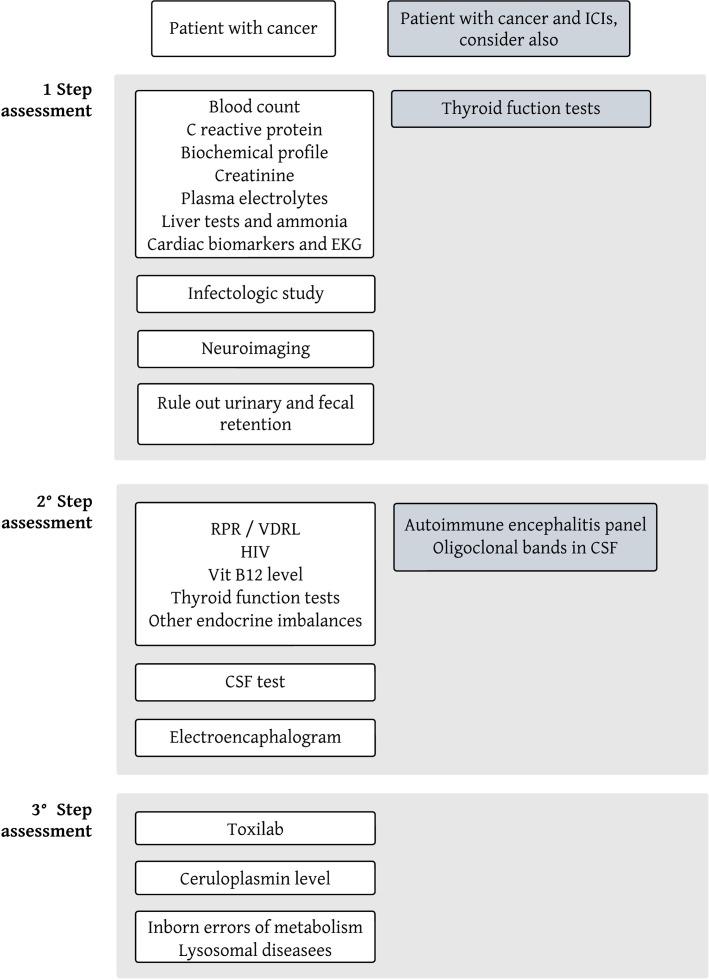
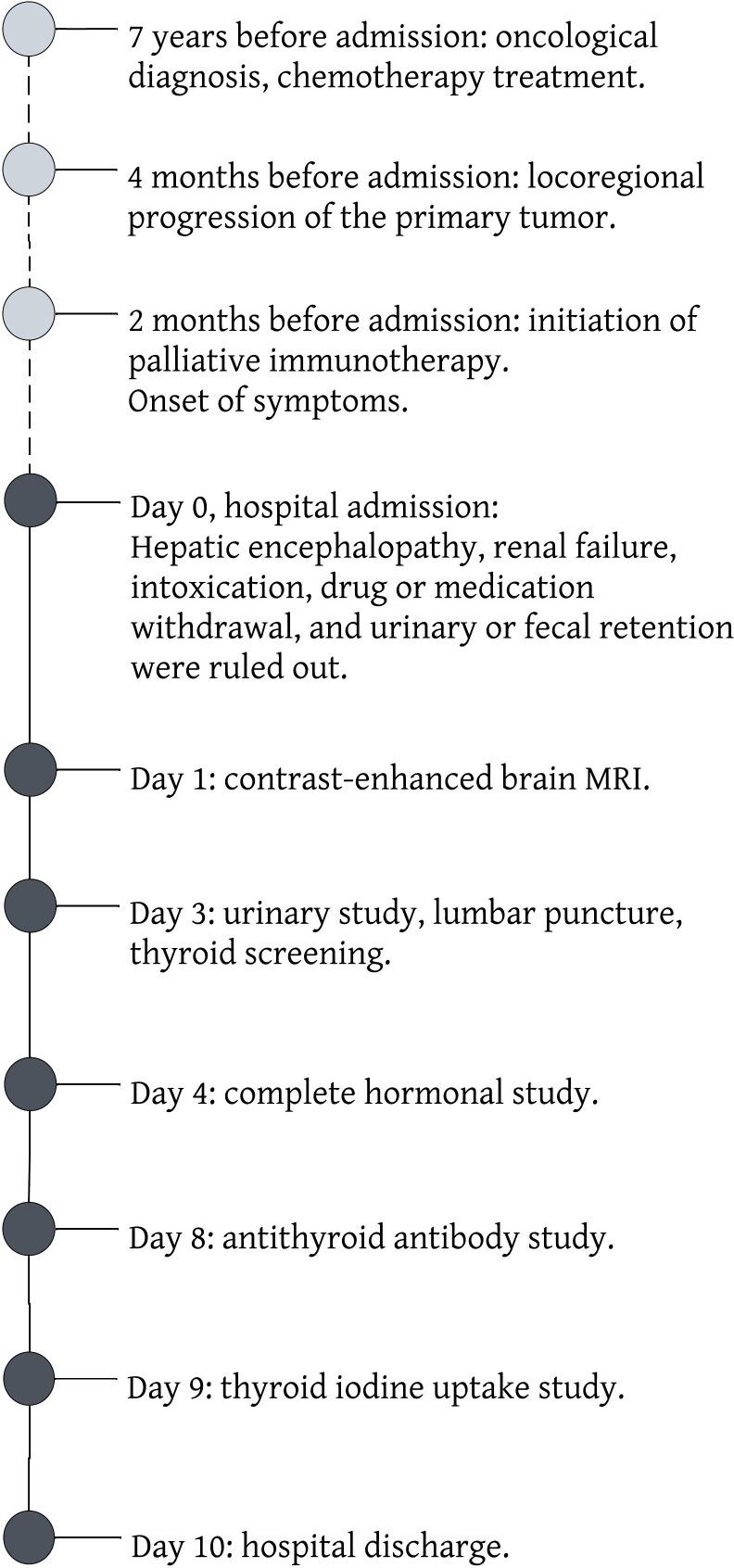
Immune checkpoint inhibitors (ICIs) are drugs that are being increasingly used in the field of oncology; due to their mechanism of action, they can present immune-related adverse effects (IRAEs), with various clinical manifestations, one of which is delirium. We present the case of a patient diagnosed with pleural mesothelioma that started combined palliative immunotherapy two months before admission. She was hospitalized for delirium with psychotic symptoms and a comprehensive neurological and etiological examination for this pathology was performed, revealing undetectable TSH levels, indicating the etiology of the condition as thyrotoxicosis in the context of autoimmune thyroiditis, secondary to treatment with ICIs. Symptomatic treatment with beta-blockers was initiated, leading to progressive improvement. This case brings awareness of impaired consciousness and neuropsychiatric symptoms as manifestation of IRAEs and the difficulty of their diagnosis: there may also be several other causes of impaired consciousness, so the characterization of delirium requires a multifaceted approach to determine the underlying cause, taking into account direct cancer-related complications and those stemming from the treatments received by this group of patients. Endocrinological immune-related adverse events (IRAEs), such as thyroid IRAEs, generally have a low lethality rate, do not necessarily require discontinuation of therapy, and are linked to a more favorable oncological prognosis. Conversely, neurological IRAEs, though rare, constitute a contraindication for further use of ICIs. This clinical case emphasizes the importance of the systematic study of consciousness impairment in cancer patients, and of considering multiple IRAEs that could lead to changes in oncological therapy when establishing possible etiologies.
免疫检查点抑制剂(ICIs)是肿瘤学领域中使用越来越广泛的药物;由于其作用机制,它们可能会出现免疫相关不良反应(IRAEs),临床表现多样,其中之一是谵妄。我们报告一例诊断为胸膜间皮瘤的患者,在入院前两个月开始接受姑息性免疫联合治疗。她因伴有精神病症状的谵妄住院,并针对该病症进行了全面的神经学和病因学检查,结果显示促甲状腺激素(TSH)水平检测不到,表明病因是在自身免疫性甲状腺炎背景下的甲状腺毒症,继发于ICIs治疗。开始使用β受体阻滞剂进行对症治疗,病情逐渐改善。该病例提高了人们对意识障碍和神经精神症状作为IRAEs表现的认识以及其诊断的难度:意识障碍可能还有其他多种原因,因此谵妄的特征描述需要采用多方面的方法来确定潜在病因,同时要考虑直接的癌症相关并发症以及该组患者所接受治疗引发的并发症。内分泌学方面的免疫相关不良事件(IRAEs),如甲状腺IRAEs,通常致死率较低,不一定需要停止治疗,并且与更有利的肿瘤预后相关。相反,神经学方面的IRAEs虽然罕见,但却是进一步使用ICIs的禁忌证。该临床病例强调了系统研究癌症患者意识障碍的重要性,以及在确定可能病因时考虑多种可能导致肿瘤治疗改变的IRAEs的重要性。

 Zotero 插件