
资源有限国家院外心脏骤停(OHCA)生存链的有效性:一项系统综述。
Effectiveness of chain of survival for out-of-hospital-cardiac-arrest (OHCA) in resource limited countries: A systematic review.
作者信息
Ali Baig Mirza Noor, Fatmi Zafar, Khan Nadeem Ullah, Khan Uzma Rahim, Raheem Ahmed, Razzak Junaid Abdul
机构信息
Department of Emergency Medicine, The Aga Khan University Hospital, Karachi, Pakistan.
Centre of Excellence for Trauma & Emergencies, The Aga Khan University, Karachi, Pakistan.
出版信息
Resusc Plus. 2025 Jan 22;22:100874. doi: 10.1016/j.resplu.2025.100874. eCollection 2025 Mar.
AIM
Given the critical disparities in survival for out-of-hospital-cardiac-arrest (OHCA) in resource limited countries and the lack of context-specific evidence to guide resuscitation practices, we aimed to systematically evaluate the effectiveness of the chain of survival components including bystander response, emergency medical services (EMS) response, advanced life support, and post-resuscitation care on outcomes such as return of spontaneous circulation, survival to admission, survival to hospital discharge, and neurological outcomes in these settings.
METHODS
This systematic review, following PRISMA guidelines, included observational and interventional studies on OHCA management from low, lower-middle, and upper-middle-income countries, published in English (2004-2023). PubMed, Embase, CINAHL, and Cochrane Library were searched using predefined terms. Two reviewers independently screened studies, extracted data using the Utstein template, and resolved conflicts with a third reviewer. Data included pre-hospital, patient, and post-resuscitation care factors, as well as short and long-term outcomes. Descriptive analysis and narrative synthesis were conducted, with return of spontaneous circulation (ROSC) rates compared across income groups using -tests.
RESULTS
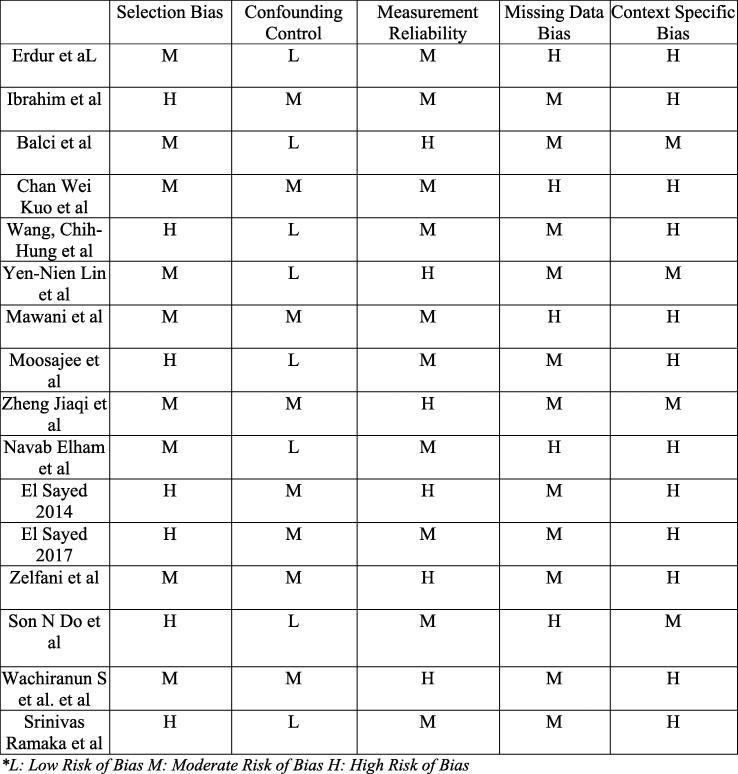
Sixteen (16) eligible studies were included. No study was found from low-income countries. ROSC rates ranged from 0.7% to 44%, survival to discharge from 0.6% to 14.1%, and good neurological outcomes (CPC 1-2) from 0.6% to 53.8%. While upper-middle-income countries showed slightly higher ROSC rates, differences were not statistically significant. Risk of bias was moderate to high due to selection bias, inadequate confounding control, and inconsistent reporting. These findings emphasize the need for standardized reporting and further research to improve outcomes in resource limited countries.
CONCLUSION
This review highlights low survival rates for OHCA in resource limited countries, with significant variability and gaps in evidence. Strengthening EMS systems, adopting context-specific strategies, and standardizing reporting are critical to improving outcomes.
目的
鉴于资源有限国家院外心脏骤停(OHCA)患者生存率存在严重差异,且缺乏针对具体情况的证据来指导复苏实践,我们旨在系统评估生存链各环节的有效性,这些环节包括旁观者反应、紧急医疗服务(EMS)反应、高级生命支持和复苏后护理,以及它们对这些情况下自主循环恢复、入院生存率、出院生存率和神经学结局等结果的影响。
方法
本系统评价遵循PRISMA指南,纳入了2004年至2023年期间以英文发表的关于低收入、中低收入和中高收入国家OHCA管理的观察性和干预性研究。使用预定义术语检索了PubMed、Embase、CINAHL和Cochrane图书馆。两名 reviewers 独立筛选研究,使用Utstein模板提取数据,并与第三名reviewer解决冲突。数据包括院前、患者和复苏后护理因素,以及短期和长期结局。进行了描述性分析和叙述性综合分析,使用t检验比较了不同收入组的自主循环恢复(ROSC)率。
结果
纳入了16项符合条件的研究。未发现来自低收入国家的研究。ROSC率在0.7%至44%之间,出院生存率在0.6%至14.1%之间,良好神经学结局(脑功能分类1 - 2级)在0.6%至53.8%之间。虽然中高收入国家的ROSC率略高,但差异无统计学意义。由于选择偏倚、混杂因素控制不足和报告不一致,偏倚风险为中度至高度。这些发现强调了标准化报告和进一步研究以改善资源有限国家结局的必要性。
结论
本综述强调了资源有限国家OHCA患者生存率较低,证据存在显著变异性和差距。加强EMS系统、采用针对具体情况的策略以及标准化报告对于改善结局至关重要。

 Zotero 插件