
纳米技术创新环境下的SIR流行病学模型。
An epidemiological model of SIR in a nanotechnological innovation environment.
作者信息
Svoboda David, Havelka Ondřej, Holendová Julie, Kraft Jiří
机构信息
Faculty of Economics, Technical University of Liberec, Voroněžská 13, 460 01, Liberec, Czech Republic.
Institute for Nanomaterials, Advanced Technologies and Innovation, Technical University of Liberec, Studentská 1402/2, 461 17, Liberec, Czech Republic.
出版信息
Heliyon. 2025 Jan 28;11(3):e42309. doi: 10.1016/j.heliyon.2025.e42309. eCollection 2025 Feb 15.
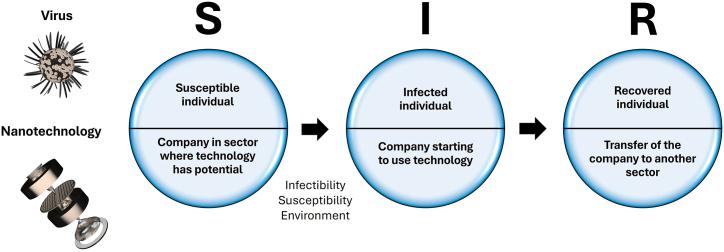
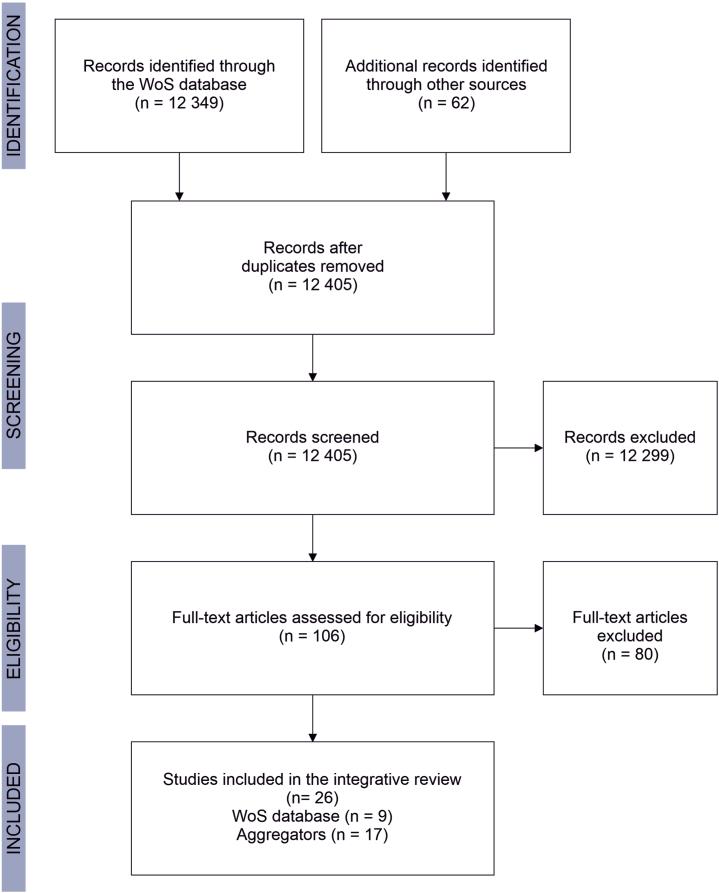
Today, when nanotechnological innovation, in particular, faces stringent regulations, the question arises concerning a tool that can quantify individual interventions and thus complement current knowledge in the diffusion theory of innovation. This paper examines the complex nature of innovation diffusion in a rapidly evolving technological environment. The research presents current knowledge in the field linking diffusion of innovation theory and the basic epidemiological model of SIR (Susceptible, Infected, Recovered). Epidemiological models, originally developed to study the spread of infectious diseases, offer intriguing parallels to innovation diffusion due to shared characteristics in propagation dynamics. Integrating the SIR epidemiological model into the current theoretical framework allows the SIR model to be considered as a tool capable of filling current gaps in the literature. Nanotechnological innovations are chosen because of their significant impact on society, which faces unique market entry challenges. Within the framework of high interdisciplinarity, nanotechnologies, like viruses, tend to 'mutate' into different industries where their 'infectivity' varies. The case of nanotechnology serves to illustrate the usefulness of the proposed model and shows how factors that influence the spread of viruses can similarly affect the adoption of technological innovations. Similar characteristics in the propagation framework between innovations and viruses can serve as one of many arguments for the use of the SIR model in this field. Using an integrative review, aspects that have the potential to add to the SIR model in the current literature are identified. By combining epidemiological findings with innovation theory, the paper contributes to a richer and more integrated understanding of the phenomena of diffusion of nanotechnological innovations. The motivation is to open a debate regarding the ability of the epidemiological model of SIR to reveal the impact of interventions affecting the diffusion of innovations.
如今,尤其是纳米技术创新面临严格监管时,就出现了关于一种工具的问题,该工具能够量化个体干预措施,从而补充创新扩散理论中的现有知识。本文考察了在快速发展的技术环境中创新扩散的复杂本质。该研究展示了该领域将创新扩散理论与SIR(易感者、感染者、康复者)基本流行病学模型相联系的现有知识。流行病学模型最初是为研究传染病传播而开发的,由于在传播动态方面具有共同特征,它与创新扩散有着有趣的相似之处。将SIR流行病学模型整合到当前理论框架中,使得SIR模型能够被视为一种能够填补当前文献空白的工具。选择纳米技术创新是因为它们对社会有重大影响,而社会面临着独特的市场进入挑战。在高度跨学科的框架内,纳米技术就像病毒一样,倾向于“变异”到不同行业,其“传染性”各不相同。纳米技术的案例说明了所提出模型的有用性,并展示了影响病毒传播的因素如何同样能够影响技术创新的采用。创新与病毒在传播框架中的相似特征可以作为在该领域使用SIR模型的众多论据之一。通过综合评价,确定了当前文献中有可能补充SIR模型的方面。通过将流行病学研究结果与创新理论相结合,本文有助于更丰富、更全面地理解纳米技术创新扩散现象。其动机是开启一场关于SIR流行病学模型揭示影响创新扩散的干预措施影响能力的辩论。
 Zotero 插件