
鱼类中重金属(类金属)的生物累积及其对人类健康的影响。
Heavy metal(loid) bioaccumulation in fish and its implications for human health.
作者信息
Almashhadany Dhary Alewy, Rashid Rzgar Farooq, Altaif Khalil Ibrahim, Mohammed Sarhang Hayyas, Mohammed Hero Ismael, Al-Bader Salah Mahdi
机构信息
Department of Medical Laboratory Science, College of Science, Knowledge University, Erbil.
Faculty of Pharmacy, Middle East University, Amman.
出版信息
Ital J Food Saf. 2024 Dec 20;14(1):12782. doi: 10.4081/ijfs.2024.12782.
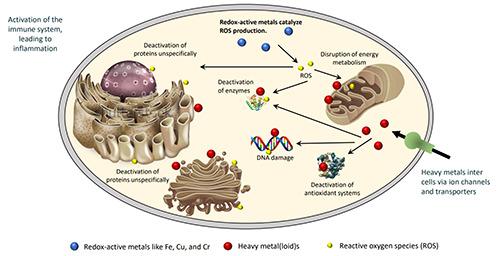
Heavy metal(loid)s (HM) pollution in aquatic environments is a serious issue due to the toxicity, persistence, bioaccumulation, and biomagnification of these pollutants. The main sources of HM contamination are industrial activities, mining, agricultural practices, and combustion of fossil fuels. Fish can accumulate HMs through a process called bioaccumulation. As larger predatory fish consume smaller fish, these HMs enter the main food chains and can become increasingly concentrated in their tissues and finally reach humans. Here, we provided a general and concise conclusion from current research findings on the toxicological effects on different body systems. Exposure to HMs can lead to a range of adverse health effects, including neurological damage, developmental disorders, kidney damage, cardiovascular problems, and cancers. Their long-term accumulation can result in chronic toxicity even at low levels of exposure. HMs exert cellular cytotoxicity by disrupting essential cellular processes and structures. They can interfere with enzyme function, disrupt cell membrane integrity, induce oxidative stress, and cause DNA damage, ultimately leading to cell death or dysfunction. Prevention and control of HMs involve implementing measures to reduce their release into the environment through regulations on industrial processes, waste management, and pollution control technologies. Additionally, monitoring and remediation efforts are crucial for identifying contaminated sites and implementing strategies such as soil and water remediation to reduce human exposure and mitigate the impact on ecosystems. To conclude, HM accumulation in fish poses serious risks to public health and the environment, necessitating urgent interdisciplinary efforts to mitigate their harmful effects and promote sustainable practices that reduce HM flow into biological systems.
由于重金属(类金属)污染物具有毒性、持久性、生物累积性和生物放大性,水生环境中的重金属(类金属)污染是一个严重问题。重金属污染的主要来源是工业活动、采矿、农业实践以及化石燃料燃烧。鱼类可通过一种称为生物累积的过程积累重金属。随着大型掠食性鱼类捕食小型鱼类,这些重金属进入主要食物链,并可能在其组织中越来越集中,最终到达人类体内。在此,我们根据当前关于重金属对不同身体系统毒理学影响的研究结果给出了一个概括性的简要结论。接触重金属会导致一系列不良健康影响,包括神经损伤、发育障碍、肾脏损伤、心血管问题和癌症。即使在低暴露水平下,它们的长期积累也会导致慢性毒性。重金属通过破坏基本的细胞过程和结构发挥细胞毒性作用。它们会干扰酶的功能、破坏细胞膜完整性、诱导氧化应激并导致DNA损伤,最终导致细胞死亡或功能障碍。重金属的预防和控制包括通过对工业过程、废物管理和污染控制技术的监管来实施措施,以减少其向环境中的释放。此外,监测和修复工作对于识别受污染场地以及实施土壤和水修复等战略以减少人类暴露和减轻对生态系统的影响至关重要。总之,鱼类中的重金属积累对公众健康和环境构成严重风险,需要紧急开展跨学科努力,以减轻其有害影响,并推广减少重金属流入生物系统的可持续做法。

 Zotero 插件