
超重和肥胖女性子宫微生物群与胚胎移植妊娠结局的相关性
Correlation between uterine microbiota and pregnancy outcomes of embryo transfer in overweight and obese women.
作者信息
Yan Ying, Li Ying, Wu Lingling, Zhang Yuxuan, Guo Hong, Ji Yazhong
机构信息
Reproductive Medical Center, Tongji Hospital, School of Medicine, Tongji University, Shanghai, China.
出版信息
Front Cell Infect Microbiol. 2025 Feb 3;15:1515563. doi: 10.3389/fcimb.2025.1515563. eCollection 2025.
OBJECTIVE
Currently, it has been reported that uterine microbiota affected pregnancy outcomes in assisted reproductive technology, but little was known in obese women. Thus, this study aims to explore how body weight affects pregnancy outcomes by comparing the differences in uterine microbiota between women of normal weight and those with obesity or overweight.
METHODS
The study included 45 embryo transfer cycles. Patients were divided into two groups based on body mass index (BMI): normal-weight group, BMI ≤23.9 kg/m² (Con group, n=31) and obesity/overweight group, BMI >23.9 kg/m² (OwOb group, n=14). Microbial samples were collected from the catheter tips and analyzed using RNA Ribosomal 16S.
RESULTS
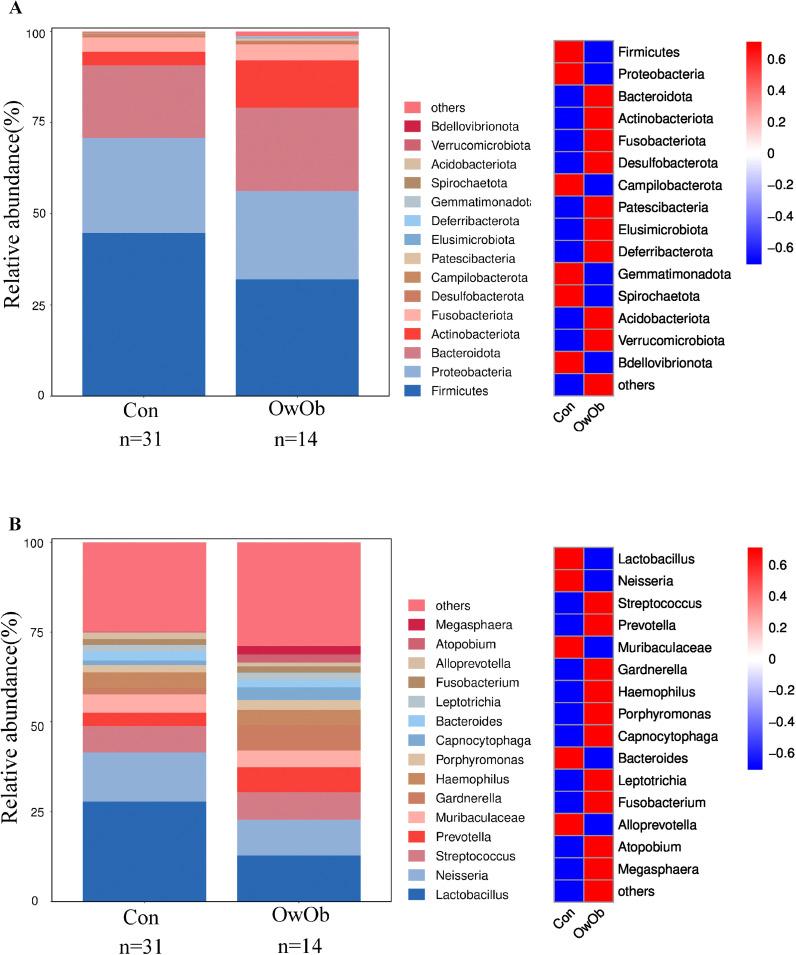
In 45 women, the β-human chorionic gonadotropin (β-hCG) positivity rate and clinical pregnancy rate 10-12 days after embryo transfer were higher in the Con group. At the genus level, the relative abundance of Lactobacillus in the Con group was 2.2 times higher than that in the OwOb group. The Alpha diversity in the OwOb group was significantly higher than in the Con group (p=0.028). After regrouping based on β-hCG results 10-12 days post-transfer, in the Con-negative group (the group with negative β-hCG in the Con group, n=16) the relative abundances of pathogenic bacteria such as Klebsiella (p<0.001), Parasutterella (p=0.004), Dialister (p=0.01), and Gardnerella (p=0.029) were significantly higher than in the Con-positive group (the group with positive β-hCG in the Con group, n=15).
CONCLUSION
Overweight and obese women possess a distinct uterine microbiota, characterized by a lower relative abundance of Lactobacillus and an increased relative abundance of pathogenic bacteria, along with specific genera strongly associated with obesity. In individuals with higher BMI, pathogenic bacteria are more likely to impair endometrial receptivity, ultimately leading to adverse pregnancy outcomes. Therefore, modulating the uterine microbiota in overweight/obese women may improve assisted reproductive technology success rates.
目的
目前,已有报道称子宫微生物群会影响辅助生殖技术中的妊娠结局,但肥胖女性的相关情况却知之甚少。因此,本研究旨在通过比较正常体重女性与肥胖或超重女性子宫微生物群的差异,探讨体重如何影响妊娠结局。
方法
该研究纳入了45个胚胎移植周期。根据体重指数(BMI)将患者分为两组:正常体重组,BMI≤23.9kg/m²(对照组,n = 31)和肥胖/超重组,BMI>23.9kg/m²(肥胖/超重组,n = 14)。从导管尖端采集微生物样本,并使用RNA核糖体16S进行分析。
结果
在45名女性中,对照组胚胎移植后10 - 12天的β-人绒毛膜促性腺激素(β-hCG)阳性率和临床妊娠率更高。在属水平上,对照组中乳酸杆菌的相对丰度比肥胖/超重组高2.2倍。肥胖/超重组的α多样性显著高于对照组(p = 0.028)。根据移植后10 - 12天的β-hCG结果重新分组后,在对照组阴性组(对照组中β-hCG为阴性的组,n = 16)中,克雷伯菌(p<0.001)、副萨特氏菌(p = 0.004)、戴阿李斯特菌(p = 0.01)和加德纳菌(p = 0.029)等病原菌的相对丰度显著高于对照组阳性组(对照组中β-hCG为阳性的组,n = 15)。
结论
超重和肥胖女性拥有独特的子宫微生物群,其特征是乳酸杆菌相对丰度较低,病原菌相对丰度增加,以及与肥胖密切相关的特定菌属。在BMI较高的个体中,病原菌更有可能损害子宫内膜容受性,最终导致不良妊娠结局。因此,调节超重/肥胖女性的子宫微生物群可能会提高辅助生殖技术的成功率。



 Zotero 插件