
用于治疗自身免疫性疾病的调节性T细胞。
T-regulatory cells for the treatment of autoimmune diseases.
作者信息
Fisher Marina S, Sennikov Sergey V
机构信息
Laboratory of Molecular Immunology, Federal State Budgetary Scientific Institution Research Institute of Fundamental and Clinical Immunology, Novosibirsk, Russia.
Laboratory of Immune Engineering, Federal State Autonomous Educational Institution of Higher Education I.M. Sechenov First Moscow State Medical University under the Ministry of Health of the Russian Federation (Sechenov University), Moscow, Russia.
出版信息
Front Immunol. 2025 Feb 4;16:1511671. doi: 10.3389/fimmu.2025.1511671. eCollection 2025.
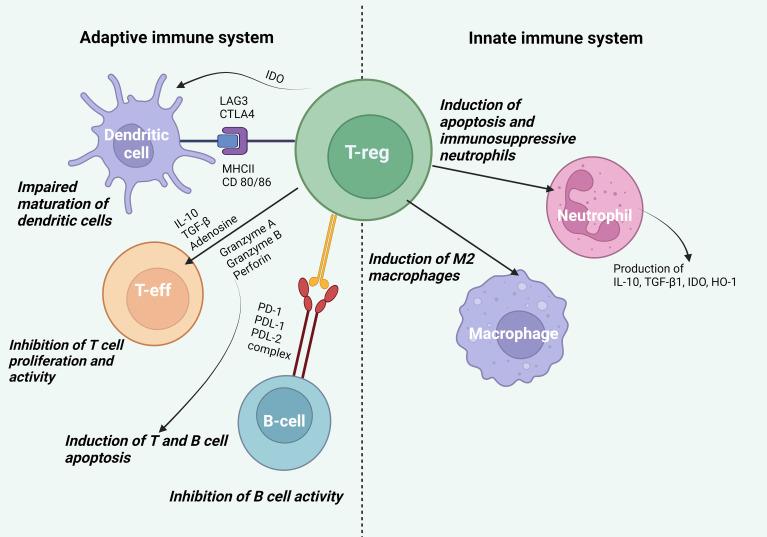
Autoimmune diseases result from imbalances in the immune system and disturbances in the mechanisms of immune tolerance. T-regulatory cells (Treg) are key factors in the formation of immune tolerance. Tregs modulate immune responses and repair processes, controlling the innate and adaptive immune system. The use of Tregs in the treatment of autoimmune diseases began with the manipulation of endogenous Tregs using immunomodulatory drugs. Then, a method of adoptive transfer of Tregs grown was developed. Adoptive transfer of Tregs includes polyclonal Tregs with non-specific effects and antigen-specific Tregs in the form of CAR-Treg and TCR-Treg. This review discusses non-specific and antigen-specific approaches to the use of Tregs, their advantages, disadvantages, gaps in development, and future prospects.
自身免疫性疾病是由免疫系统失衡和免疫耐受机制紊乱引起的。调节性T细胞(Treg)是免疫耐受形成的关键因素。Tregs调节免疫反应和修复过程,控制先天性和适应性免疫系统。Tregs在自身免疫性疾病治疗中的应用始于使用免疫调节药物对内源性Tregs进行调控。随后,开发了一种体外扩增Tregs并进行过继转移的方法。Tregs的过继转移包括具有非特异性作用的多克隆Tregs以及以嵌合抗原受体Treg(CAR-Treg)和T细胞受体Treg(TCR-Treg)形式存在的抗原特异性Tregs。本文综述了Tregs的非特异性和抗原特异性应用方法、它们的优缺点、发展中的差距以及未来前景。

 Zotero 插件