
血管紧张素II 2型受体拮抗剂PD123319((S-( +)-1-[(4-(二甲氨基)-3-甲基苯基)甲基]-5-(二苯乙酰基)-4,5,6,7-四氢-1H-咪唑并[4,5-c]吡啶-6-羧酸)、EMA300(5-(2,2-二苯乙酰基)-4-[(4-甲氧基-3-甲基苯基)甲基]-1,4,6,7-四氢咪唑并[4,5-c]吡啶-6-羧酸)和EMA401((3S)-5-(苄氧基)-2-(2,2-二苯乙酰基)-6-甲氧基-1,2,3,4-四氢异喹啉-3-羧酸),在水痘带状疱疹病毒诱导的大鼠神经性疼痛模型中可减轻疼痛。
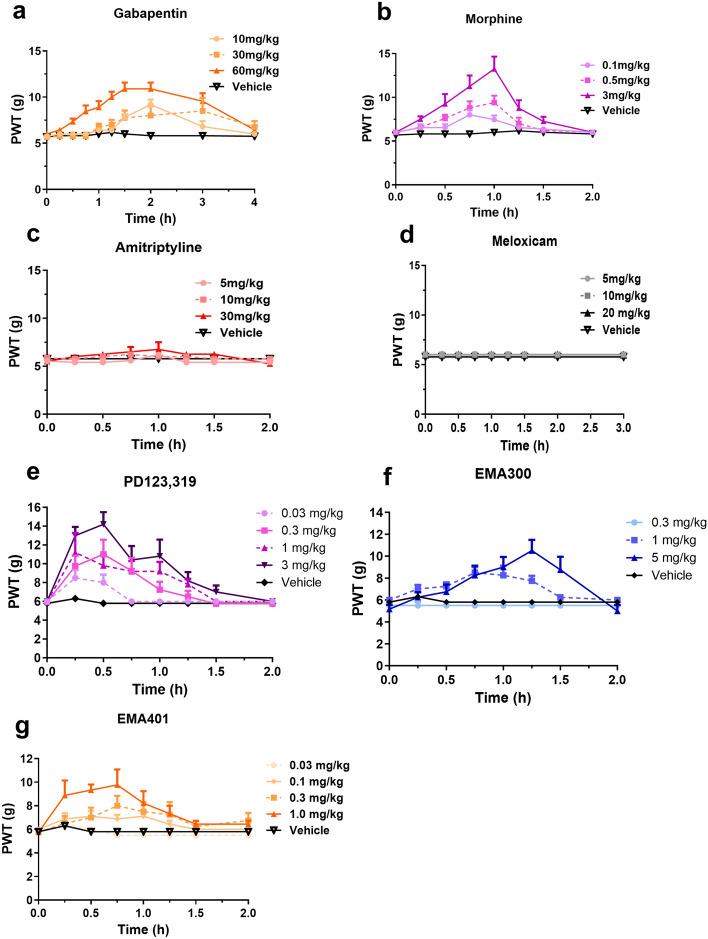
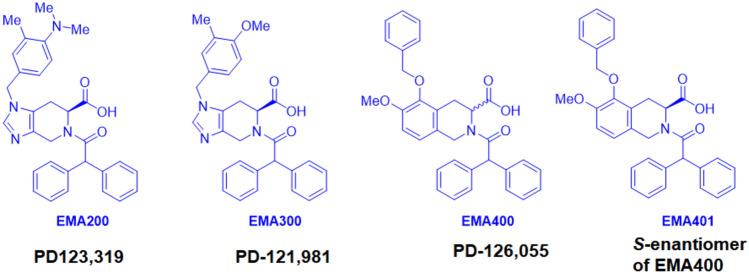
The angiotensin II type 2 receptor antagonists, PD123,319 ((S-( +)-1-[(4-(dimethylamino)-3-methylphenyl)methyl]-5-(diphenylacetyl)-4,5,6,7-tetrahydro-1H-imidazo[4,5-c]pyridine-6-carboxylic acid), EMA300 (5-(2,2-diphenylacetyl)-4-[(4-methoxy-3-methylphenyl)methyl]-1,4,6,7-tetrahydroimidazo[4,5-c]pyridine-6-carboxylic acid) and EMA401 ((3S)-5-(benzyloxy)-2-(2,2-diphenylacetyl)-6-methoxy-1,2,3,4-tetrahydroisoquinoline-3-carboxylic acid), evoke pain relief in a varicella zoster virus-induced rat model of neuropathic pain.
作者信息
Das V, Lam A L, Smith M T
机构信息
Centre for Integrated Preclinical Drug Development (CIPDD), School of Biomedical Sciences, Faculty of Medicine, The University of Queensland, St Lucia Campus, Brisbane, QLD, 4072, Australia.
出版信息
Inflammopharmacology. 2025 Mar;33(3):1337-1348. doi: 10.1007/s10787-025-01650-z. Epub 2025 Feb 20.
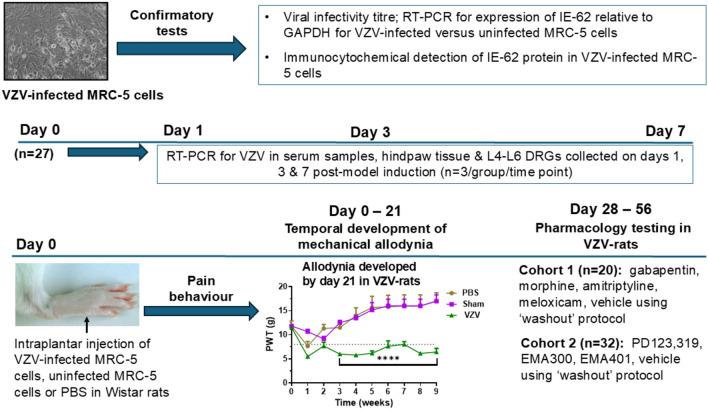
Post-herpetic neuralgia (PHN) is a type of neuropathic (nerve) pain that persists for more than 3 months after crusting of the last shingles lesion. It is difficult to relieve with analgesic/adjuvant medications, and so novel analgesics are needed. Our aim was to use a rat model of varicella zoster virus (VZV)-induced neuropathic pain to assess the pain relief efficacy of several small molecule angiotensin II type 2 (AT) receptor antagonists (PD123,319, EMA300, and EMA401) relative to clinically used analgesic/adjuvant agents from four different pharmacological classes. Male Wistar rats received a unilateral intraplantar injection of VZV-infected MRC-5 cells (2 × 10 infected cells) and paw withdrawal thresholds (PWTs) in the ipsilateral hindpaws were assessed using von Frey filaments. Animals with PWTs ≤ 8 g received single doses of PD123,319 (0.03-3 mg/kg), EMA300 (0.3-5 mg/kg), EMA401 (0.03-1 mg/kg), gabapentin (10-60 mg/kg), amitriptyline (5-30 mg/kg), morphine (0.1-3 mg/kg), meloxicam (5-20 mg/kg) or vehicle and PWT versus time curves were generated. Single doses of PD123,319, EMA300, EMA401, gabapentin and morphine-evoked dose-dependent anti-allodynia in the hindpaws of VZV-rats. The mean (95% confidence intervals) EDs were 0.57 (0.04-1.7), 2.5 (1.0-3.7) and 0.41 (0.12-0.87) mg/kg for PD123,319, EMA300, and EMA401, respectively. The EDs for gabapentin and morphine were 39.9 (25.1-64.8) and 0.04 (0.16-2.09) mg/kg, respectively. In conclusion, the anti-allodynic efficacy of EMA401 in a VZV-rat model of neuropathic pain is aligned with its analgesic efficacy in a Phase 2a clinical trial in patients with PHN. This model has utility for anti-allodynic efficacy assessment of novel AT receptor antagonists from drug discovery.
带状疱疹后神经痛(PHN)是一种神经性疼痛,在最后一个带状疱疹皮损结痂后持续超过3个月。使用镇痛/辅助药物难以缓解,因此需要新型镇痛药。我们的目的是使用水痘带状疱疹病毒(VZV)诱导的神经性疼痛大鼠模型,评估几种小分子血管紧张素II 2型(AT)受体拮抗剂(PD123,319、EMA300和EMA401)相对于四种不同药理类别的临床使用镇痛/辅助药物的镇痛效果。雄性Wistar大鼠接受单侧足底注射VZV感染的MRC-5细胞(2×10个感染细胞),并使用von Frey细丝评估同侧后爪的爪退缩阈值(PWT)。PWT≤8 g的动物接受单剂量的PD123,319(0.03 - 3 mg/kg)、EMA300(0.3 - 5 mg/kg)、EMA401(0.03 - 1 mg/kg)、加巴喷丁(10 - 60 mg/kg)、阿米替林(5 - 30 mg/kg)、吗啡(0.1 - 3 mg/kg)、美洛昔康(5 - 20 mg/kg)或赋形剂,并生成PWT与时间的曲线。单剂量的PD123,319、EMA300、EMA401、加巴喷丁和吗啡在VZV大鼠后爪诱发剂量依赖性抗痛觉过敏。PD123,319、EMA300和EMA401的平均(95%置信区间)ED50分别为0.57(0.04 - 1.7)、2.5(1.0 - 3.7)和0.41(0.12 - 0.87)mg/kg。加巴喷丁和吗啡的ED50分别为39.9(25.1 - 64.8)和0.04(0.16 - 2.09)mg/kg。总之,EMA401在VZV大鼠神经性疼痛模型中的抗痛觉过敏效果与其在PHN患者2a期临床试验中的镇痛效果一致。该模型可用于药物研发中新型AT受体拮抗剂的抗痛觉过敏效果评估。

 Zotero 插件